
When Sales Increase but Cash Still Feels Uncertain
In poultry trading, movement never stops. Birds are loaded early morning, vehicles leave farms daily, and markets remain active throughout the week. On paper, business looks strong because sales continue consistently.
Yet many poultry farmers experience a silent concern.
Despite continuous trading, money availability never feels stable.
Payments arrive irregularly. Some customers settle quickly while others delay without clear timelines. Farmers often realize cash shortages only when supplier payments or operational expenses become due.
This creates a confusing situation where business activity is high but financial comfort is low.
The question slowly arises inside every trading operation.
If sales are happening daily, why is payment collection still unpredictable?
The answer lies not in customers alone but in how payment collection is managed.
Why Payment Collection Feels Out of Control
Most poultry traders believe payment delay is a market habit. They assume customers naturally pay late, and nothing can be changed.
But in reality, payment confusion usually begins inside the system itself.
After delivery, information spreads across different channels. Delivery quantities are recorded in one place, rates discussed elsewhere, and payment expectations communicated verbally. Over time, clarity disappears.
When payment responsibility is unclear, collection becomes reactive instead of structured.
Farmers start depending on reminders rather than processes. Calls replace planning. Follow-ups become routine work.
Gradually, payment collection feels uncontrollable even though the business itself is functioning properly.
Control is lost not because customers refuse to pay, but because payment visibility is weak.
The Hidden Cost of Delayed Collections
Payment delay does more damage than most traders realize.
Cash flow imbalance forces farmers to adjust daily operations. Feed purchases may be postponed. Vehicle expenses become stressful. Staff payments require careful timing.
Even profitable businesses begin to feel financially tight.
This creates a chain reaction across the trading cycle.
When incoming payments are uncertain, outgoing payments also get delayed. Supplier relationships weaken. Negotiation power reduces. Market confidence slowly declines.
Over time, farmers spend more energy managing financial pressure than improving operational efficiency.
The business continues running, but growth slows silently.
How Lack of Clarity Creates Collection Problems
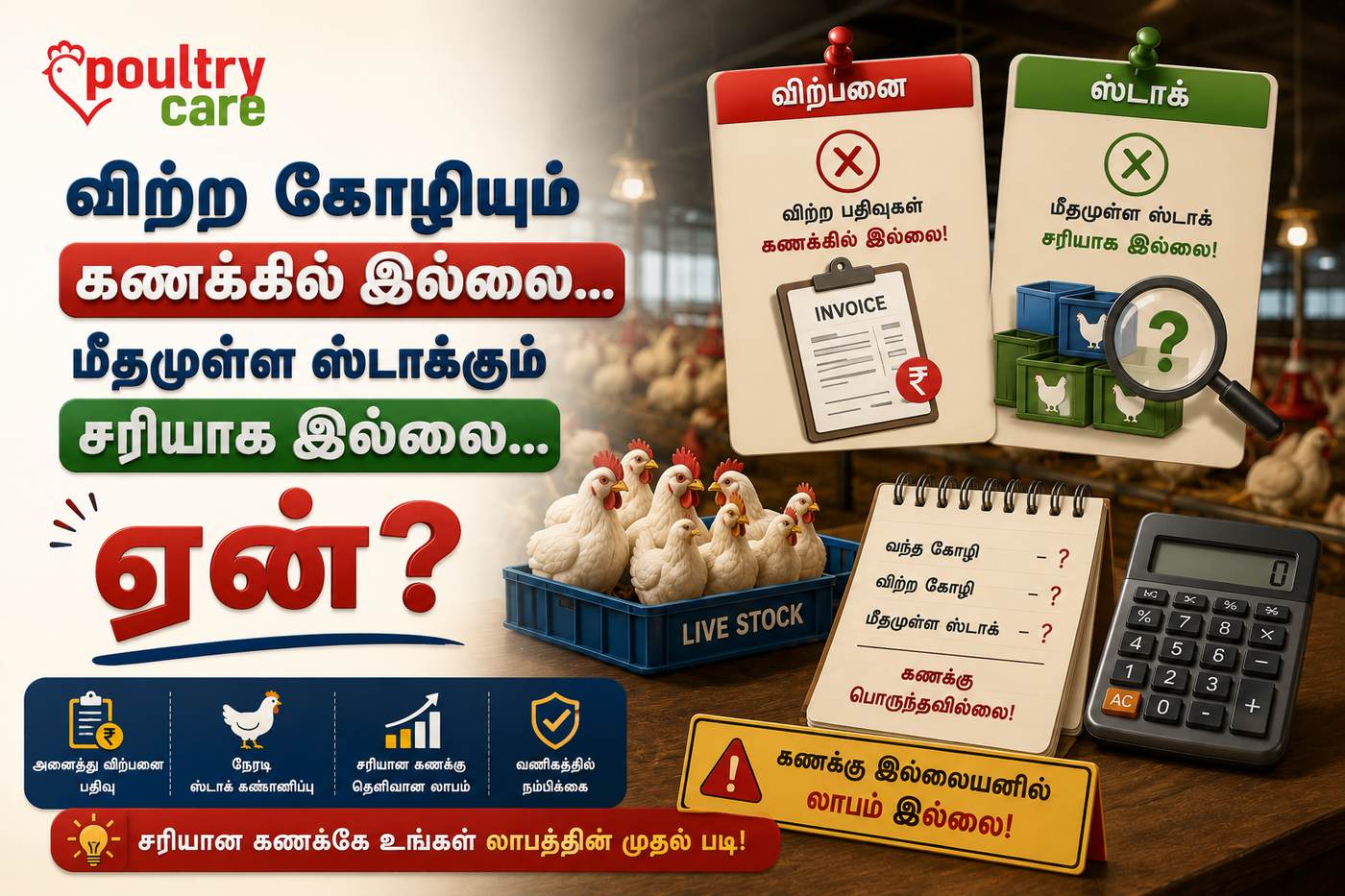
In many poultry businesses, the biggest difficulty is not collecting money but knowing what exactly needs to be collected today.
Farmers often depend on memory or manual notes to track receivables. As trading volume grows, remembering every transaction becomes impossible.
Questions begin appearing frequently.
Which customer’s payment is due today?
Which delivery is still pending settlement?
Has partial payment already been received?
Without instant answers, follow-up becomes delayed. Customers assume extended credit periods because urgency is unclear.
Collection problems therefore grow gradually, not suddenly.
When information is scattered, accountability disappears.
Why Customers Delay Even Without Intention
Many traders believe customers delay payments intentionally. However, delays often occur because expectations are not clearly structured.
When delivery confirmation, billing clarity, and due dates are not communicated systematically, customers prioritize other payments first.
Human behavior follows visibility.
Payments that are clearly tracked and regularly visible receive attention. Payments that remain informal move to the background.
When traders themselves lack daily payment visibility, customers also treat settlement casually.
Clear systems indirectly influence customer discipline.
Payment behavior improves when clarity improves.
From Follow-Up Culture to Collection Control
A large number of poultry businesses operate in what can be called a follow-up culture.
Collection depends on phone calls, reminders, and personal relationships. While relationships remain important, dependency on reminders consumes valuable management time.
Farmers become collectors instead of business planners.
Controlled payment collection works differently.
Instead of chasing payments, businesses create visibility around due amounts. Both trader and customer understand expectations clearly.
When payment tracking becomes structured, follow-ups reduce naturally because accountability already exists.
Control is not created by pressure but by clarity.
The Role of Daily Payment Awareness
Daily awareness transforms financial management completely.
When traders clearly see pending receivables each day, decision-making becomes stronger. Purchases can be planned confidently because incoming funds are visible.
Operational stress reduces because uncertainty reduces.
Daily payment visibility also allows early action. Instead of reacting after delays become serious, farmers can communicate proactively.
Small adjustments prevent large financial problems.
Collection then becomes a continuous process rather than a monthly struggle.
How Payment Discipline Strengthens the Entire Business
Payment control does more than improve cash flow. It strengthens overall business discipline.
When collections become consistent, suppliers trust the business more. Credit terms improve. Negotiations become easier.
Internal teams also work more efficiently because financial expectations are clear.
Drivers, sales teams, and accounts departments align better when transaction closure is visible.
The trading operation moves from confusion to coordination.
Financial discipline creates operational discipline.
Why Growing Businesses Need Structured Collection Systems
In early stages, traders manage collections personally. With fewer customers, manual tracking feels manageable.
But growth changes complexity.
More customers mean varied credit terms. Multiple deliveries create overlapping payment cycles. Partial settlements increase accounting difficulty.
Manual tracking begins failing silently.
Farmers may still believe they are in control, but delays start increasing. Month-end reconciliation becomes stressful.
Growth requires structured visibility.
Without it, expansion increases financial risk instead of profitability.
Changing the Mindset Around Payment Collection
Payment collection should not be viewed as a separate accounting task. It is part of trading management itself.
Every delivery creates future cash movement. Every credit decision affects financial stability.
When farmers treat payment visibility as a daily operational responsibility, control naturally improves.
Instead of asking customers for money late, traders begin managing payment flow proactively.
This mindset shift transforms trading confidence.
Business stops depending on luck and starts depending on systems.
The Real Meaning of Controlled Payment Collection
Controlled collection does not mean forcing customers or shortening relationships.
It means knowing clearly:
who must pay,
how much is pending,
and when settlement is expected.
When these three elements remain visible daily, payment flow becomes predictable.
Predictability allows planning. Planning enables growth.
Controlled collection ultimately gives farmers peace of mind — the confidence that business performance matches financial reality.
Conclusion
Poultry trading success depends not only on selling birds but on converting sales into timely cash flow.
Payment delays often appear unavoidable, but many arise from lack of visibility rather than market behavior.
When payment tracking becomes clear and daily awareness improves, collection control becomes possible.
Farmers gain financial stability, stronger relationships, and the ability to grow without constant pressure.
Payment collection is not about chasing money.
It is about creating clarity that allows money to return naturally to the business.