
When Sales Are Happening but Cash Still Feels Tight
In poultry trading, activity never stops. Birds move daily, vehicles load continuously, and markets remain active. From outside, business looks strong. Deliveries happen on time, customers continue purchasing, and accounts appear busy.
Yet many farmers experience the same question at the end of each day.
Where is the money?
Despite steady sales, cash availability often feels uncertain. Payments arrive unpredictably. Some customers pay early, some delay, and some payments remain forgotten until financial pressure builds.
The real challenge is not selling birds. The challenge is knowing exactly who is supposed to pay today.
Without this clarity, trading becomes dependent on memory, assumptions, and follow-ups instead of control.
Why Payment Visibility Matters More Than Sales Volume
Increasing sales gives confidence, but payment visibility gives stability.
Many poultry traders focus heavily on dispatch numbers, market prices, and delivery speed. However, once birds leave the farm, financial tracking becomes weaker.
Invoices may be recorded, but daily payment responsibility is not clearly visible. Farmers often rely on accountants or manual records to understand receivables.
This creates a delay between business activity and financial awareness.
When farmers cannot immediately identify pending payments, decision-making slows. Purchases are postponed because incoming cash timing is unclear.
Business growth requires predictable money movement, not just successful trading.
How Confusion Begins After Delivery
The moment birds are delivered, a new process starts — settlement.
But this stage often lacks structure.
Delivery quantities may change slightly due to weight variation. Rate confirmation may happen later. Transport adjustments may be discussed separately. Credit terms vary between customers.
Because information is scattered across calls, messages, and handwritten notes, payment responsibility becomes unclear.
Farmers then start asking questions late.
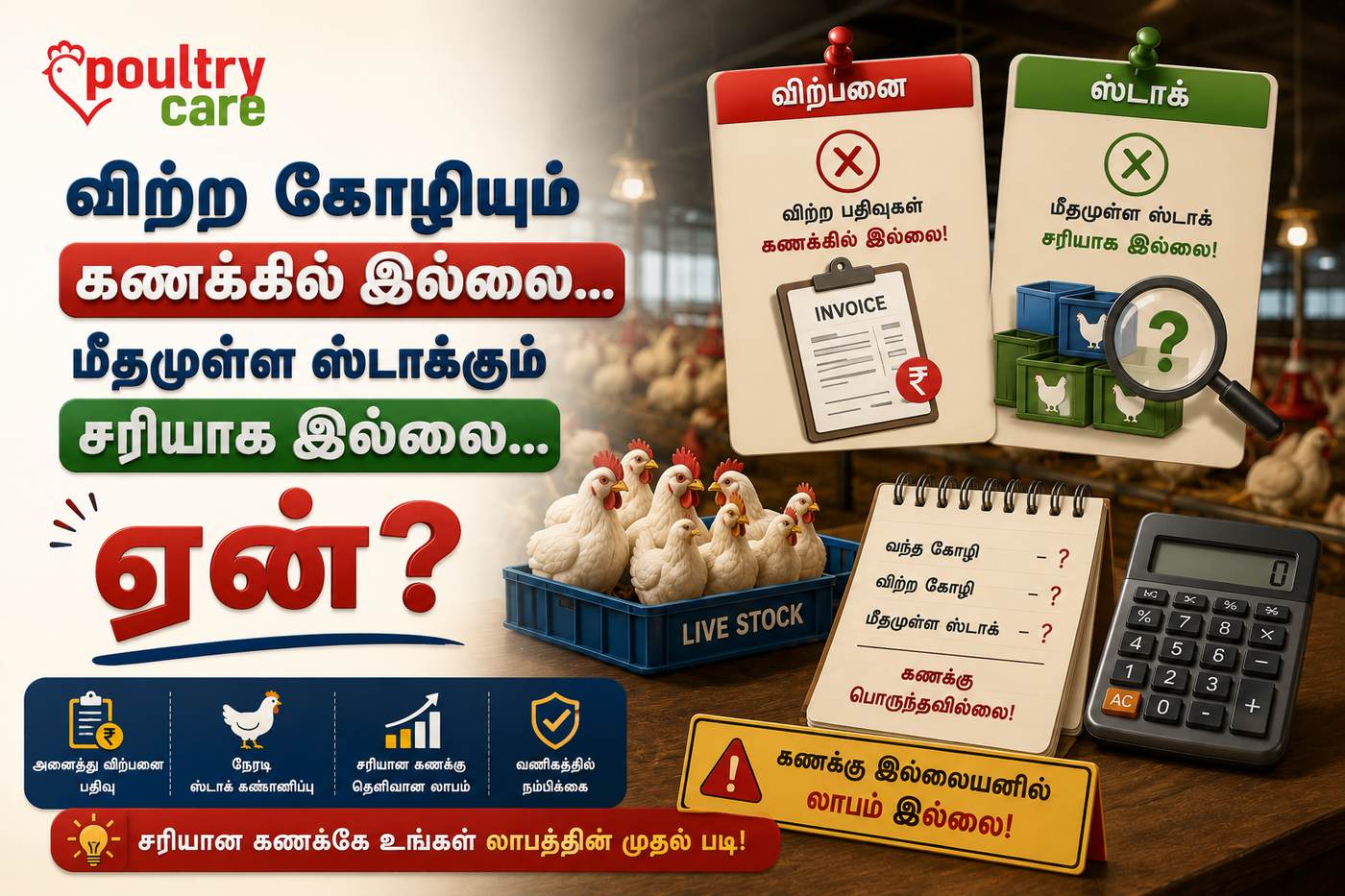
Who received birds yesterday?
Who confirmed the rate?
Which payment is already due?
By the time answers are gathered, payment timelines have already shifted.
The issue is not customer intention. The issue is lack of real-time clarity.
The Hidden Stress of Not Knowing Receivables Daily
Financial stress in poultry trading rarely comes from loss alone. It often comes from uncertainty.
When farmers do not know expected collections for the day, planning becomes difficult.
Feed suppliers must be paid. Labour wages are scheduled. Fuel expenses continue daily. But incoming money remains unpredictable.
This mismatch forces farmers into reactive management.
Instead of planning expenses confidently, they wait for payments to arrive. Business decisions become defensive rather than progressive.
Over time, this uncertainty reduces operational confidence and creates mental pressure for management teams.
Knowing receivables daily removes this invisible stress.
Why Follow-Up Culture Develops in Trading
Many poultry businesses unknowingly operate under a follow-up culture.
Payments move only after reminders. Calls become routine. Collection depends on personal relationships rather than structured systems.
While relationships are important in trading, dependency on reminders creates inefficiency.
Farmers spend valuable time tracking payments instead of improving operations.
Customers may also delay unintentionally because no structured reminder or confirmation exists.
When payment responsibility is unclear on both sides, delay becomes normal behavior.
A strong trading environment is built when payment tracking becomes automatic and transparent.
How Daily Payment Awareness Improves Financial Discipline
When farmers clearly know who has to pay today, financial discipline improves across the entire business chain.
Collections become timely because expectations are visible. Customers understand settlement timelines better. Accounts teams work proactively instead of reactively.
Daily visibility transforms financial management from guessing into monitoring.
Farmers begin planning purchases confidently because expected cash inflow is known.
This clarity strengthens negotiation power as well. Businesses with strong payment awareness maintain healthier supplier relationships because they pay on time.
Consistency builds credibility, and credibility strengthens growth opportunities.
The Connection Between Cash Flow and Business Expansion
Expansion decisions depend on financial confidence.
Whether increasing bird placement, upgrading vehicles, or entering new markets, every growth step requires predictable cash flow.
When receivables remain unclear, expansion feels risky.
Farmers hesitate to scale because they cannot accurately predict available funds.
However, when payment tracking becomes clear, business planning improves naturally. Management can forecast cash movement and align investments accordingly.
Growth then becomes a calculated decision instead of a gamble.
Why Manual Tracking Often Fails Over Time
In smaller operations, manual tracking may seem manageable. Farmers remember major payments and maintain simple records.
But as trading volume increases, complexity grows quickly.
Multiple customers, varying credit periods, partial payments, and delivery adjustments make manual tracking unreliable.
Human memory focuses on urgent tasks and forgets routine follow-ups.
Errors do not happen due to negligence but due to workload expansion.
As operations grow, systems must evolve alongside business scale.
Without structured tracking, financial visibility decreases exactly when business needs it most.
Creating Accountability Without Conflict
One major benefit of clear payment tracking is reduced conflict.
When payment expectations are documented clearly, discussions become professional rather than emotional.
Customers understand due dates. Traders know settlement status. Accounts teams operate with shared information.
Disputes reduce because facts replace assumptions.
Accountability does not require pressure when information is transparent.
Healthy trading relationships grow when clarity replaces confusion.
From Reactive Collections to Predictable Income
The biggest transformation happens when collections stop depending on reminders.
Instead of chasing payments, farmers begin receiving payments as part of normal workflow.
Income becomes predictable.
Predictable income changes business behavior completely. Planning improves. Stress reduces. Operational focus shifts toward efficiency and profitability.
Farmers gain time to analyze performance instead of managing uncertainty.
Trading becomes structured rather than reactive.
A Simple Mindset Shift That Changes Trading Control
Many farmers believe payment management belongs only to accounting.
In reality, payment visibility is an operational responsibility.
Every delivery creates financial movement. Every dispatch decision influences future cash flow.
When farmers start viewing payment tracking as part of daily trading management, control improves naturally.
Knowing who must pay today becomes as important as knowing how many birds were sold today.
This mindset shift connects operations and finance into one continuous business cycle.
Conclusion
Poultry trading success is not determined only by how many birds are sold but by how clearly money returns to the business.
Lack of payment visibility creates uncertainty, delays decisions, and slows growth even when sales remain strong.
Farmers who understand daily receivables gain stronger financial control, healthier relationships, and better planning confidence.
When you clearly know who has to pay you today, business stops running on assumptions and starts running on clarity.
And clarity is the foundation of sustainable growth in poultry trading.