
The Daily Pricing Decision That Looks Small but Matters Most
In poultry trading, pricing decisions are taken quickly. The market is dynamic, customers are waiting, and birds need to move. In this fast environment, traders often decide prices based on the situation rather than a clear calculation.
At that moment, the price may look correct. It matches the market, satisfies the customer, and helps close the deal. Business continues without interruption.
But later, when the day ends or the month closes, something feels different.
Profit does not match the effort.
This is where the impact of wrong pricing begins to show.
How Pricing Goes Wrong Without Being Noticed
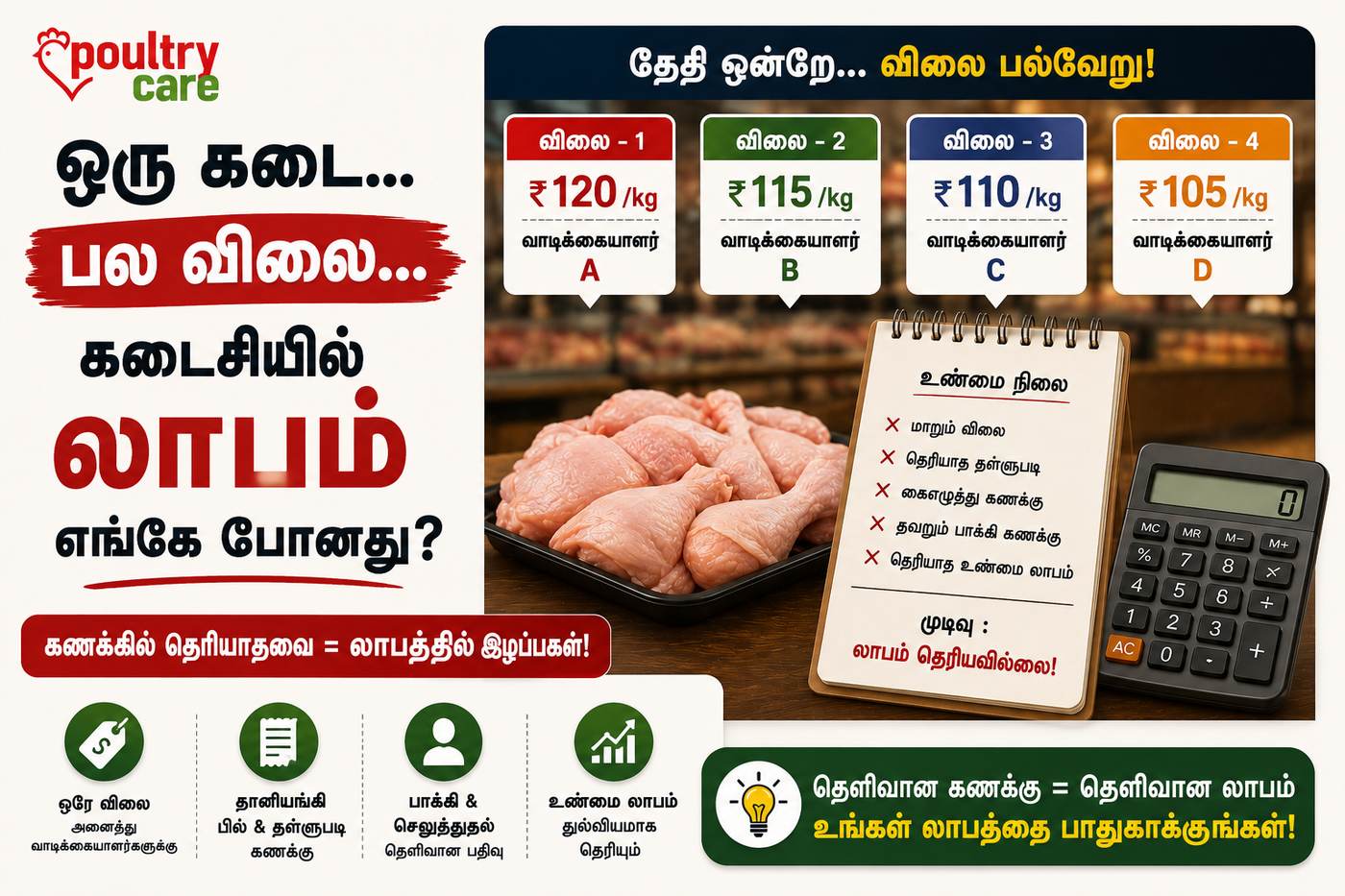
Wrong pricing does not always mean a big mistake. It usually starts with small misjudgments. A slight reduction to close a deal, a quick adjustment to match a competitor, or a decision taken without checking the full cost.
These small actions feel harmless.
But when they are repeated across multiple transactions, they start forming a pattern. Pricing becomes reactive instead of structured.
Over time, this pattern leads to inconsistency.
And inconsistency leads to loss of control.
When Selling Price Does Not Reflect True Cost
One of the most common reasons for profit reduction is when the selling price does not include the full cost. Many traders consider only the purchase price while deciding their selling rate.
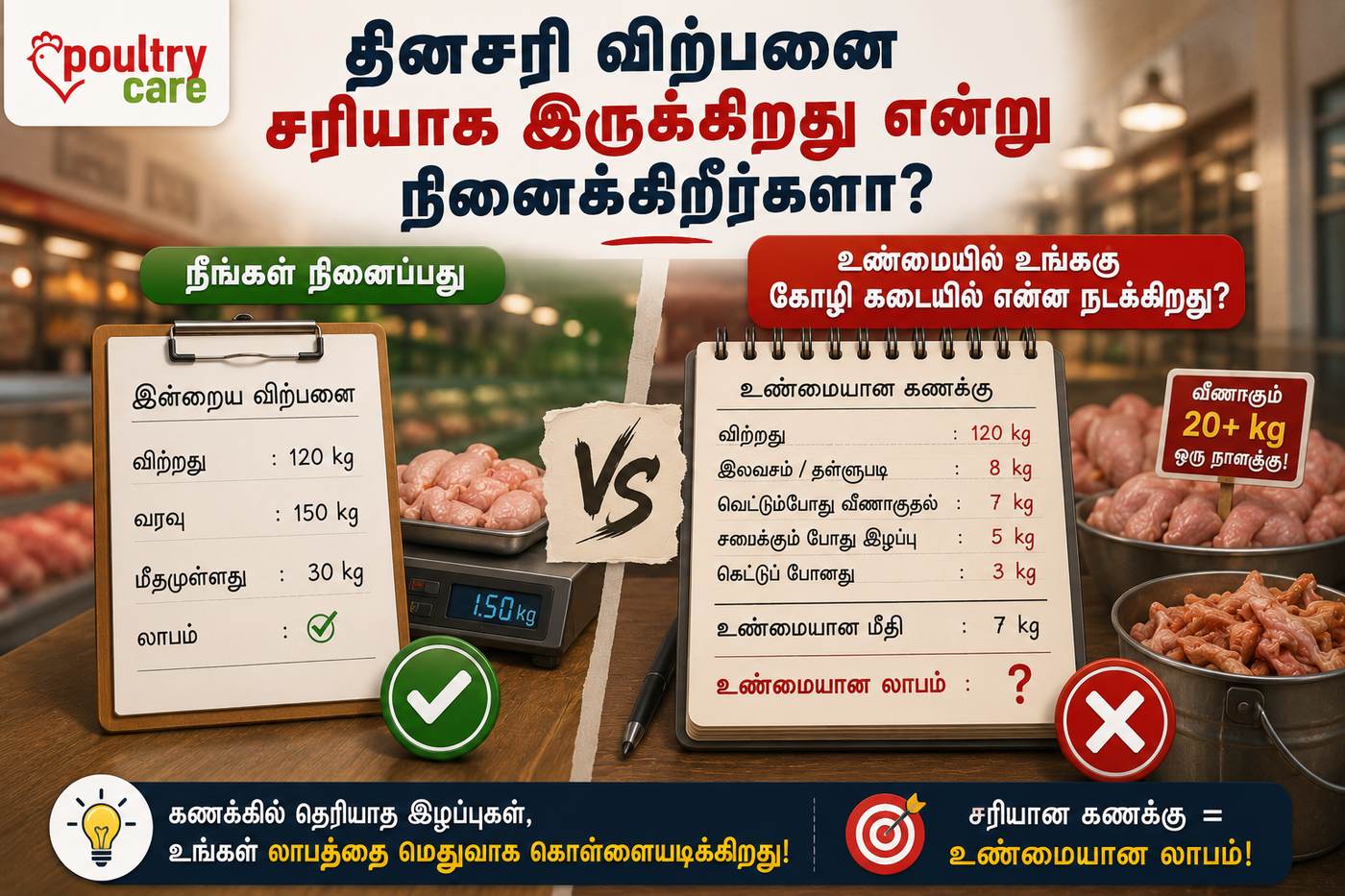
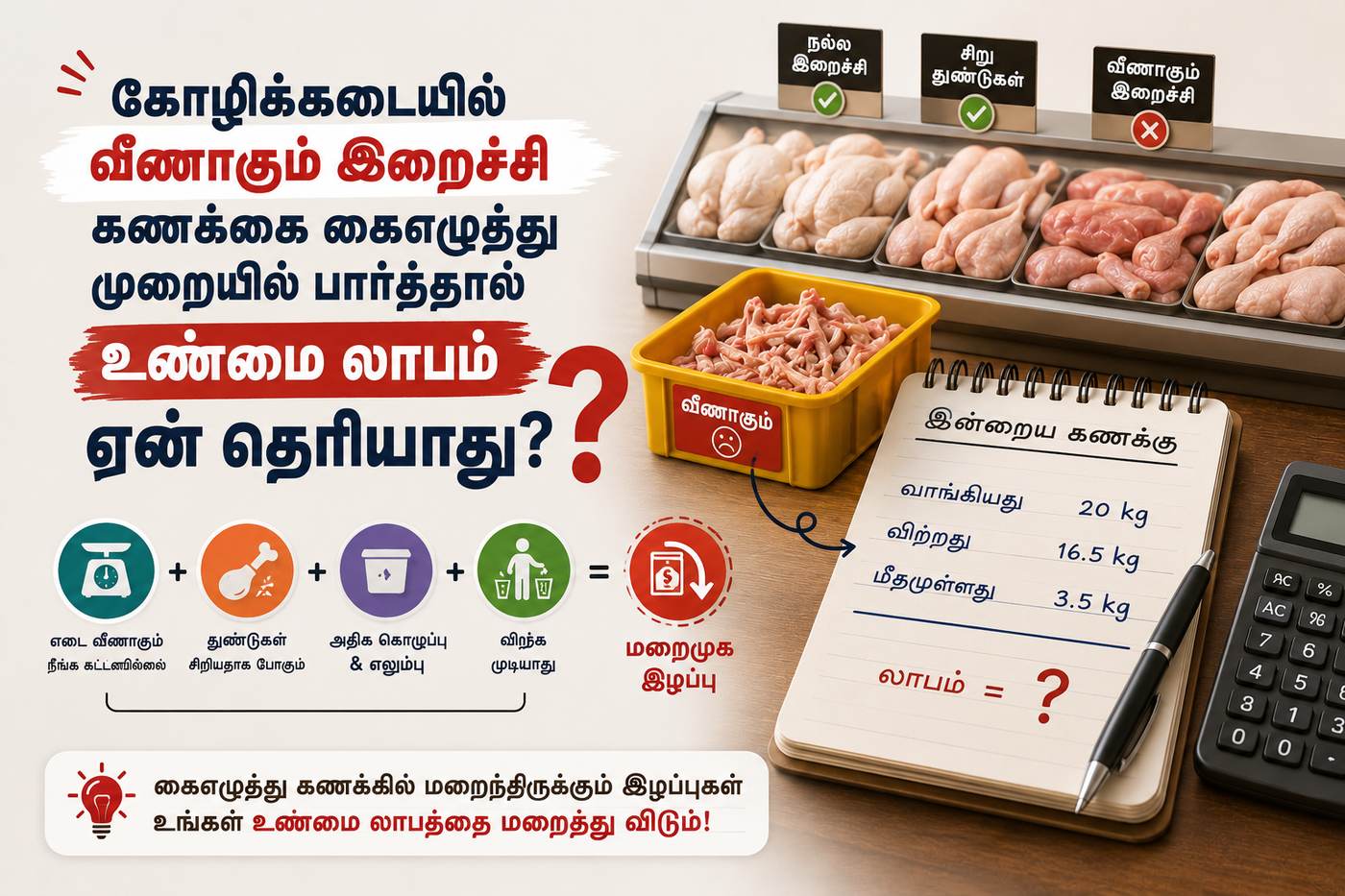
But poultry trading involves more than just buying and selling. Transport, labor, bird loss, weight variation, and daily operational expenses all add to the actual cost.
If these are not included in pricing decisions, the selling price may appear profitable but may actually be below the real cost.
This gap between assumed cost and actual cost is where profit disappears.
The Role of Market Pressure in Wrong Pricing
Market conditions influence pricing heavily. Rates change frequently, and traders feel the need to stay competitive. Customers also negotiate based on current market trends.
In such situations, traders often adjust prices quickly to avoid losing sales.
While this helps in maintaining business flow, it can also lead to wrong pricing if decisions are made without clarity.
Matching the market is important, but ignoring your own cost is risky.
Because every business operates with different cost structures.
What works for one trader may not work for another.
How Inconsistent Pricing Creates Unstable Margins
When pricing decisions are not consistent, margins become unstable. Some deals may generate good profit, while others may barely cover expenses.
This variation makes it difficult to understand overall performance. Traders may feel that business is doing well because sales are happening, but financially, the results are unclear.
Unstable margins create uncertainty.
And uncertainty makes it difficult to plan and grow.
Why Traders Continue With Wrong Pricing
Many traders continue with wrong pricing because the impact is not immediately visible. Transactions are completed, payments are received, and business continues.
There is no instant signal showing that the price was wrong.
Over time, the effect accumulates. Profit reduces gradually, but the reason is not clearly identified.
This delay in feedback makes it difficult to correct the mistake early.
By the time the issue becomes noticeable, it has already affected multiple transactions.
The Difference Between Guessing Price and Knowing Price
There is a big difference between guessing a price and knowing a price. Guessing is based on experience, market observation, and quick judgment. Knowing is based on clarity of cost, margin, and business goals.
When traders guess prices, outcomes become unpredictable. Some decisions work, while others do not.
But when traders know their pricing, decisions become more reliable. They understand the impact of each rate and can adjust confidently.
This shift from guessing to knowing brings control.
How Correct Pricing Improves Confidence and Stability
When pricing is correct and consistent, traders feel more confident in their decisions. They do not need to depend on last-minute adjustments or unnecessary discounts.
They can explain their pricing clearly to customers. Negotiations become smoother. Relationships improve because there is transparency.
At the same time, profit becomes more stable.
This stability reduces stress and helps in planning future growth.
From Reactive Pricing to Planned Pricing
Reactive pricing is driven by immediate situations. Planned pricing is guided by understanding. Moving from one to the other requires awareness and discipline.
Traders need to observe their current pricing patterns. They need to understand where adjustments are happening and why.
Once this awareness is built, they can start making changes.
Pricing becomes more structured. Decisions become more controlled.
And the business becomes more predictable.
Conclusion
In poultry trading, wrong pricing does not always look wrong at the moment. It often feels normal, practical, and necessary. But its impact is gradual and powerful.
Small pricing mistakes, when repeated over time, reduce profit silently.
Traders who do not notice this pattern continue working harder without seeing the expected results.
But those who bring clarity into pricing gain control over their business. They understand their costs, protect their margins, and make better decisions.
At the end, pricing is not just about matching the market.
It is about understanding your business well enough to ensure that every sale contributes to profit.
Because the trader who controls pricing controls profit.
And the trader who ignores it keeps losing without realizing why.