
When Sales Are Strong but Savings Stay Weak
In a growing town market, a poultry retail shop had everything that looked successful from the outside. Customers trusted the shop. Daily sales were consistent. Weekends were especially busy. The cutting table rarely stayed idle.
The owner worked long hours and believed business was progressing well. However, one concern continued to bother him. Despite steady sales, profits did not improve month after month.
Expenses appeared normal. Purchase rates were competitive. Staff numbers were manageable. Still, cash reserves were not growing.
Like many retailers, he assumed the reason was market competition or fluctuating chicken prices. But after closely observing daily operations, a different reality emerged.
The problem was not visible in cash flow.
It was hidden in weight flow.
The shop was losing 2.86 percent weight every day without realizing it.
Understanding the Shop’s Daily Routine
The retailer purchased dressed poultry every morning from a trusted supplier. Average daily purchase quantity stayed around one hundred and forty kilograms.
Processing started immediately after arrival. Birds were cleaned, cut into portions, displayed for customers, and sold throughout the day. Remaining stock was refrigerated overnight.
The owner maintained purchase invoices carefully and tracked daily sales revenue. However, one comparison had never been made — purchase weight versus billed sale weight.
When this comparison was finally done, the numbers told a surprising story.
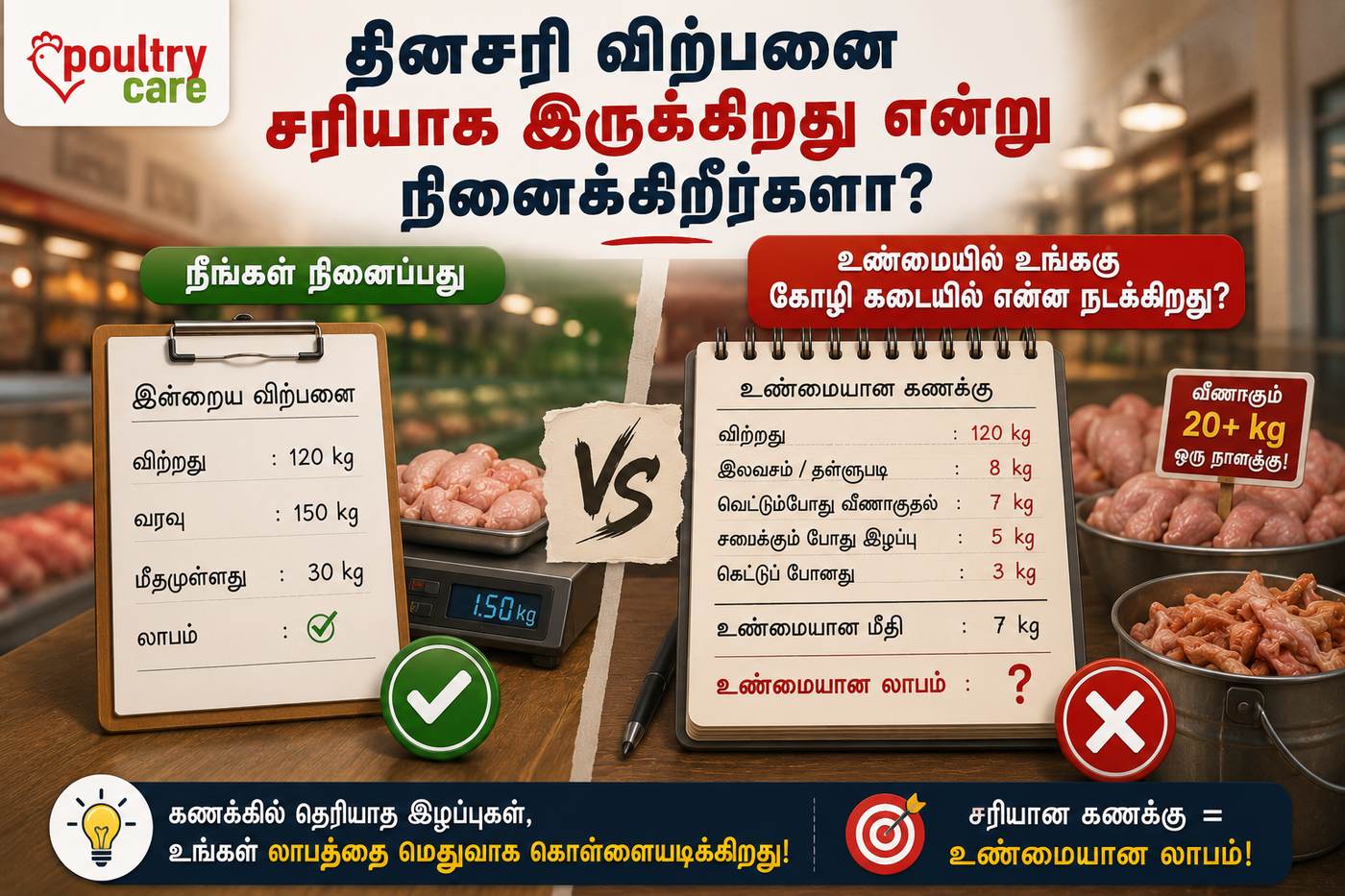
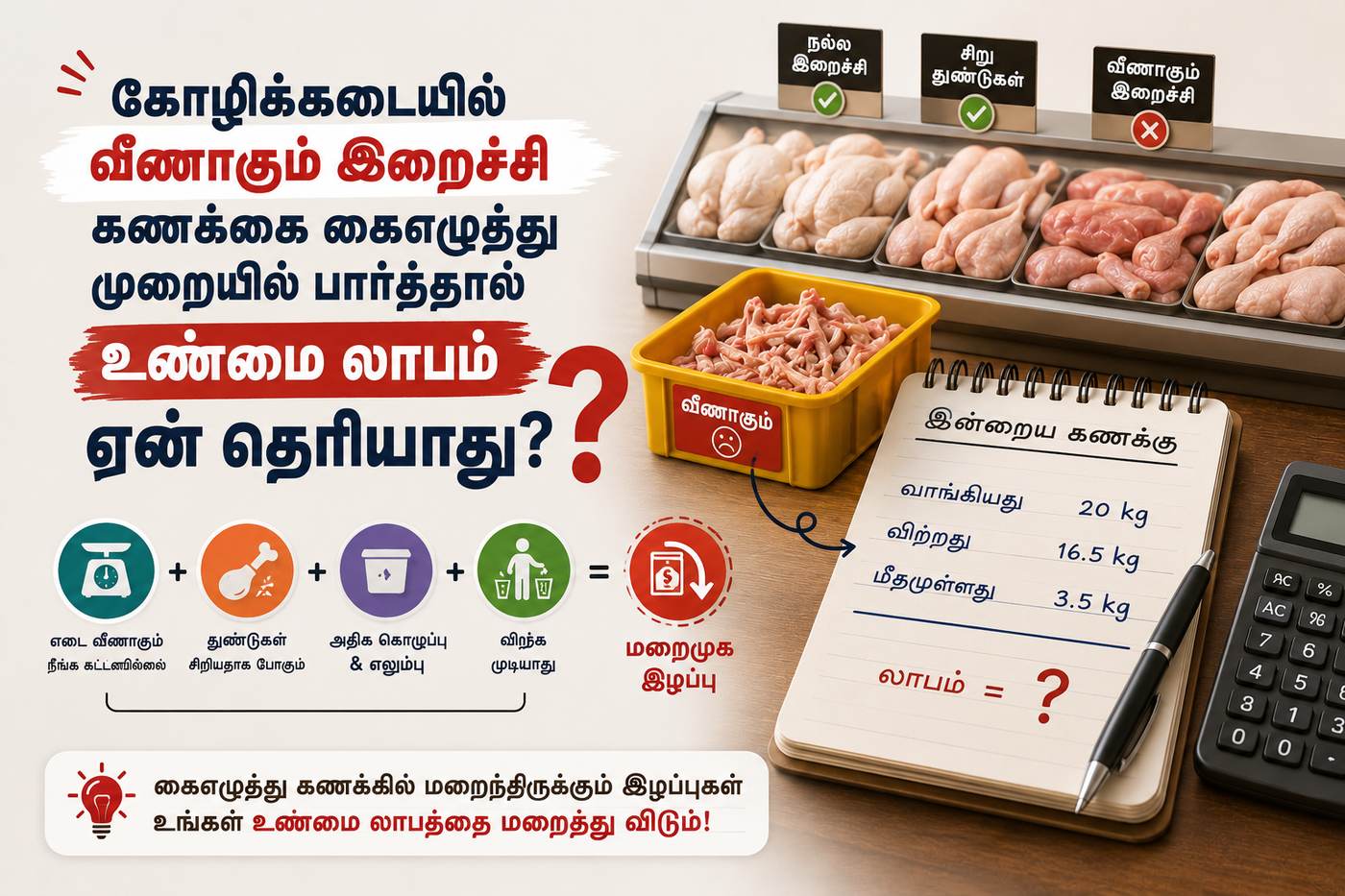
Out of one hundred and forty kilograms purchased daily, only about one hundred and thirty-six kilograms were sold on average.
Nearly four kilograms disappeared each day.
At first, this difference seemed minor. But when calculated as a percentage, it equaled 2.86 percent shrinkage.
That small percentage explained the missing profit.
Why a Small Percentage Creates a Big Financial Impact
In poultry retail, margins are usually tight. Even a small reduction in sellable weight changes profitability significantly.
The retailer paid for full purchase weight but earned income only from reduced sale weight. This automatically increased the real cost per kilogram.
Without knowing it, the shop was selling at a lower margin than expected.
Over a single day, the loss felt insignificant. Over a month, it became noticeable. Over a year, it represented a major financial leakage equal to several weeks of earnings.
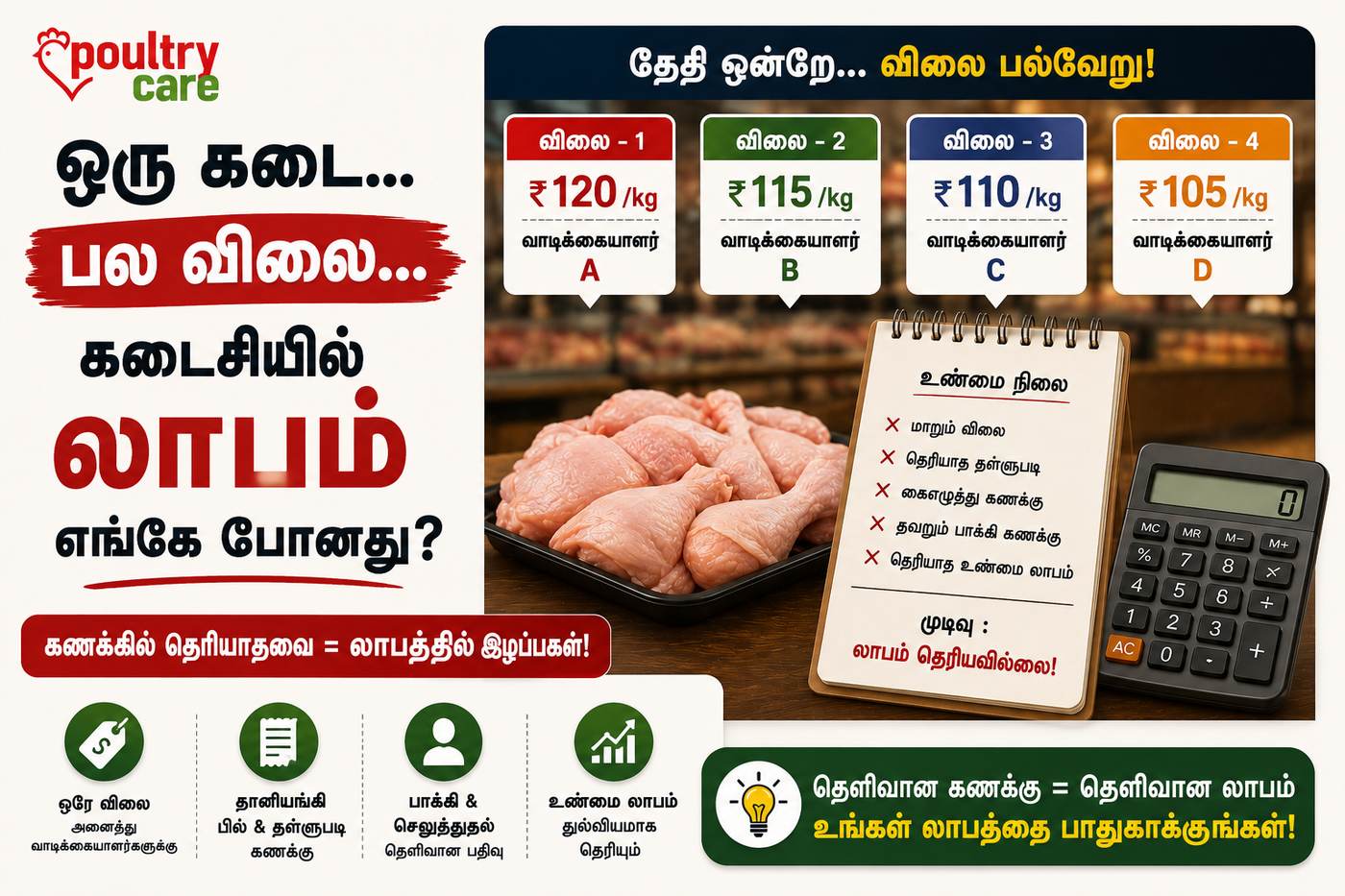
This situation is common because shrinkage does not appear as an expense entry. It hides inside normal operations.
Retail owners often try to increase profit by attracting more customers or adjusting prices, while the real solution lies in controlling operational loss.
Where the Weight Was Actually Lost
Detailed observation revealed that shrinkage occurred across multiple stages rather than from one major mistake.
Processing practices were the first contributor. Excess washing during cleaning removed additional moisture weight. Staff believed more washing improved product freshness, but it unintentionally increased loss.
Cutting methods varied between workers. Some trimmed aggressively to improve visual presentation, unknowingly removing sellable meat.
Storage conditions also played an important role. Frequent opening of refrigeration units caused temperature fluctuations. Meat exposed repeatedly to air lost moisture gradually.
Display handling added further reduction. Products remained uncovered during busy hours, accelerating drying.
Overnight storage contributed additional shrinkage as moisture evaporation continued even when product quality remained acceptable.
Each activity caused a small loss. Together, they created measurable daily shrinkage.
The Moment Awareness Changed Operations
The turning point came when the retailer began measuring weight movement daily.
No major investment was made. No complex system was introduced. Only consistent recording started.
Purchase weight was noted every morning. Total billed weight was calculated at closing time.
Within days, staff behavior changed naturally. Cutting became more careful. Washing reduced to necessary levels. Storage doors were handled more responsibly.
Shrinkage percentage began decreasing gradually.
The owner realized an important lesson.
People improve performance when results become visible.
Measurement created awareness, and awareness created discipline.
Lessons Retail Owners Can Learn from This Case
This case reflects challenges faced by many poultry retailers who unknowingly accept shrinkage as normal.
The first lesson is that profit problems often originate from operations rather than market conditions.
The second lesson is that small daily losses accumulate into significant yearly impact.
The third lesson is that measurement brings clarity without increasing workload.
The fourth lesson is that staff cooperation improves when goals become measurable instead of verbal instructions.
Most importantly, retail management begins when weight is monitored with the same seriousness as cash.
Successful retailers manage kilograms as carefully as currency.
From Traditional Selling to Structured Retail Management
Traditional poultry shops focus mainly on buying and selling. Modern retail success depends on managing the process between those two activities.
When shrinkage becomes measurable, pricing decisions improve because true cost is understood. Purchase planning becomes smarter. Overstocking reduces. Product handling improves.
The retailer in this case did not increase selling price or expand shop size to improve profit. Efficiency alone created improvement.
This shift represents the evolution from operating a shop to managing a retail business.
Retail growth often begins internally before expanding externally.
Conclusion: The Profit You Lose May Already Be Inside Your Shop
A daily loss of 2.86 percent does not create immediate alarm. Customers still arrive. Sales still happen. Business continues normally.
But poultry retail is built on weight accuracy. Every kilogram lost before billing directly reduces earnings.
This case study shows that many profit challenges are not caused by poor sales but by unnoticed operational loss.
Once weight movement becomes visible, improvement becomes possible.
Before closing your shop today, ask yourself one question.
Do you clearly know how much weight your shop loses every day?
That answer may reveal opportunities already waiting within your existing business.
Retail success is not only about increasing sales volume. It is about protecting the value you already purchase.
When loss becomes measurable, profit becomes manageable.