
You monitor feed cost carefully.
You track FCR seriously.
You negotiate chick price strongly.
You calculate mortality percentage daily.
But are you giving the same importance to stock control?
Many poultry farmers focus heavily on production performance but underestimate the financial power of proper poultry stock control. They believe stock is just counting birds or bags of feed. But in reality, stock control is direct money control.
Every bird standing in your shed is money.
Every feed bag in your godown is money.
Every medicine bottle on your shelf is money.
If stock is not controlled properly, money slowly leaks without noise.
Let us understand how stock control actually saves money in poultry business.
Stock Is Working Capital Standing in Your Shed
In poultry business, cash does not remain in bank for long. It converts into chicks, feed, medicines, labor, electricity, and birds growing in sheds.
That means your live bird stock and feed stock are your working capital.
If you do not know exact stock position daily, you do not know how much money is currently tied up in operations.
Many farmers think profit comes only from selling birds at good price. But profit also depends on how efficiently you manage capital between placement and sale.
If stock is higher than expected, your money is blocked longer.
If stock is lower than expected, you may miss market opportunities.
Clear poultry inventory management gives visibility. Visibility gives control. Control protects cash flow.
Without visibility, you are managing blindly.
Preventing Silent Leakages
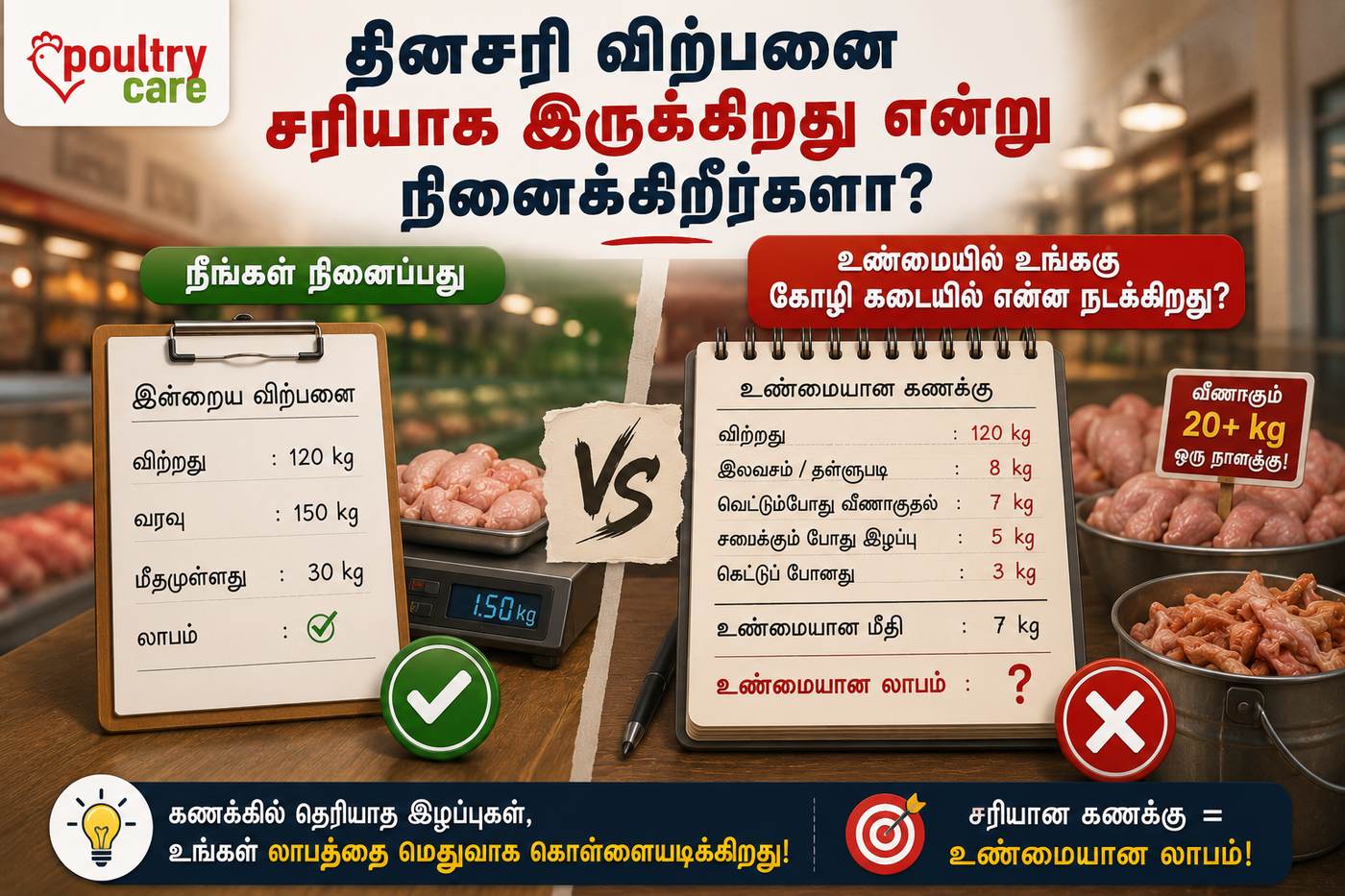
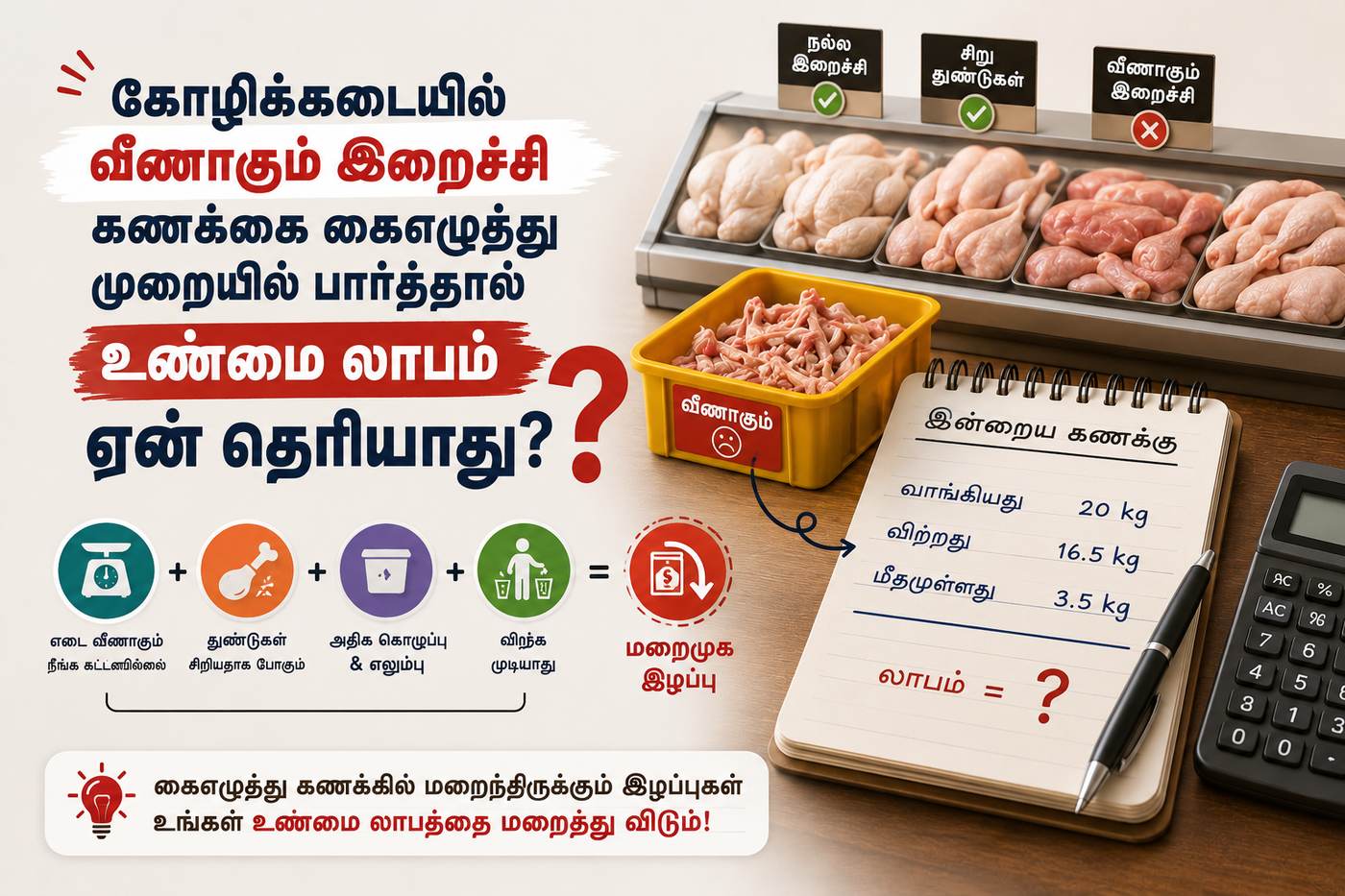
Stock mismatch is one of the biggest silent losses in poultry business.
It does not happen in one big event. It happens slowly.
Unrecorded mortality.
Delayed sales entry.
Unaccounted transfers.
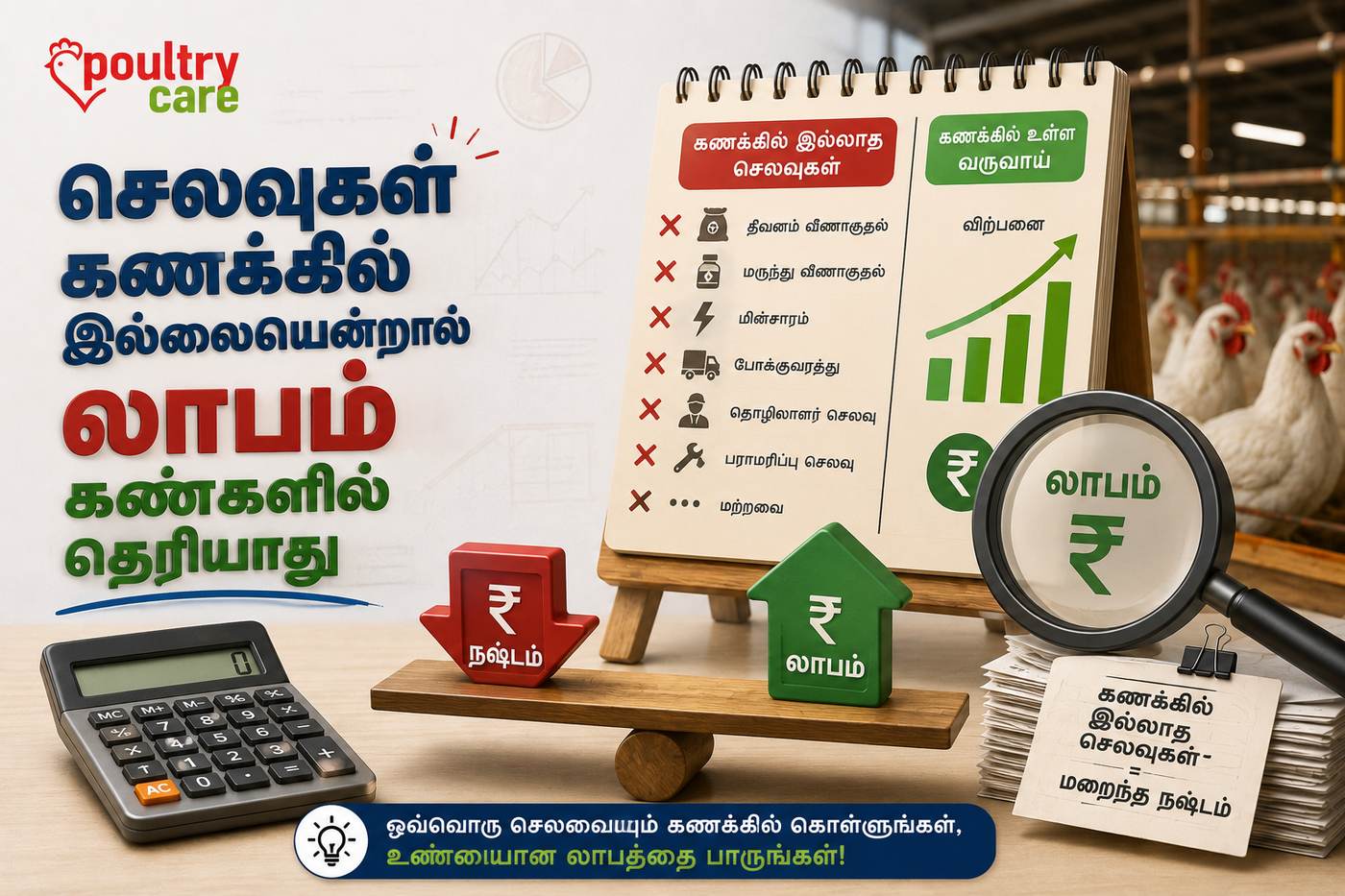
Feed wastage not monitored.
Medicine usage not recorded properly.
Each small gap may look harmless. But when multiplied across sheds and cycles, the financial impact becomes serious.
For example, a small difference of 40 birds per cycle may not look alarming. But calculate that across 10 cycles a year. Then multiply by average selling weight and price.
The number becomes uncomfortable.
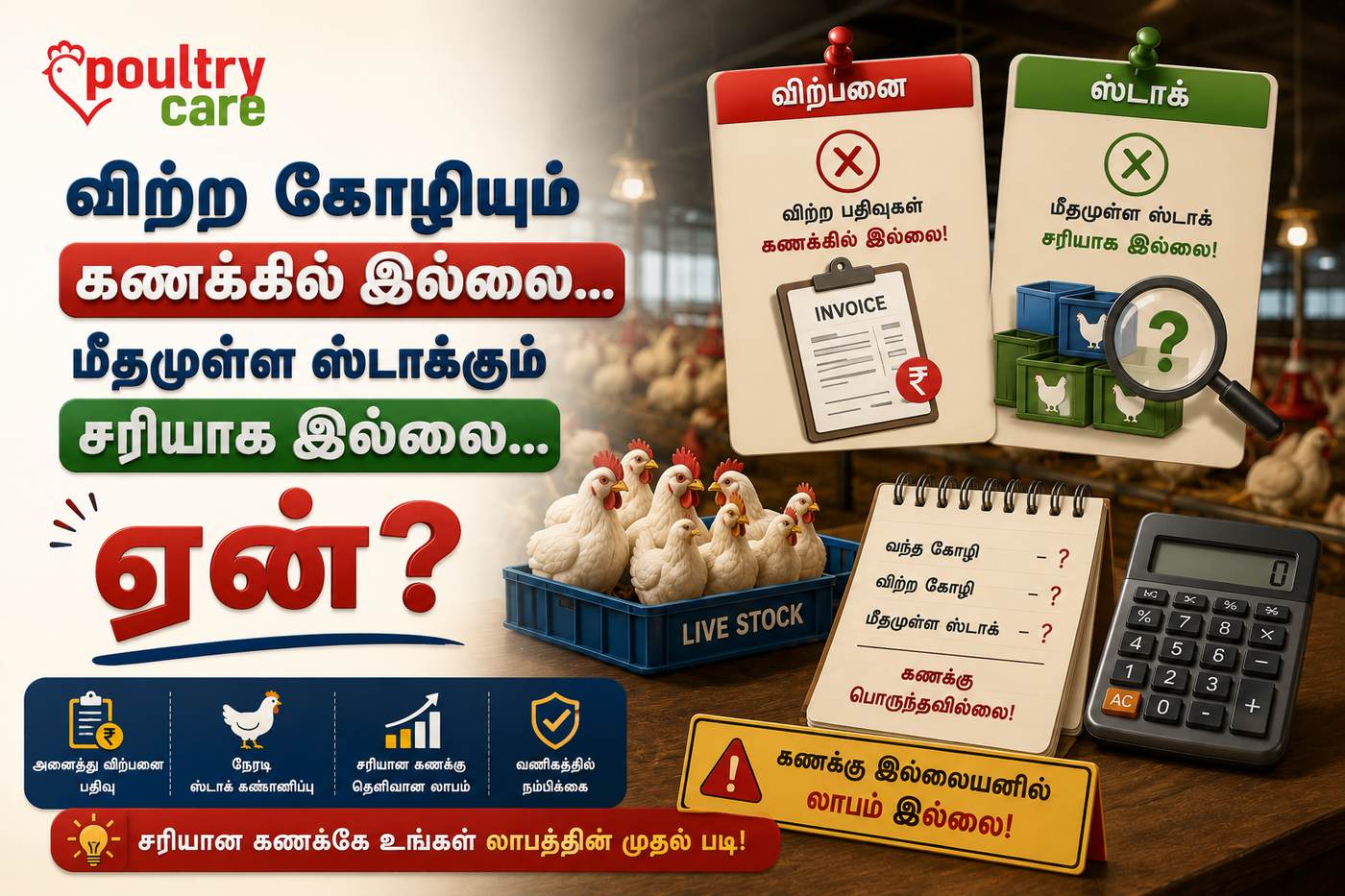
Proper poultry stock control means regular reconciliation between physical stock and recorded stock. When done consistently, leakage reduces automatically.
You cannot improve what you do not measure.
Better Planning Reduces Emergency Expenses
When stock numbers are unclear, planning becomes weak.
You may suddenly realize feed stock is low and purchase urgently at higher rate.
You may overstock feed and face storage losses.
You may commit birds to buyer and later scramble to arrange shortage from market.
Emergency decisions cost money.
But when poultry inventory management is updated daily, planning becomes smooth.
You know exact feed requirement based on live bird count.
You know expected market-ready volume.
You know future placement schedule.
With this clarity, you negotiate better. You avoid last-minute purchases. You reduce panic decisions.
Stock control saves money not only by preventing loss, but by preventing poor planning.
Market Timing Becomes Stronger
Poultry trading is sensitive to daily price movement.
If you know your exact live stock and weight category distribution, you can decide whether to sell today or wait.
If price improves suddenly and you know exactly how many birds are ready, you can dispatch immediately and maximize revenue.
If price drops and you know holding capacity accurately, you can delay sale strategically.
Without clear stock control, you hesitate. By the time you verify numbers, opportunity is gone.
Stock awareness gives negotiation power.
When you speak to buyers with confidence about available volume, delivery schedule, and consistency, your business position strengthens.
Confidence backed by numbers increases credibility.
Feed Stock Control Directly Impacts Profit
Feed cost is the largest expense in broiler and layer operations.
Even small mismanagement in feed stock creates financial pressure.
If feed consumption is not aligned with actual bird count, either wastage happens or shortage occurs.
Without proper feed inventory tracking:
Extra bags may disappear unnoticed.
Over-issue of feed may inflate FCR artificially.
Old stock may expire or spoil.
Farmers spend energy improving feed conversion ratio but ignore feed stock discipline.
Proper poultry stock control ensures feed issued matches bird population. It reveals abnormal consumption patterns early.
Early detection saves money.
Reducing Internal Confusion and Stress
Many poultry business owners spend unnecessary time verifying numbers.
“How many birds are actually there?”
“Is this feed usage correct?”
“Why is physical stock not matching records?”
Uncertainty creates tension between owner and staff.
When stock records are transparent and updated regularly, confusion reduces. Team accountability improves.
Clear system reduces suspicion.
Less internal friction means more focus on growth and market expansion.
Stock control saves not only money but also mental energy.
Integration Across Poultry Segments
Modern poultry businesses are not limited to one activity. Many operate across multiple segments such as broiler farms, breeder farms, hatchery units, feed mills, processing plants, and trading divisions.
In such cases, stock control becomes even more important.
If hatchery output does not match placement records, planning collapses.
If feed mill production is not aligned with farm requirement, either surplus or shortage occurs.
If processing capacity is not matched with live bird availability, inefficiency increases.
Integrated poultry operations demand integrated stock visibility.
When stock flows smoothly between departments with accurate data, cost control improves automatically.
From Guesswork to Structured Discipline
Traditional poultry businesses often rely on experience and manual tracking. That may work on small scale. But as scale increases, guesswork becomes expensive.
Structured poultry inventory management transforms business from reactive to proactive.
Daily updated stock numbers allow you to:
Plan feed accurately.
Schedule sales properly.
Control mortality impact.
Prevent internal leakage.
Strengthen negotiation with buyers.
Stock control is not extra work. It is protective work.
It is like locking your warehouse door every night. It does not generate profit directly, but it prevents loss.
And preventing loss is equal to increasing profit.
The Real Question
Most farmers focus on increasing sales price. That is important. But equally important is protecting existing margin.
Ask yourself today:
Do I know exact live bird stock right now?
Do I reconcile physical and recorded stock regularly?
Do I track feed inventory accurately?
Do I detect small mismatches early?
If answers are uncertain, money may be leaking silently.
In poultry business, margin is often tight. Small savings create big yearly difference.
Stock control may look simple, but its financial impact is powerful.
When stock is visible, cash flow becomes predictable.
When inventory is controlled, wastage reduces.
When numbers are accurate, decisions become confident.
And confident decisions build stable profit.
Stock control is not about counting birds.
It is about counting money properly.
If you strengthen poultry stock control today, you strengthen your financial foundation tomorrow.
That is how disciplined inventory management quietly saves money in poultry trading and farming operations.