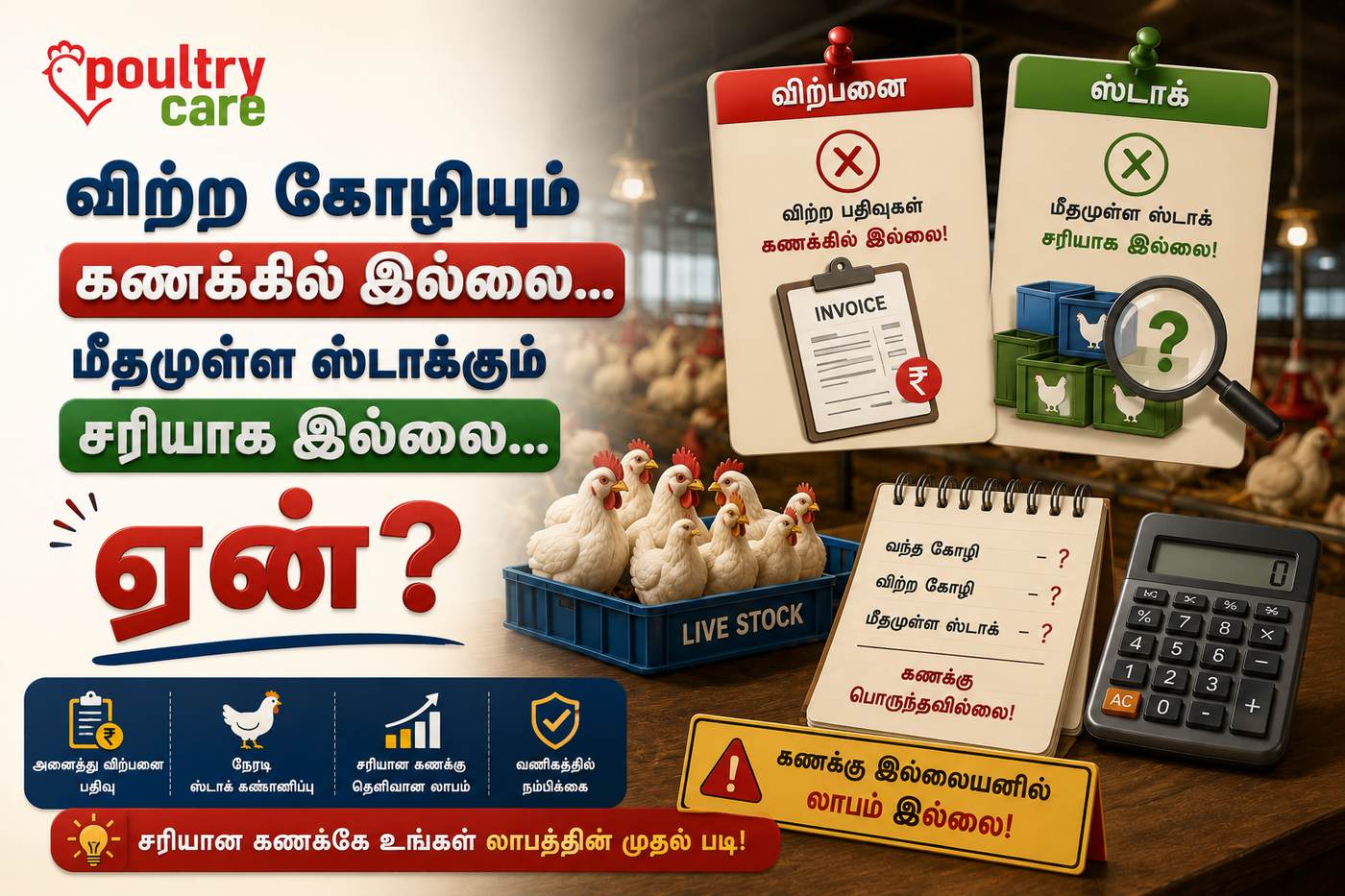

If you ask many poultry traders one simple question — “How many birds do you have right now?” — the answer is often an estimate, not a certainty.
Some say approximately.
Some check notebooks.
Some call supervisors.
And by the time the number is confirmed, the situation has already changed.
Birds rarely disappear suddenly. They slowly go missing through small gaps in daily operations. These gaps are not always theft or major mistakes. Most of the time, they are simple coordination failures that happen between farm, loading, transport, and delivery.
Understanding where birds go missing is the first step toward protecting profit.
The Gap Between Farm Count and Loading Count
Everything usually starts correctly at the farm level. Birds are counted during growing, mortality is recorded, and the expected quantity for sale is known.
But the moment loading begins, pressure increases.
Workers focus on speed. Vehicles must leave on time. Buyers are waiting. During this rush, counting accuracy reduces. Birds may be loaded cage by cage without final verification.
Sometimes loading teams assume numbers instead of confirming them. A cage counted earlier may contain fewer birds due to stress or movement. Small variations begin here.
If loading count is not verified carefully, the first mismatch enters the system.
And once the starting number is wrong, every later calculation becomes wrong.
Transport Creates Invisible Changes
Transport is one of the most underestimated stages in poultry trading.
Birds experience heat, movement, vibration, and stress during travel. Some may lose weight. Some may become weak. Occasionally mortality occurs.
But the real issue is documentation.
Drivers focus on reaching the destination quickly. Rarely does anyone track condition changes during the journey. When birds arrive, only delivery numbers matter, not what happened during transport.
Without visibility during transit, differences between dispatch and delivery become arguments instead of data.
Transport is not just movement. It is a critical control point.
Delivery Counting Is Not Always Accurate
At the customer location, another counting process begins. And this is where confusion often increases.
Buyers may recount birds differently. Counting methods vary from farm to market. Sometimes counting happens while unloading quickly, leading to estimation instead of accuracy.
If delivery count differs from loading count, discussions start immediately.
Was the farm count wrong?
Was loading incorrect?
Did transport cause loss?
Did counting methods differ?
Because earlier stages were not clearly tracked, nobody can confidently answer.
The missing birds become a mystery instead of a measurable event.
Manual Recording Creates Delayed Truth
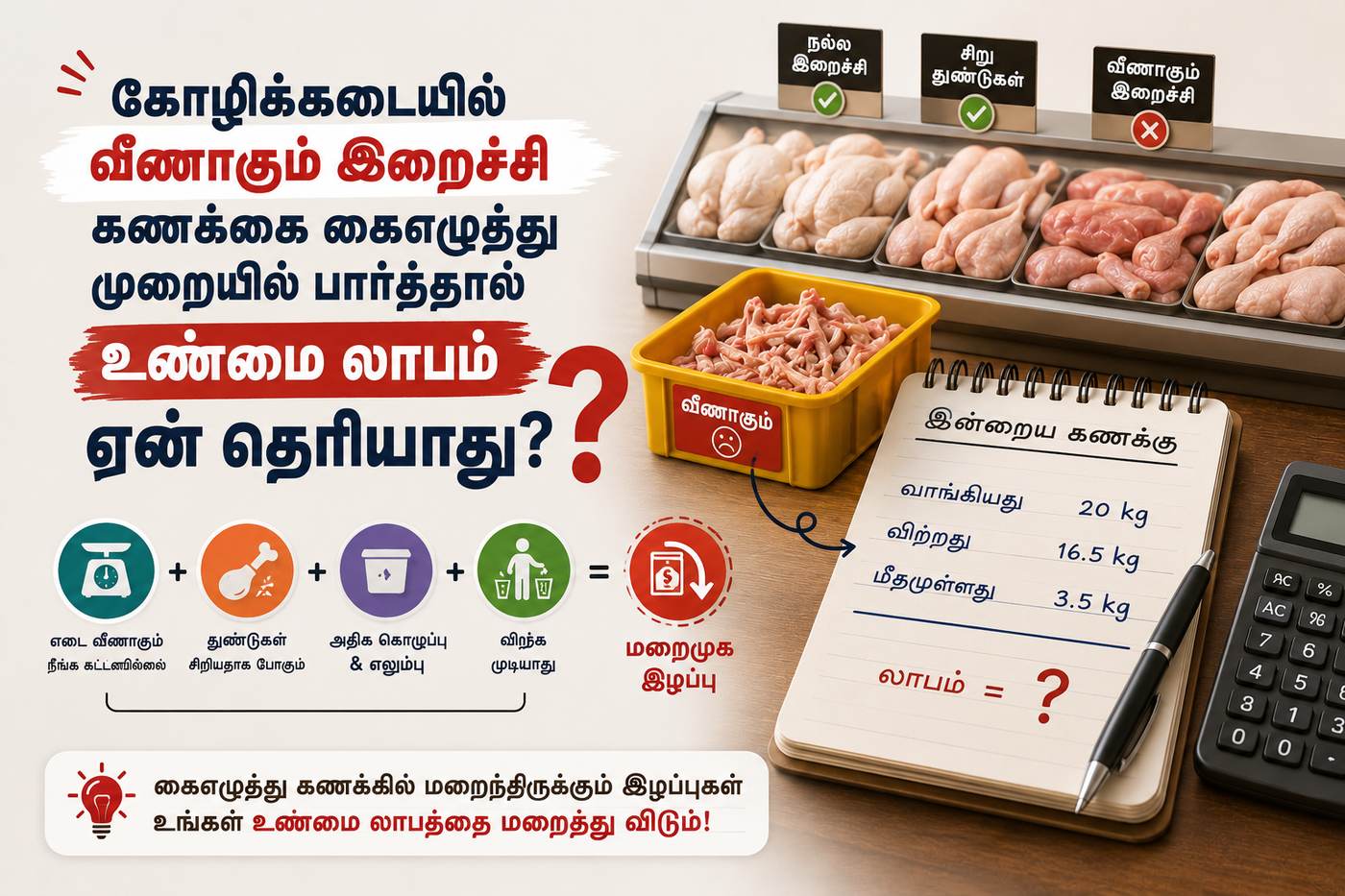
Many poultry operations still depend on handwritten notes or delayed entries.
Mortality recorded later.
Transfers updated at the end of the day.
Sales entered after delivery confirmation.
When records are updated late, reality and documentation move in different directions.
By the time accounts are checked, the exact moment of loss cannot be identified. Everything merges into one adjustment entry.
This is why live bird stock control becomes reactive instead of proactive.
Small Daily Differences Become Big Financial Impact
One or two birds missing may not feel serious. But poultry trading works on volume.
Small daily differences accumulate silently.
Over weeks and months, these gaps translate into unexplained stock shortages, customer disputes, and reduced confidence in internal numbers.
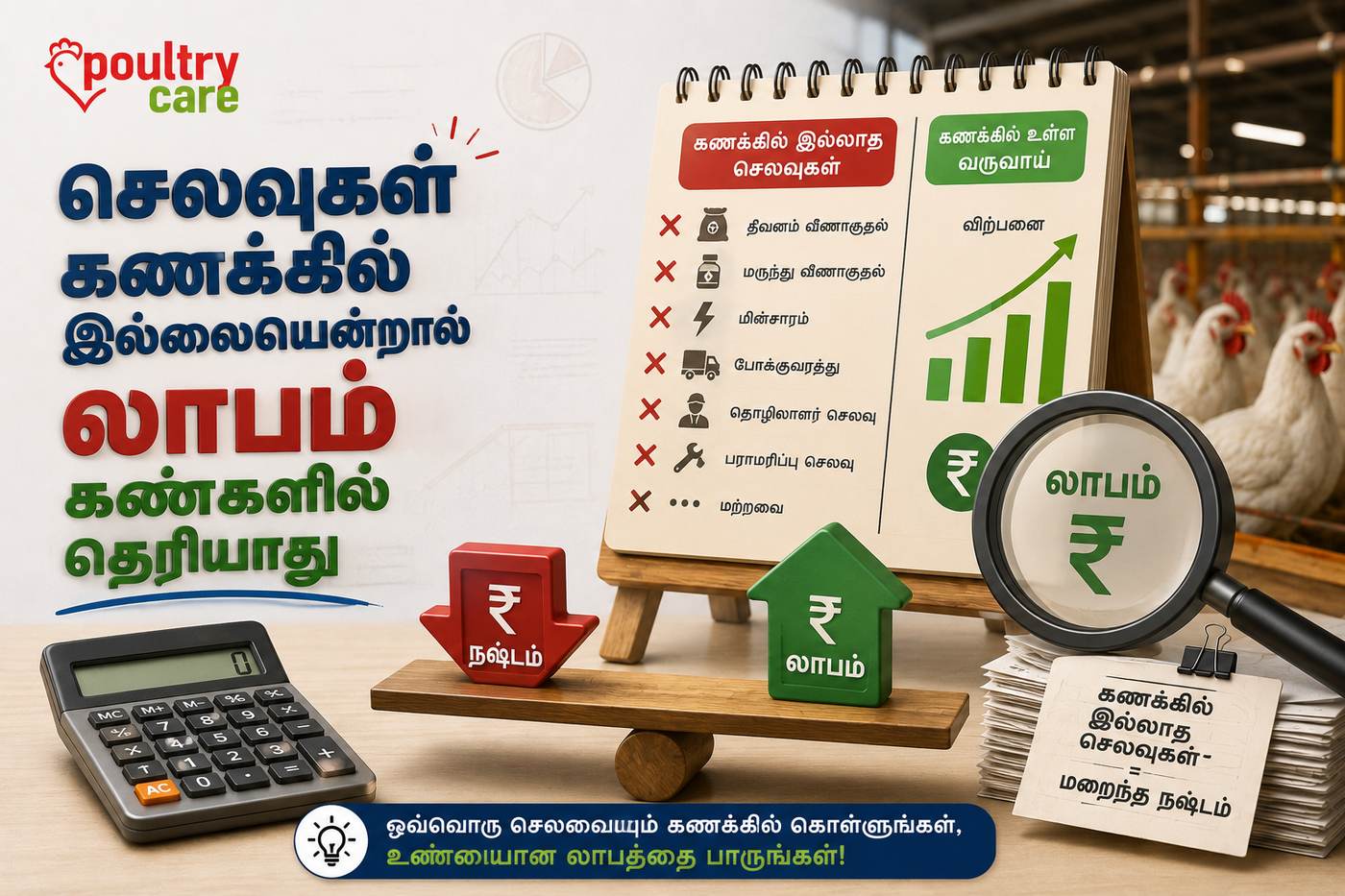
Many traders believe losses come only from market price fluctuations. In reality, operational leakage often eats profit quietly.
Profit protection begins with visibility.
Visibility Creates Accountability
When every stage is clearly tracked, responsibility becomes clear.
Farm team knows dispatched quantity.
Loading team confirms actual numbers.
Transport team records journey details.
Delivery team validates final count.
When visibility improves, blame reduces.
Instead of asking “Where did birds go?” the business starts asking “How do we prevent this next time?”
That shift changes operations completely.
Building a Culture of Daily Tracking
Tracking is not about complex systems. It starts with discipline.
Daily confirmation of bird count.
Immediate recording of mortality.
Verification during loading.
Consistent counting at delivery.
When teams understand that accurate numbers protect everyone, participation increases.
Tracking should feel like support, not supervision.
Because accurate stock gives confidence to traders, managers, and customers alike.
Final Thought
Birds do not truly go missing.
Information goes missing.
Every loss usually begins as a small unnoticed difference between reality and recording. When businesses rely on assumptions instead of visibility, confusion replaces control.
The goal is simple — know exactly where birds are at every stage.
When visibility improves, arguments reduce.
When accuracy improves, trust increases.
And when trust increases, profit becomes predictable.
In poultry trading, success is not only about selling birds.
It is about knowing where every bird stands — from farm to final delivery.