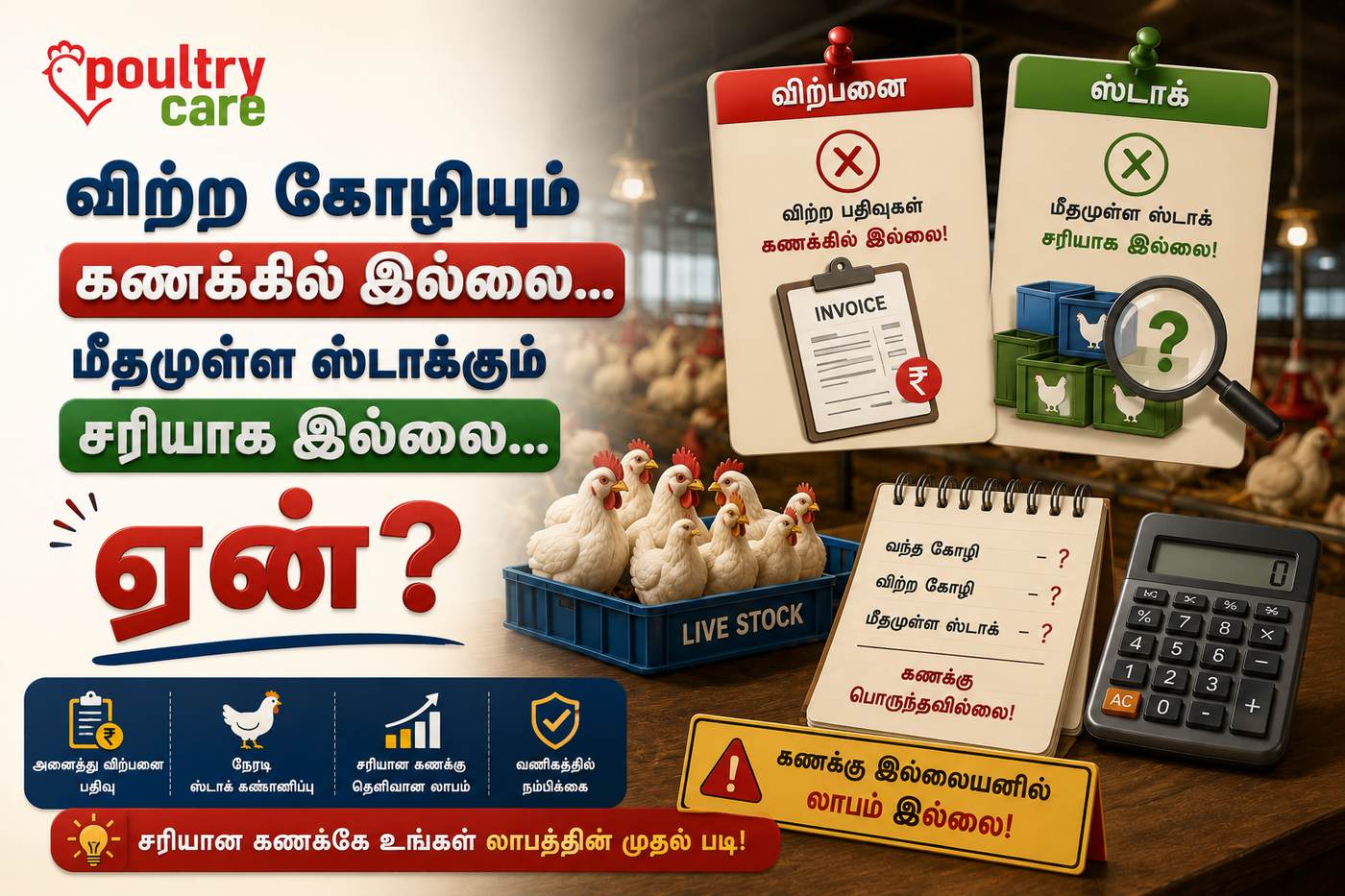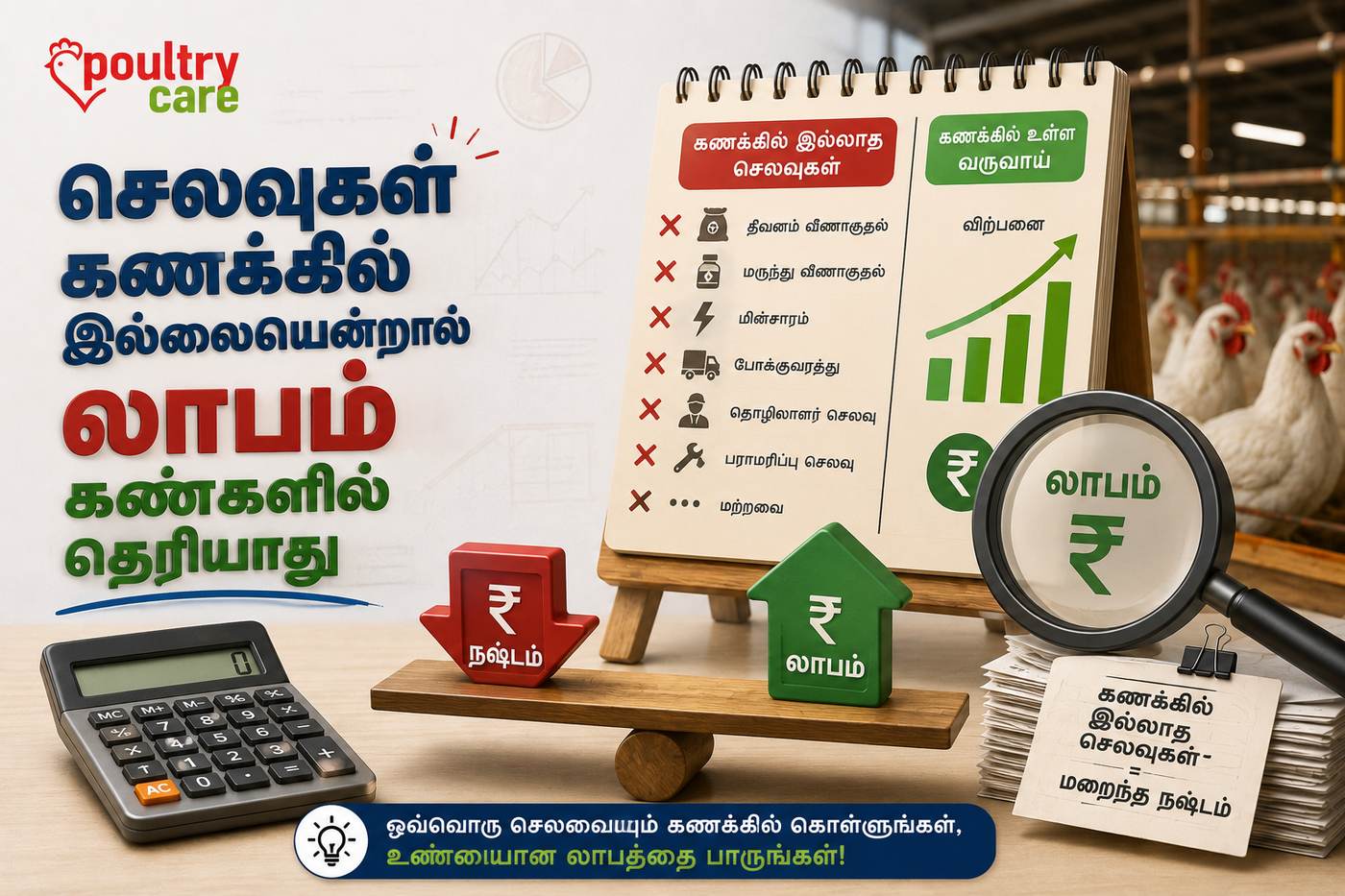

In poultry trading, most farmers believe their job is finished once birds are caught, counted, and loaded into the vehicle. On paper everything looks correct — bird count matches, average weight is noted, and dispatch time is recorded. But in real field conditions, this is exactly where control often starts breaking. The journey between farm gate and buyer point silently decides whether your profit stays safe or leaks away.
From years of working closely with poultry farmers, traders, and integration teams, one pattern appears again and again. Losses after loading are rarely caused by one big mistake. They happen because of small control gaps — missed checks, unclear responsibility, verbal communication, and no tracking discipline. Each small gap eats margin. By the time birds reach the destination, weight loss, mortality, mismatch counts, and payment disputes appear.
This guide explains in a practical farm-level tone where control breaks after loading and how poultry farmers can rebuild strong farm-to-sale control without depending on complicated systems. What matters most is discipline, visibility, and documented movement.
The Moment Birds Leave the Shed — The First Invisible Risk Zone
Loading time is usually rushed. Catching teams want to finish fast, vehicles are waiting, and farm teams are under pressure to dispatch on time. In this rush, the first break in control happens — verification weakness.
Bird count is often taken cage-wise or crate-wise, but not cross-verified. Average weight is assumed from earlier sampling instead of last-hour sampling. Weak birds are mixed with strong birds. Damaged crates are still used. Door tags are not sealed properly. All these look like small operational shortcuts, but they become trade disputes later.
Another hidden break happens when the responsibility shifts unclearly. Before loading, the birds belong to the farm manager’s control. After loading, who owns the accountability — farm, trader, transport contractor, or supervisor? When responsibility is not clearly handed over with documented confirmation, control becomes verbal. Verbal control never protects money.
A strong farm-to-sale process treats loading as a control transfer point, not just a dispatch activity. The farm must record final count, final sample weight, crate count, vehicle number, driver name, dispatch time, and condition remarks at that exact moment. That is the control anchor. Without that anchor, every later discussion becomes an argument instead of a record.
Transport Movement — Where Visibility Drops and Losses Grow
Once the vehicle leaves the farm, visibility becomes weak. This is the second major break point. Many poultry traders still operate with phone-call tracking. They call the driver and ask, “Where did you reach?” That is not control — that is guesswork.
Transport conditions directly affect live bird value. Heat stress, over-stacking, airflow blockage, long stoppages, and rough driving increase mortality and shrink weight. Even a one-hour delay in hot weather can change the final delivered weight significantly. But if movement is not tracked with time stamps and route awareness, nobody can prove where the loss happened.
Another common break is route deviation. Drivers sometimes take longer routes to combine trips, refuel, or manage personal stops. Each unscheduled stop increases bird stress. Without movement visibility, farmers only see the final effect, not the cause.
Control during transport does not require expensive technology to begin with. Even basic structured reporting — dispatch time, mid-route check call, arrival gate time — builds a control chain. When every movement event is recorded, disputes reduce because facts replace assumptions.
Transport is not just logistics — it is value preservation. Birds are live assets in motion. Treating them like static goods is a costly mindset mistake.
Arrival Point Confusion — Where Count and Weight Disputes Start
At the buyer point, another control break appears — receiving discipline. Many losses happen not during travel, but during unloading and receiving. When receiving teams are not aligned with dispatch records, mismatch stories begin.
Crates may be opened before counting. Birds may be mixed with other loads. Weak birds may be separated without record. Weighing may be delayed. Sometimes weighing machines differ from farm machines. Even small scale variation changes payment outcome.
In field reality, if dispatch records are weak and receiving records are different, negotiation replaces measurement. Negotiation always reduces farmer advantage.
A controlled farm-to-sale chain ensures that receiving is treated as a mirror of dispatch. Same crate count, same batch identity, same load reference, same time record. When both sides speak using the same data sheet, trust increases and payment cycles become faster.
Control does not mean mistrust. Control means clarity. Clarity protects both seller and buyer.
The Human Factor — Where Process Breaks Without Bad Intention
Many poultry control failures are not caused by cheating. They are caused by human habit. Teams rely on memory instead of records. Supervisors assume instead of verifying. Drivers forget to report. Catching teams rush. Traders multitask. Each person believes the other person recorded the detail.
This shared assumption culture creates blind spots. In poultry trading, blind spots equal money loss.
Field experience shows that when farms introduce simple written movement logs and role-based confirmation, behavior changes automatically. People become more careful when they sign records. Responsibility becomes visible. Errors reduce without conflict.
Training is also important. Catching teams and loading supervisors must understand that their accuracy affects farmer profit, not just daily work completion. When teams understand the business impact, discipline improves.
Control systems fail when they are designed only for office use. They succeed when they are designed for field behavior.
Rebuilding Farm-to-Sale Control with Practical Discipline
Improving control after loading is not about adding complexity. It is about adding structured visibility. Start with dispatch clarity. Every load must leave the farm with a complete dispatch record created at the loading point, not later in the office.
Next, create movement checkpoints. Even two or three time-based confirmations during transport improve control dramatically. Movement awareness reduces route risk and delay impact.
Then align receiving discipline. Make sure arrival records are created immediately at gate entry, before unloading confusion begins. Time, count, and condition notes should be captured before birds mix with other batches.
Most importantly, connect these three records — dispatch, movement, and receiving — into one continuous story. When the story is continuous, control does not break. When records are disconnected, control collapses.
Farmers often ask whether control systems are only for large integrators. Field truth says otherwise. Small and mid-size poultry traders benefit even more because each load represents a larger share of their working capital. Protection matters more when margins are tight.
Farm-to-market control is not a software concept first. It is a discipline concept first. Tools only support discipline — they cannot replace it.
Why Strong Post-Loading Control Directly Increases Poultry Profit
When control improves after loading, three measurable benefits appear. Mortality reduces because transport conditions are monitored. Weight disputes reduce because records are aligned. Payment delays reduce because documentation is ready.
Profit improvement in poultry trading rarely comes from price increase alone. It comes from leakage reduction. Leakage happens silently in uncontrolled stages — especially after loading.
Farmers who strengthen post-loading control often discover hidden losses they never measured before. Once measured, those losses become manageable. Once manageable, margins improve.
The journey from farm to buyer should be treated like a monitored production stage, not a blind transport stage. Birds are still your asset until they are received and verified. Control must travel with them.