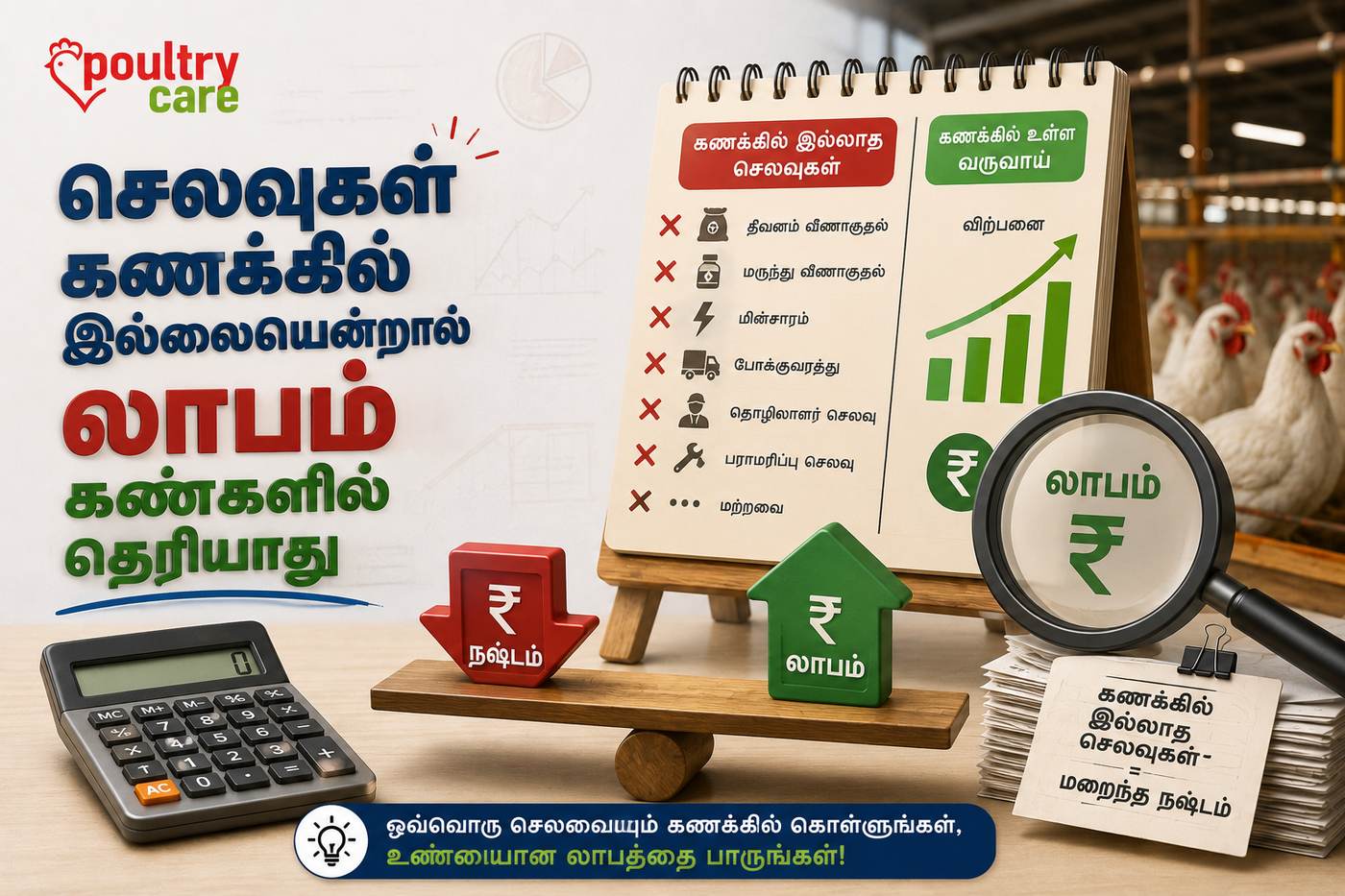

If you have been in poultry trading for even a few years, you already know this truth. Delivery day often becomes dispute day. Birds are lifted from the farm in good condition, but once they reach the buyer, discussions start. Shortage is claimed. Mortality is questioned. Weight is debated. Transport is blamed. Farm defends. Buyer argues.
The real question is not who is right. The real question is why this happens so frequently in poultry trading.
From working closely with poultry farmers, traders, and integration teams, I have seen that delivery disputes are rarely about dishonesty. Most arguments happen because systems are weak and processes are unclear. When there is no structured control, confusion turns into conflict.
Let us understand this in a practical farm language.
No Single Record from Farm to Buyer
One of the biggest reasons for poultry delivery disputes is the absence of one continuous record. At the farm level, birds are counted during loading. Sometimes count is manual, sometimes approximate. At the market or buyer location, counting happens again. Often the numbers do not match perfectly.
When farm count and receiving count are different, argument starts immediately.
If the dispatch record, transport details, and receiving record are not linked clearly, both sides stand with different data. Farm believes its loading count. Buyer believes its receiving count. Without connected documentation, there is no single source of truth.
In poultry trading management, clarity in record flow is more important than speed. When each stage is recorded properly and verified, disputes reduce automatically.
Weight Difference Creates Immediate Tension
Weight is money. Even a small variation in average live weight affects total settlement significantly. That is why weight disputes are common in live bird delivery.
Farm may take sample weight before feed withdrawal. Buyer may weigh birds after transport stress. Different scales, different sampling methods, different timing – all these create natural variation.
If weighing basis is not agreed clearly before dispatch, weight difference becomes a permanent source of tension.
Farmers who define weighing standards in advance face fewer arguments. When both parties agree on shrink allowance, weighing time, and acceptable tolerance range, discussion becomes professional instead of emotional.
Many delivery issues are not fraud. They are measurement mismatch.
Transport Delays Increase Blame
Transportation plays a critical role in live bird delivery issues. When vehicle leaves late, faces traffic, or waits long at unloading point, birds stay in crates for extended time. Stress increases. Mortality risk increases. Weight loss happens.
At receiving, buyer sees stressed birds and assumes poor farm condition. Farm says birds were healthy at dispatch. Transport says road delay was unavoidable.
Without proper time tracking, it becomes a blame game.
If dispatch time, travel duration, and arrival time are recorded properly, it becomes easy to identify where delay happened. Transparency in timing builds trust. When timeline is clear, arguments reduce.
Verbal Communication Creates Confusion
Many poultry trading operations still depend mainly on phone calls. Lift quantity is discussed verbally. Price is discussed verbally. Changes in schedule are communicated verbally.
The problem with verbal communication is memory difference. What was said in the morning may be remembered differently in the evening. During settlement, this creates conflict.
Simple written confirmations at each stage reduce misunderstanding sharply. Confirmed lift quantity. Confirmed rate. Confirmed arrival time. Confirmed receiving count.
Documentation may look like extra work, but it protects relationships and profit.
In poultry trading management, clarity is more valuable than speed.
No Clear Responsibility at Each Stage
Another common reason delivery issues are always argued is unclear responsibility. If shortage happens, farm blames loading team. Loading team blames transport. Transport blames buyer’s unloading delay. Buyer blames farm quality.
When roles are not defined clearly, disputes repeat again and again.
Strong trading control defines responsibility stage-wise. Dispatch responsibility lies with farm supervisor. Transport responsibility lies with driver and transport coordinator. Receiving responsibility lies with buyer’s supervisor.
When ownership is defined, problem solving becomes easier. When ownership is unclear, argument becomes routine.
Emotional Handling Makes It Worse
Delivery disputes usually happen in stressful situations. It may be late evening. Market may be crowded. Team may be tired. Payment pressure may be high.
In such conditions, small differences feel big. Tone rises quickly. Once conversation becomes emotional, logical discussion becomes difficult.
Farmers who introduce structured review after delivery see improvement. Instead of arguing immediately, they compare records calmly. Where did difference start? Was dispatch correct? Was delay recorded? Was weighing method aligned?
When review replaces reaction, disputes reduce over time.
Assumptions Replace Data
In many poultry businesses, there is limited data analysis. If one delivery shows higher shrink, assumption says birds were weak. If mortality increases, assumption says transport was careless.
Assumption culture damages long-term relationships.
Data culture improves performance. When each trip is recorded properly, patterns become visible. Certain routes may show consistent higher shrink. Certain vehicles may need maintenance. Certain loading teams may need training.
When problems are identified through data, arguments reduce because solution becomes practical.
Why Reducing Delivery Disputes Matters
Some farmers accept delivery disputes as part of business. But repeated conflicts create hidden damage. Trust between farm and buyer reduces. Negotiation becomes aggressive. Payments get delayed. Stress increases in the team.
On the other hand, farms known for clean delivery records build strong reputation. Buyers feel confident. Settlement becomes smooth. Business grows steadily.
Delivery control is not only about avoiding shortage claims. It is about building credibility in poultry trading.
Moving Toward Stronger Delivery Management
If delivery issues are always argued in your trading operations, it is not bad luck. It is a signal that system needs strengthening.
Start with proper dispatch record. Standardize weighing method. Track transport timing. Define stage responsibility. Confirm receiving details in writing. Review each trip data.
Small process improvements bring big long-term stability.
From my journey working closely with poultry farm owners, I have learned one important lesson. Farmers are hardworking and focused on production, but trading discipline needs equal attention. Birds may grow well on farm, but profit is secured only when delivery is controlled.
Delivery disputes are not unavoidable. They are manageable when structure replaces assumption and documentation replaces memory.
When clarity improves, arguments reduce. When arguments reduce, profit stabilizes. And when profit stabilizes, poultry business becomes sustainable for the long run.