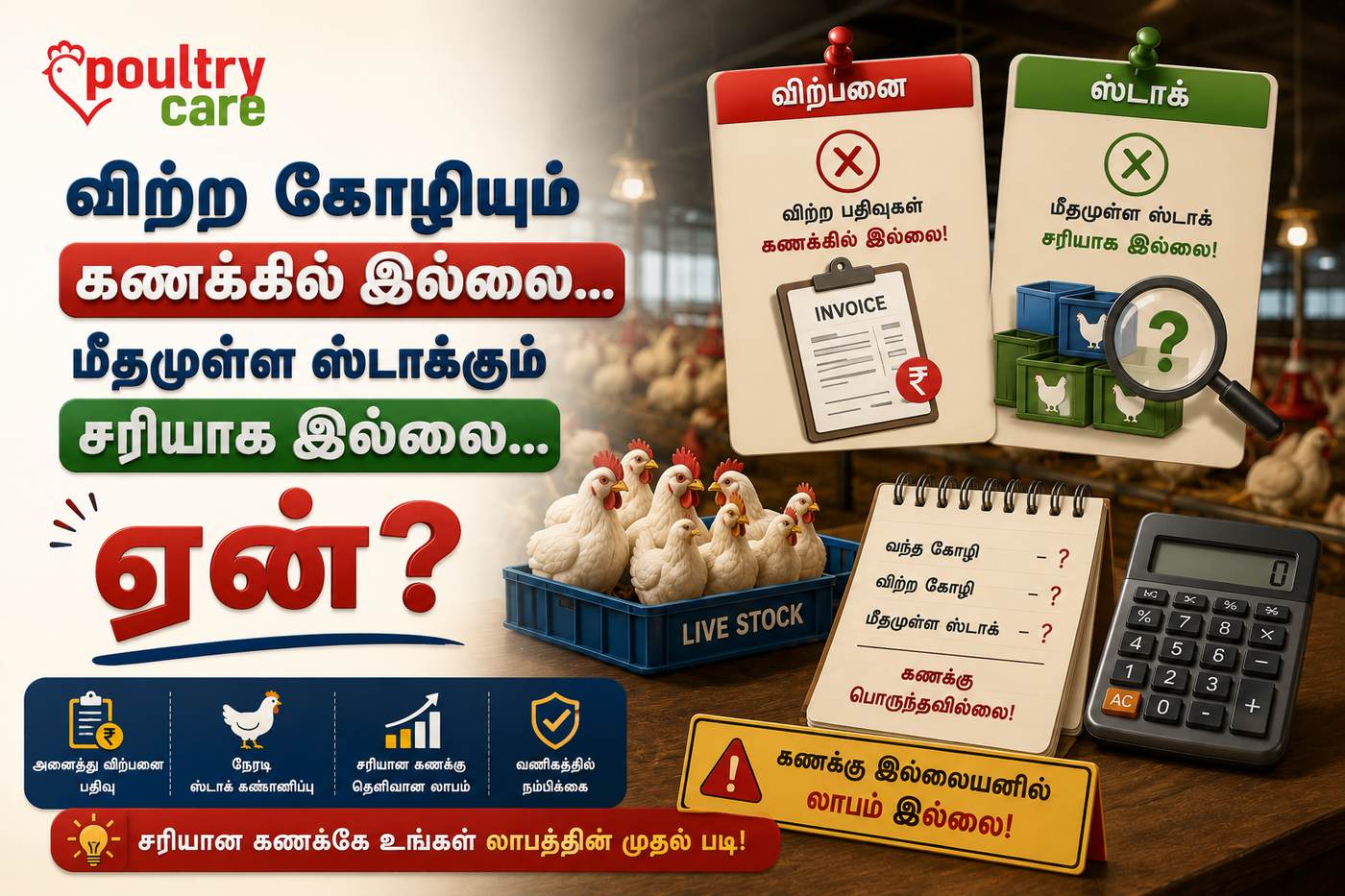

If stock is frequently corrected later, it means something was not recorded properly at the right time.
In poultry business, stock should match daily. Adjustment should be rare. But in many farms and trading offices, it becomes routine. Birds are adjusted. Feed is adjusted. Mortality is corrected later.
And slowly, inaccuracy becomes normal.
Adjustment Means Delay in Recording
Stock does not change by itself. If numbers are different, it means entries were delayed or missed.
Maybe mortality was written on paper but not updated.
Maybe birds were sold but entry was done two days later.
Maybe transfers between sheds were not recorded immediately.
Small delays create small gaps. Small gaps become month-end surprises.
Poultry inventory control must be daily, not monthly.
Small Differences Become Big Losses
A mismatch of 20 or 30 birds may look small. But if this happens every cycle, the yearly impact becomes serious.
The same applies to feed bags and medicine stock.
When stock errors in poultry trading are adjusted casually, leakage becomes hidden. And hidden leakage reduces profit without anyone noticing.
Stock accuracy is money accuracy.
Inaccurate Stock Weakens Trading Decisions
If you do not know exact live stock today, how can you commit confidently to a buyer?
You may promise more birds than available. Or you may delay sales thinking stock is low when it is not.
Stock mismatch creates hesitation. And hesitation costs opportunity.
Clear daily stock position builds confidence in negotiation and dispatch planning.
Adjustment Is a Warning Sign
Frequent stock correction is not a solution. It is a warning.
It shows lack of daily reconciliation.
It shows weak recording discipline.
It shows process gaps.
Instead of adjusting numbers later, focus on updating them correctly every day.
Even simple daily confirmation of bird count and feed balance can prevent month-end shock.
Final Thought
If poultry stock never matches, profit may never match expectation either.
Stock should reflect reality, not correction.
Move from adjustment habit to accuracy habit.
Because in poultry trading, numbers decide trust.
And trust decides long-term profit.