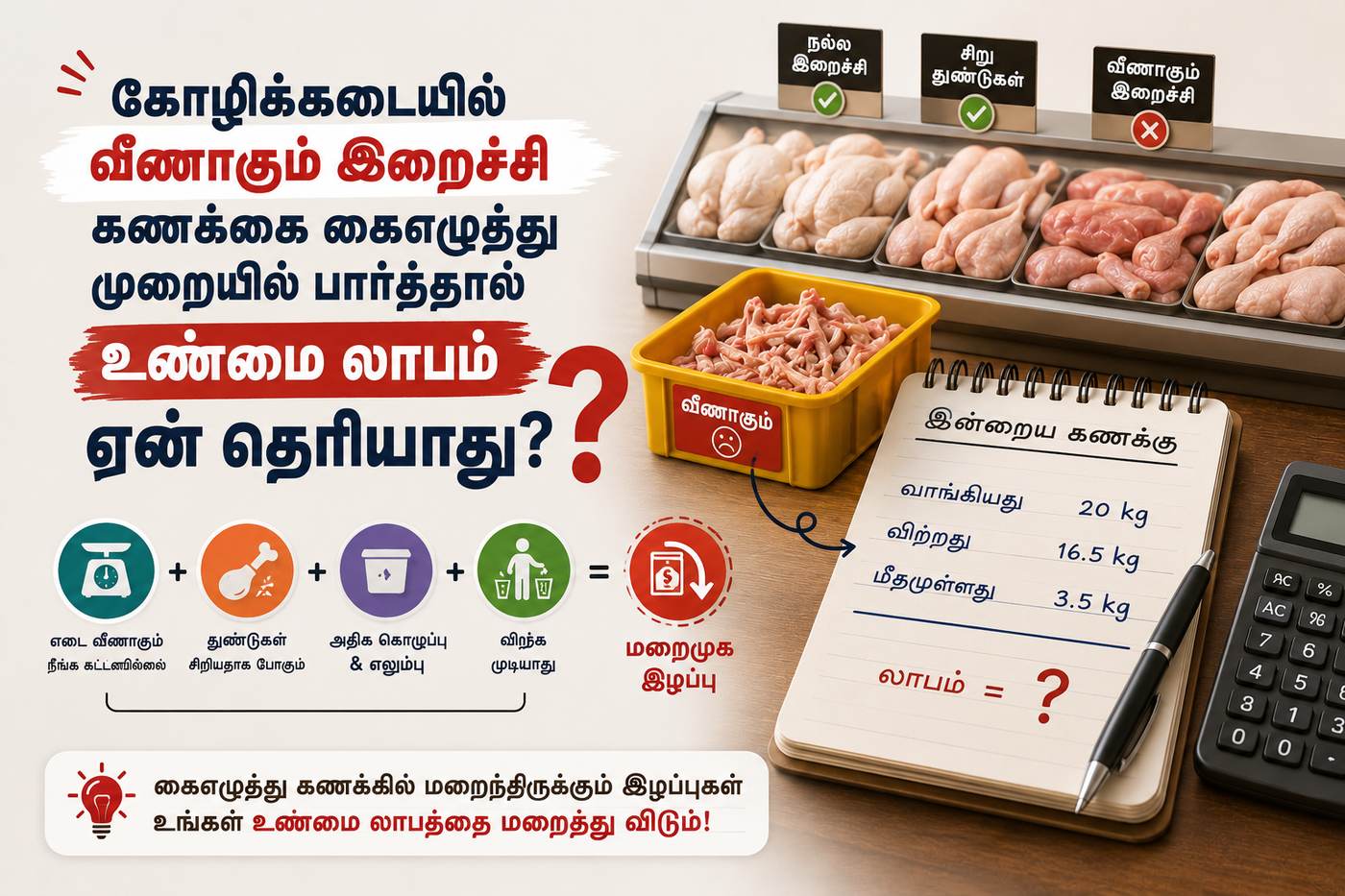

Many poultry traders believe stock differences are normal. At the end of the day, numbers rarely match perfectly, and most farmers assume small variations are unavoidable in live bird trading.
Registers are updated after work hours. Quantities are written based on memory or phone calls. Dispatch details arrive late, and adjustments are added later to balance records. Everything seems manageable until month-end calculations begin.
That is when confusion starts. Physical stock and recorded stock tell different stories. Farmers spend hours checking books, calling staff, and searching for missing birds.
The real question is not where birds went missing. The real question is why manual stock almost always becomes inaccurate.
Manual Recording Depends on Memory, Not Reality
Manual stock systems rely heavily on human recall. Workers note numbers during busy loading times and update records later. Sometimes entries are postponed because operations feel more urgent than paperwork.
In poultry trading, movement happens quickly. Birds are loaded, weighed, transported, and delivered within short timeframes. When recording is delayed even slightly, accuracy begins to slip.
A small missed entry today becomes a larger mismatch tomorrow. Over time, records reflect estimates instead of actual movement.
Manual tracking does not fail because people lack effort. It fails because human memory cannot match the speed of live operations.
Live Birds Change Faster Than Paper Records
Unlike packaged goods, poultry inventory is dynamic. Mortality, weight variation, partial deliveries, and return adjustments constantly change stock position.
Manual systems struggle to capture these real-time changes. A notebook cannot automatically adjust when birds die during transport or when delivery quantities differ from loading numbers.
Farmers often correct stock later through adjustments. While this balances books temporarily, it hides the root cause of inaccuracies.
Delayed correction creates a cycle where mistakes are fixed but never prevented.
Communication Gaps Create Invisible Errors
Manual stock management depends on communication between multiple people. Farm supervisors, drivers, loaders, traders, and accountants all share information separately.
When messages pass through several individuals, details change slightly. One person reports approximate numbers while another records rounded figures. These small differences accumulate silently.
By the time accounts are finalized, no one remembers the exact transaction clearly enough to verify it.
This is why many farmers feel their stock is always slightly wrong but cannot identify a single major mistake.
Why Adjustments Become a Habit
Many poultry businesses solve mismatches by adjusting stock entries later. Adjustment becomes a routine activity rather than an exception.
While adjustments help close accounts, they reduce visibility. Farmers stop questioning differences because corrections appear easier than investigation.
Over time, this habit weakens operational control. Profit calculations become uncertain because numbers no longer represent real activity.
When adjustments increase, decision-making becomes based on assumptions instead of facts.
Moving from Manual Control to Operational Clarity
Accurate stock management begins when recording happens alongside operations instead of after them. Farmers who shift toward immediate tracking gain a clearer understanding of daily movement.
When stock updates reflect real-time activity, mismatches reduce naturally. Teams work with shared information, reducing confusion between departments.
Farmers gain confidence in their numbers. Planning sales, managing purchases, and evaluating performance become easier because data reflects reality.
Instead of correcting stock repeatedly, businesses begin preventing errors before they occur.
Conclusion
Manual stock is not always wrong because people make mistakes. It becomes wrong because poultry trading moves faster than manual recording methods.
When records depend on memory, delayed updates, and multiple communication layers, inaccuracies become unavoidable. Farmers then spend valuable energy fixing numbers instead of improving operations.
Accurate stock visibility transforms trading management. When farmers clearly understand their daily inventory position, stress reduces and profitability becomes easier to manage.
The goal is not to work harder on records. The goal is to make stock reflect reality every single day.