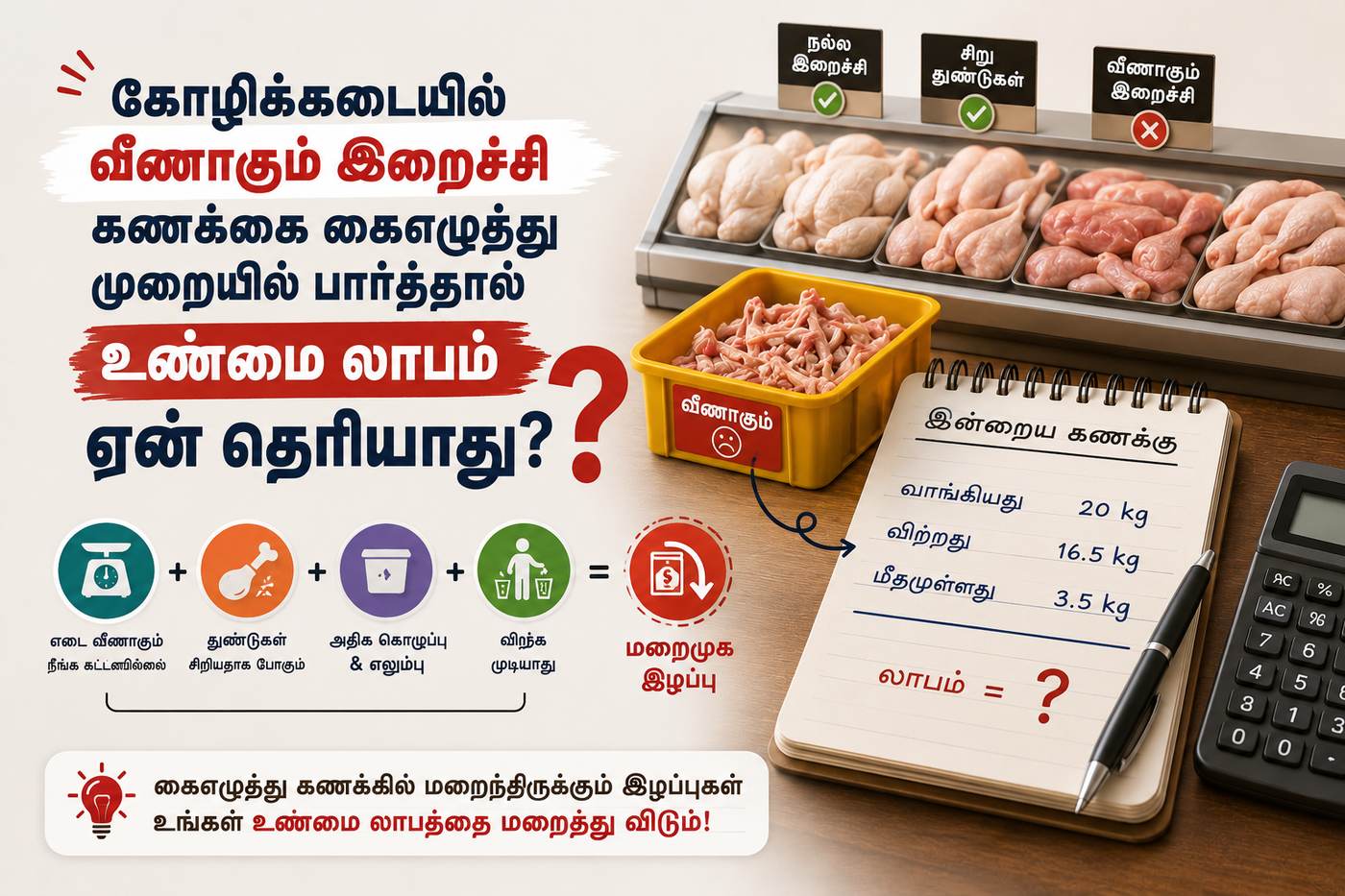

Let me ask you something like I ask traders when I sit with them in the evening after market closing.
Are you really measuring bird weight or just guessing it
Most smile and say we know by experience. Some say we can tell just by lifting the crate. Some say we have been in this line for years, we can judge by eye.
Experience is valuable, no doubt. But experience without measurement can quietly reduce your profit. In poultry trading, small weight difference across many birds becomes big money. Not seeing that difference clearly is like trading with half closed eyes.
I have seen many busy traders who work hard from early morning till late night, but still feel their margin is slipping. When we go deeper, the problem is not always price. Very often, the problem is guessed weight versus actual weight.
Let us talk about this in simple market language, the way traders actually think and work.
The Day Guessing Replaces Measuring
In fast moving poultry markets, speed becomes habit. Lifting, loading, unloading, selling, billing. Everything moves quickly. In that speed, proper weighing slowly becomes optional instead of compulsory.
At farm pickup, someone says average weight looks good. At market, someone says birds look slightly lighter. Sale happens. No one stops to compare properly.
Guessing enters quietly. Nobody announces it. It just becomes routine.
The danger is not in guessing once in a while. The danger is when guessing becomes your main system. Because guessing always sounds close to correct, but rarely is exact.
When purchase weight is guessed and sale weight is guessed, your margin is also guessed. Then month end result becomes a surprise.
Why Our Eyes and Hands Fool Us in Bird Weight
Traders often say we handle birds daily, we know the weight by feel. That confidence is natural. But body feel is influenced by many things.
Bird feather condition changes feel. Crate crowding changes feel. Time of day changes bird energy. Even your own tiredness changes how weight feels in your hand.
Two birds can look same size but carry different body mass. One may be fuller in meat. One may be lighter due to stress and shrink. Visual size is not equal to body weight.
I have done this exercise many times with traders. Ask them to guess crate weight, then actually weigh it. The gap often shocks them. Not because they are careless, but because human estimation has limits.
Market decisions should not depend only on hand feeling. They need scale confirmation.
Where Guess Weight Damages Profit Silently
Let us see where guessing creates real money leakage.
At buying stage, if bird weight is overestimated, you pay more than actual value. At selling stage, if weight is underestimated, you sell cheaper than you should. Both sides cut your margin.
Transport shrink adds more confusion. If you never record dispatch weight and arrival weight, you cannot see how much body weight was lost on the way. You may blame price when shrink is the real reason.
Commission calculations also get affected. Partner sharing becomes unclear. Settlement discussions become emotional because nobody has solid numbers.
I have seen partnerships break not because of loss, but because of unclear measurement. When numbers are not trusted, relationships get weak.
Simple Measuring Habits That Change Trading Control
Good news is this problem is not difficult to fix. It does not need complicated systems to begin. It needs simple measuring habits.
Start with consistent weighing at lifting point. Use the same type of scale regularly. Avoid changing weighing method every day.
Record farm weight and market weight separately. Do not mix them in memory. Write them clearly. Even a simple daily register works if it is maintained honestly.
Check random crates instead of only one crate. One crate never represents full load correctly. Variation is normal in live birds.
Encourage your team to respect weighing, not rush it. When staff feel weight checking is important, accuracy improves automatically.
When You Start Measuring, Patterns Start Talking
The moment you start measuring properly, business starts speaking more clearly.
You begin to see which farm gives consistent body weight. Which route causes higher shrink. Which market delay reduces sale weight. Which day timing works better.
Without measurement, all days look similar. With measurement, patterns appear. Patterns lead to better decisions.
Traders who measure regularly become calmer in negotiation. They know their numbers. They do not depend fully on buyer statements or supplier claims. Confidence increases because facts are in hand.
That confidence itself improves profit because decisions become firm, not emotional.
Measuring Is Not Distrust It Is Business Maturity
Some traders feel that too much weighing shows distrust toward supplier or buyer. That is a misunderstanding. Measuring is not distrust. Measuring is business maturity.
Professional trading respects numbers. Clear measurement protects both sides. When numbers are transparent, arguments reduce.
You are not questioning people. You are strengthening process.
In my journey working closely with poultry traders, the most stable and growing businesses are not always the biggest ones. They are the ones who measure regularly, record honestly, and review calmly.
If you change one habit from today, change this. Replace guessing with measuring. Your daily profit picture will slowly become sharper and more predictable.
That is when trading moves from struggle mode to control mode.