
Where Does the Weight Really Go
Let us talk openly like we talk in the market.
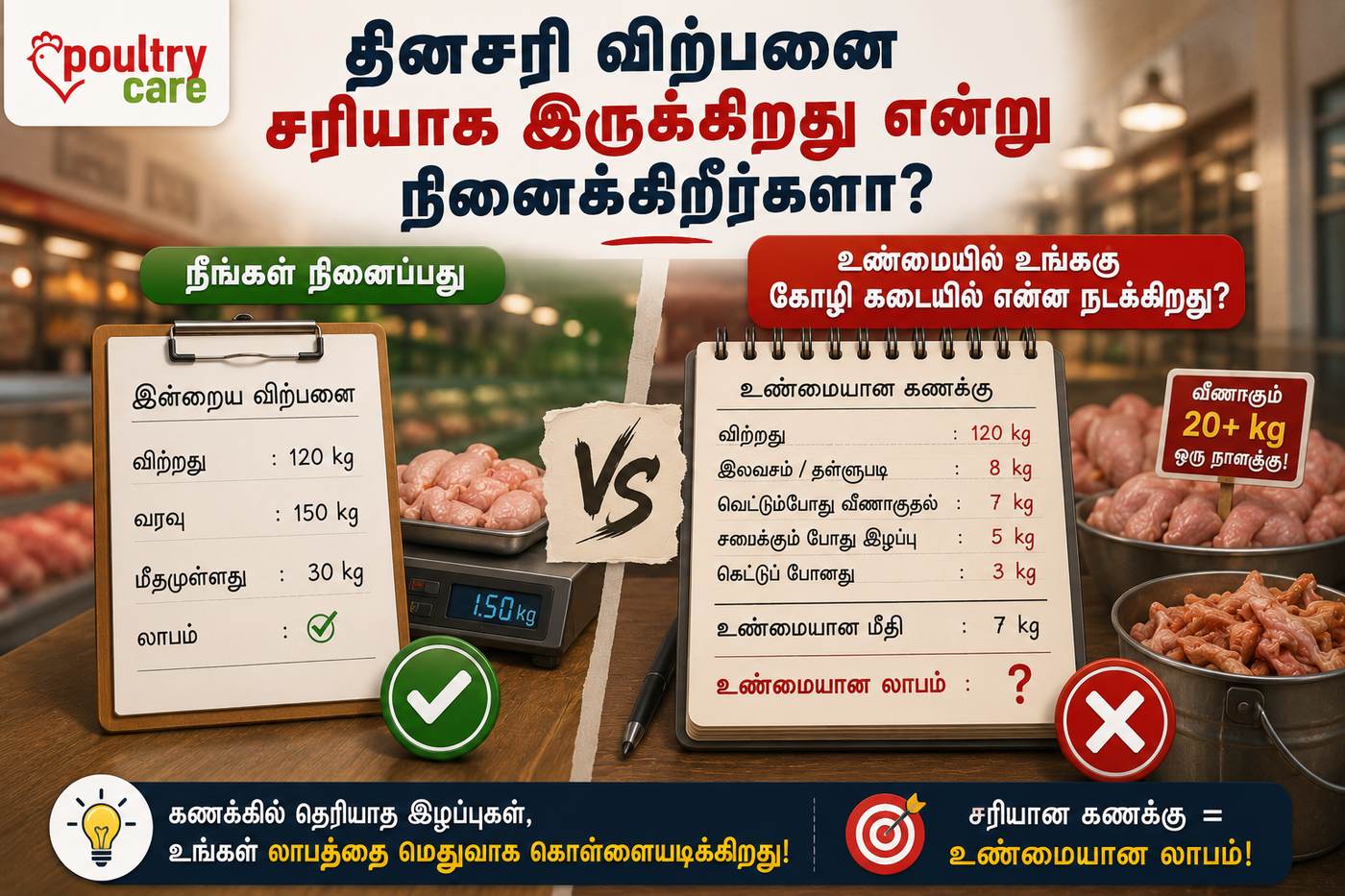
Many poultry farmers and traders have faced this situation. Birds were lifted with good body weight at the farm. Everything looked correct at loading time. But when birds reach the market or processing point, the weight looks lower. Settlement becomes uncomfortable. Margin becomes smaller. Arguments start.
Then one common line comes out.
Weight has dropped somewhere.
But where exactly does it drop
Most people guess. Very few actually know.
Weight loss is not magic and it is not bad luck. It happens in very specific stages between farm and final sale. When you understand those stages clearly, you stop guessing and start controlling loss.
This is not book knowledge. This is ground experience from real poultry movement and trading operations.
It Starts Before the Birds Even Leave the Farm
Many people think weight loss starts only after transport. But in many cases it begins even before loading.
If birds are kept off feed for too long before lifting, body weight already starts reducing. Sometimes feed withdrawal is not planned but delayed catching causes extra empty time. Birds stay without feed and water longer than expected.
In hot weather, stress increases faster. Birds lose moisture faster. That directly reflects on body weight.
Rough catching also adds stress. When birds struggle too much during catching, shrinkage risk increases. Calm handling is not just for welfare. It is also for weight protection.
So the first drop often starts quietly inside the farm itself.
What Happens During Loading and Waiting Time
After catching, birds are usually kept in crates and wait for vehicle movement. This waiting period is often ignored.
If loading is slow or vehicle arrival is delayed, birds remain in crates longer. Airflow may be poor. Heat builds up. Stress continues.
During this time birds are not eating and not drinking. Body moisture reduces. That shows up as weight loss later.
Overcrowded crates make it worse. Birds cannot settle. They keep struggling and losing energy.
Many traders measure farm weight and market weight but forget this middle waiting time completely.
Transport Stress Is a Major Hidden Factor
Now comes the most talked about stage, transport. But even here, people say transport loss without understanding what inside transport causes it.
Long travel time increases shrinkage. But even short trips can cause weight drop if conditions are poor.
High temperature inside the vehicle Poor ventilation Sudden driving and hard braking Too tight crate stacking No rest break in long routes
All these create stress. Stress causes dehydration. Dehydration shows up as lower live weight.
Night transport is usually better than hot daytime movement, but only if airflow is proper. Closed vehicles without air movement can create more damage than open ones.
Distance alone is not the problem. Transport condition is the real factor.
Market Holding and Pre Sale Handling
Many traders think once birds reach the market, weight is safe. But another loss stage often starts here.
Birds may wait again before weighing and sale. If market is crowded, unloading is delayed. If buyers are late, birds sit longer in crates.
Water is rarely given during this time. Heat and noise add more stress. Birds continue losing moisture.
Sometimes repeated weighing and shifting between crates also causes extra struggle. Every extra handling step adds small shrinkage.
By the time final weighing happens, total loss from farm to market becomes visible. Then everyone argues, but the loss already happened step by step.
Why Small Shrinkage Becomes Big Money Loss
Many people ignore small weight differences thinking it is normal. But in poultry trading, margin itself is small. So even small shrinkage hits profit directly.
If live weight drops slightly across a full vehicle load, the total value difference becomes large. That comes directly from trader or farmer margin.
This is why experienced traders do not treat shrinkage as a minor issue. They track routes, timing, seasons, and handling teams. They try to learn where shrinkage is higher and where it is lower.
They do not just say weight dropped. They ask where and why it dropped.
What Smart Traders and Farmers Do Differently
People who control weight loss are not doing complicated science. They are doing simple discipline.
They plan lifting time properly so feed withdrawal is not too long. They keep catching calm and organized. They reduce waiting time after crating. They check vehicle airflow before loading. They avoid overcrowding in crates. They prefer cooler travel windows when possible. They reduce unnecessary handling at market.
Most important, they review each trip and learn from it. They treat every load like a lesson, not just a transaction.
Final Market Truth About Weight Loss
Weight loss does not happen at one single point. It happens like a slow leak across stages.
A little before lifting. A little during waiting. A little during transport. A little at market holding.
When all small drops combine, profit drops.
If you are in poultry trading or live bird selling, this is one area you cannot afford to ignore. When you start watching shrinkage stages clearly, your control over margin becomes stronger.
Next time when someone says weight has dropped, do not just accept it. Ask calmly where exactly it started.
That one question can protect a lot of profit.