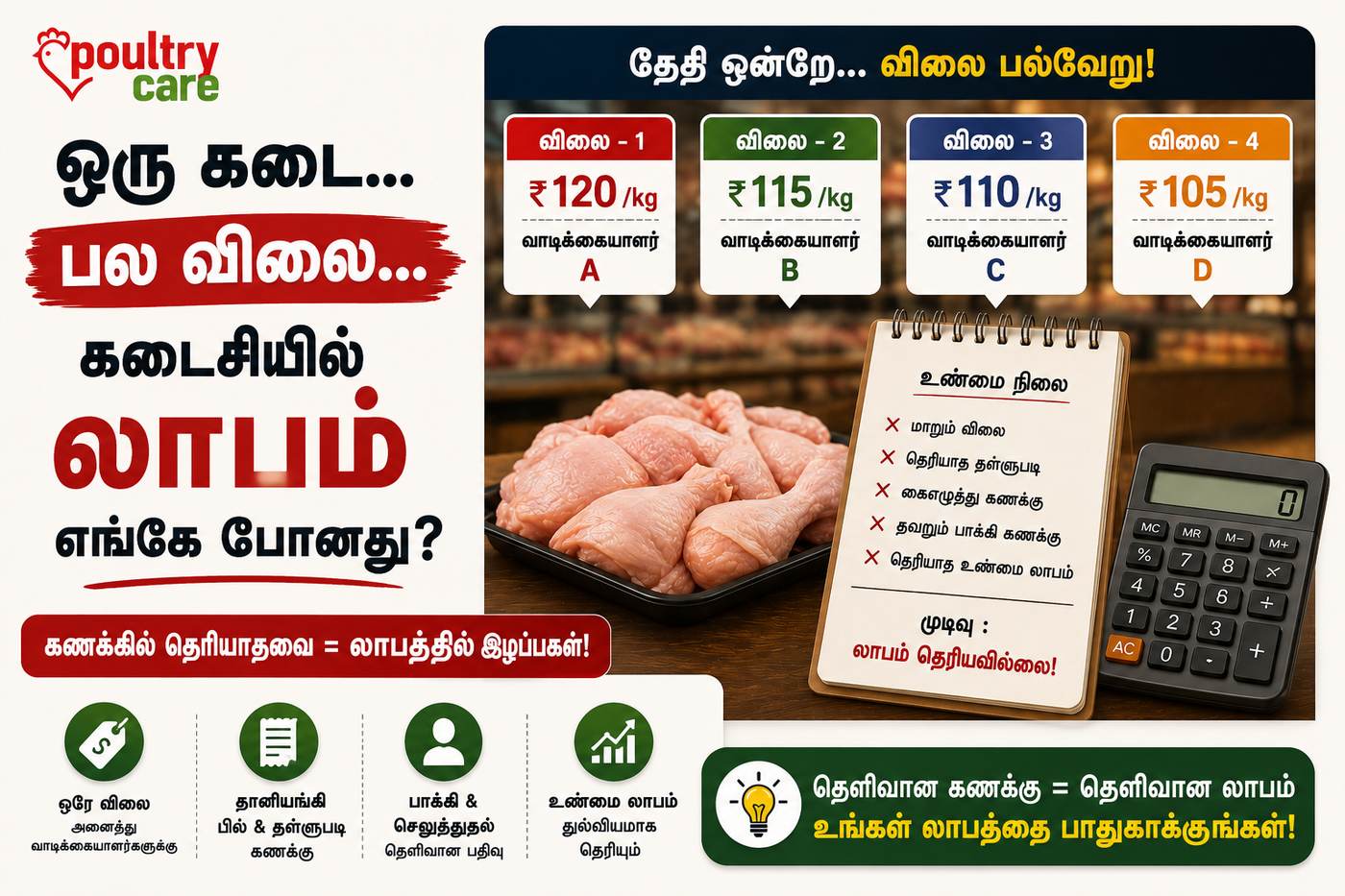

Running a poultry retail shop may look simple from the outside. Customers come in, birds are cut, meat is sold, and cash comes into the counter. But experienced poultry retailers know that the real challenge is not selling chicken — it is protecting the profit from hidden losses.
Many poultry shop owners believe losses happen because of market price fluctuations or bird mortality. However, in many retail shops, the real problem is operational mistakes inside the shop itself. Small staff errors during cutting, weighing, and handling slowly reduce the total saleable meat.
This case study explains how one poultry retail outlet discovered that staff handling mistakes increased its loss level to 4.12% within just 30 days, creating a serious impact on profitability.
What Happened in This Poultry Retail Shop
A mid-sized poultry shop was selling around 100 birds per day. The average purchase weight per bird was 2.1 kg, which meant the shop purchased approximately 210 kg of live birds daily.
After processing, the expected dressing yield should normally be around 70–72%. That means the shop should have received around 147 kg of saleable meat every day.
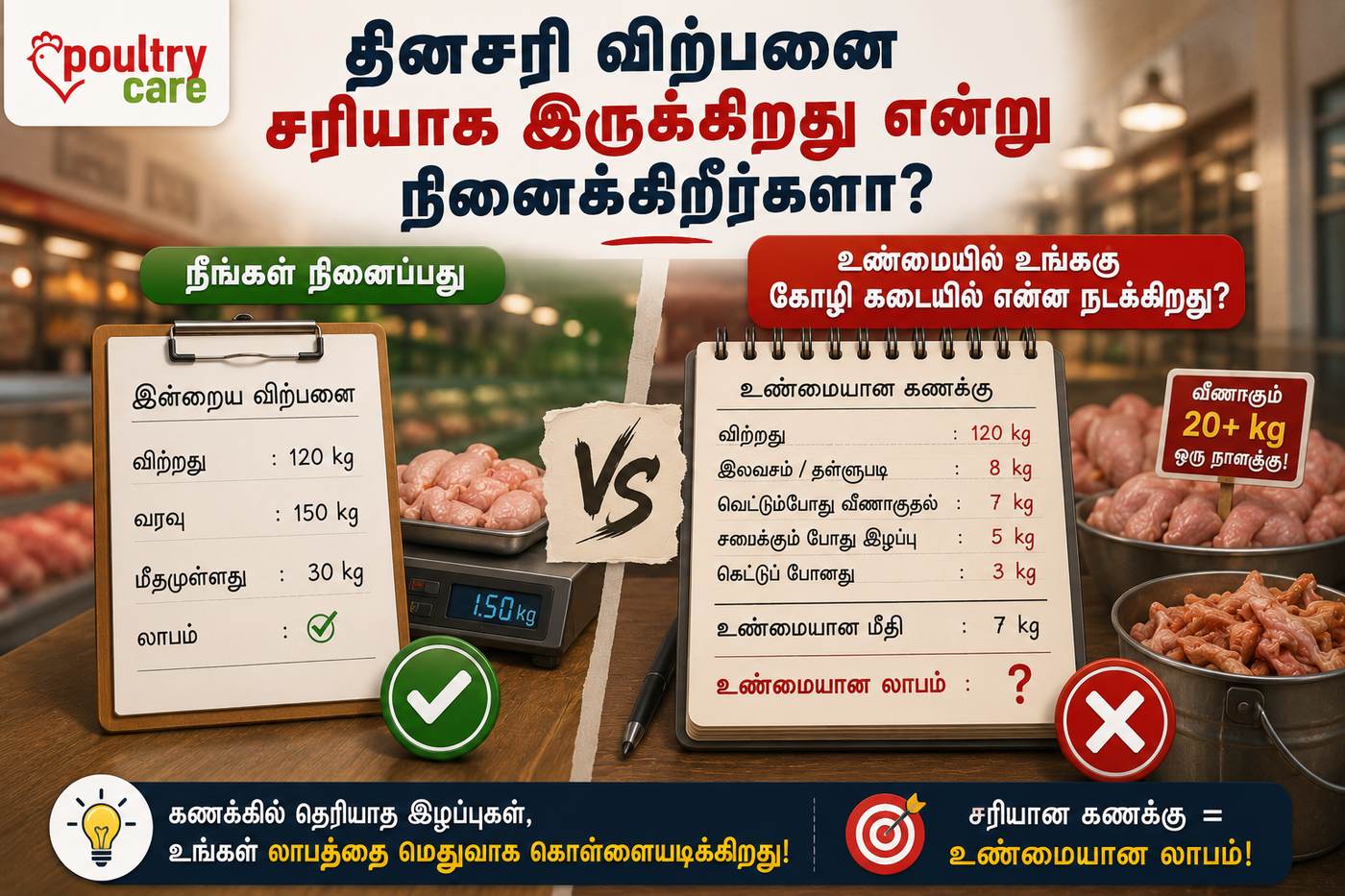
However, when the owner started comparing purchase weight and actual sale weight, the numbers were surprising. The shop was only selling around 141 kg of meat daily.
This created a difference of nearly 6 kg per day. When calculated for a full month, the loss became significant.
Daily loss: 6 kg
Monthly loss: 180 kg
If the average chicken price was ₹180 per kg, the total monthly loss became ₹32,400. After deeper analysis, the actual loss percentage was calculated at 4.12% shrinkage, which is higher than the acceptable retail limit.
Understanding Shrinkage in Poultry Retail
Shrinkage is the difference between expected output and actual sales weight. In poultry retail, shrinkage can occur due to many operational factors.
Some shrinkage is natural during processing, but excessive shrinkage usually indicates poor shop management or staff errors.
Healthy poultry retail operations normally maintain shrinkage between 1.5% and 2.5%. When losses cross 3%, it means there is a serious operational issue that must be addressed quickly.
Staff Handling Mistakes That Caused the Loss
After carefully observing shop operations, the owner discovered several staff-related issues contributing to the loss.
1. Improper Cutting Techniques
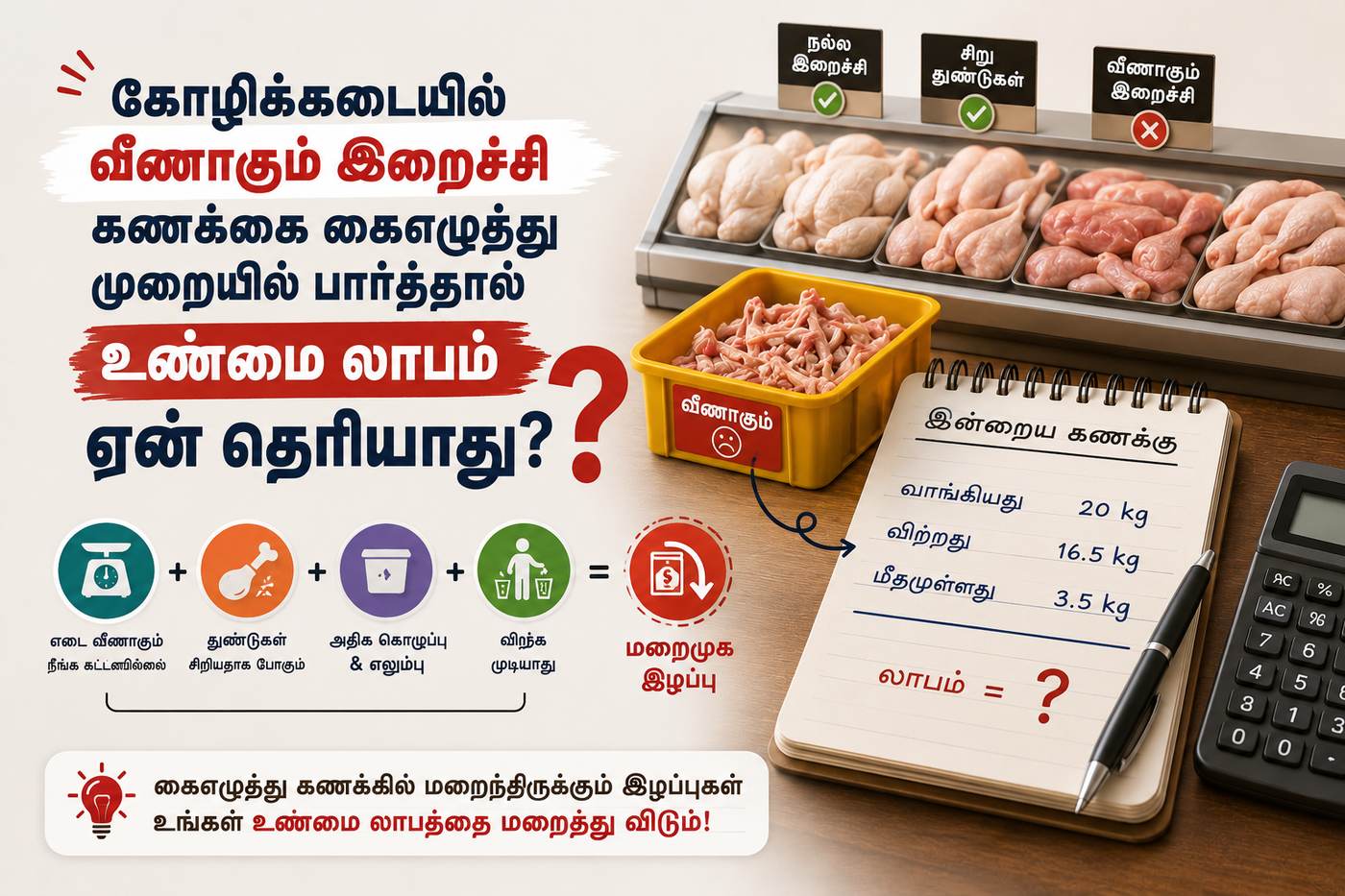
One of the biggest causes of loss was incorrect cutting methods. Staff members were cutting birds quickly during busy hours, leaving extra meat attached to bones.
Even a small yield reduction of 3% during cutting can cause major losses. For example, if 200 kg birds are processed daily, a 3% yield loss equals 6 kg of meat lost every day.
Proper cutting training alone can significantly improve meat recovery and reduce this loss.
2. Excessive Trimming of Meat
Another common mistake was over-trimming. Some workers removed more meat than necessary while cleaning fat or skin. This reduced the saleable portion of the bird.
For instance, if only 40 grams of extra meat is removed per bird, and the shop processes 100 birds per day, that alone results in 4 kg of loss daily.
Most retailers never notice this because it happens gradually during daily operations.
3. Inaccurate Weighing Practices
Weighing errors also played a role in the loss. In some cases, staff members forgot to reset the weighing scale after placing trays or bags. Small weight differences during every sale slowly accumulated into larger losses.
For example, a 20–30 gram mistake per customer transaction may look small. But if the shop serves 120 customers per day, the loss can reach 3 kg daily.
Accurate weighing practices are essential for maintaining profit in poultry retail.
4. Poor Storage and Handling
Improper storage conditions also caused weight reduction. When chicken meat is left outside the refrigerator for long periods or repeatedly thawed and refrozen, moisture loss occurs.
This causes the product to lose weight before sale. Even 1–2% moisture loss in stored meat can reduce daily saleable quantity.
Maintaining proper cold storage and inventory rotation helps reduce this problem.
How Poultry Retailers Can Reduce Shrinkage
Retail loss control does not always require expensive solutions. Most losses can be prevented through better operational discipline and staff management.
First, shop owners should ensure that staff members are properly trained in standard cutting techniques. Better cutting improves yield and reduces waste.
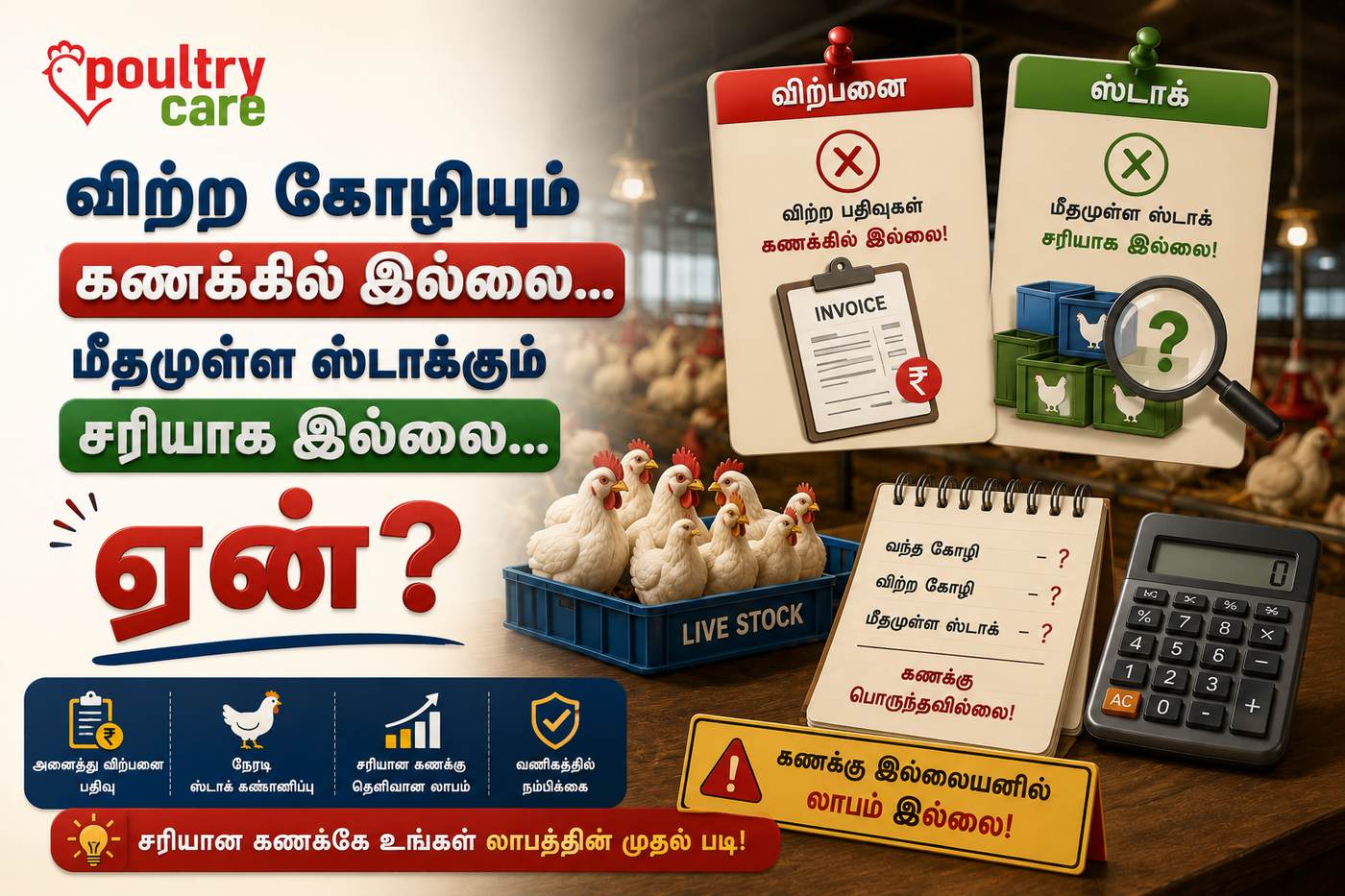
Second, daily weight tracking is important. Retailers should compare purchase weight, dressing yield, and sale weight regularly. This simple practice helps detect unusual losses quickly.
Third, digital weighing machines should be calibrated regularly to avoid small measurement errors.
Finally, proper storage practices such as maintaining consistent refrigeration temperatures and following first-in-first-out inventory rotation help preserve product weight and quality.
The Real Lesson for Poultry Shop Owners
Many poultry retailers believe that increasing sales is the only way to grow profit. But the real secret of retail success is controlling hidden losses.
Even a 2% improvement in shrinkage can increase monthly profit significantly without increasing sales volume.
Small operational improvements—better cutting, accurate weighing, and disciplined staff management—can protect thousands of rupees every month.
The poultry retail business runs on small margins, which means every kilogram matters. Hidden losses caused by staff handling mistakes can silently reduce profit without the owner realizing it.
Retailers who regularly monitor weight differences, train their staff properly, and maintain operational discipline can protect their business from unnecessary shrinkage.
Because in poultry retail, the difference between profit and loss is often just a few grams per sale.