
When Sales Are Clear but Payments Are Not
In poultry trading, every farmer clearly knows what is happening in sales. You know how many birds were sold, at what rate, and to which customer. These details are always fresh because they are part of daily activity. But when it comes to payments, the same clarity is often missing. If someone asks how much money should come today and from whom, many traders hesitate. Not because they are careless, but because they are not tracking it actively. This small gap slowly turns into a bigger business issue.
How the Habit of Hoping Replaces Tracking
Most traders do not notice when they shift from tracking payments to simply hoping for them. In the beginning, everything feels under control. Customers pay within a few days, and transactions are easy to manage. But as business grows, the number of customers increases, and so does the complexity of payments. Some pay on time, some delay, and some stretch beyond expectations. Without proper tracking, all these patterns mix together, creating confusion that is hard to untangle.
Why Cash Feels Tight Even When Business Is Good
Many traders experience a strange situation where sales are strong but cash is still tight. Birds are moving, customers are active, but money is not available when needed. Expenses do not wait. Purchases, transport, and daily operations require immediate cash. But incoming payments follow a different pace. The real issue here is not always the market or pricing. Often, it is the lack of clarity in payment tracking that creates this pressure.
The Silent Impact of Payment Delays
Payment delays usually start small. A customer delays by a day, then a few days, and it slowly becomes a habit. Traders adjust and continue business, thinking it is normal. But when multiple customers follow the same pattern, the effect becomes serious. Money starts staying outside longer than expected. Without clear tracking, this delay goes unnoticed until it begins to affect daily operations and decision-making.
Why Following Payments Feels Difficult but Necessary
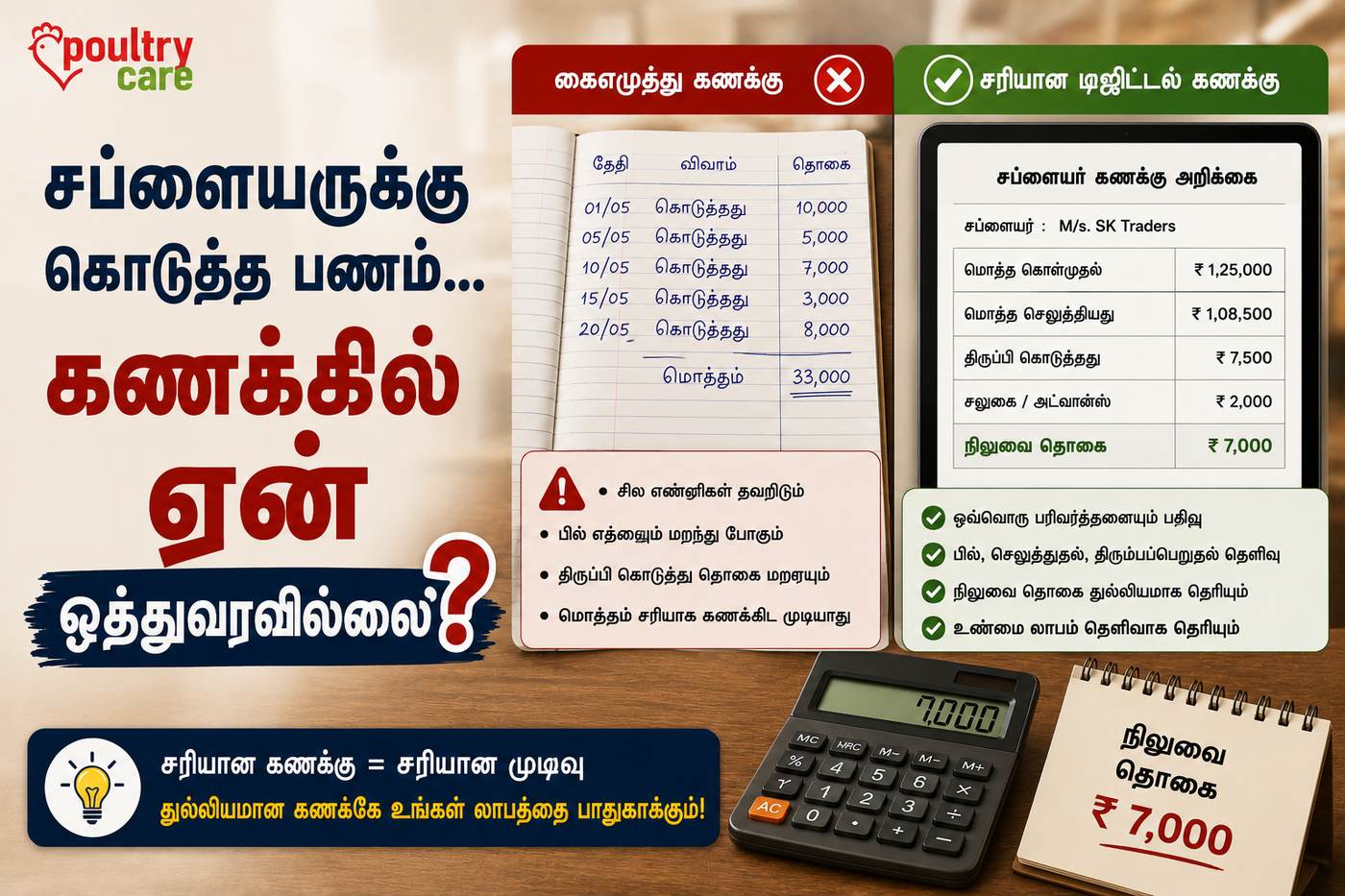
Many poultry traders hesitate to follow up on payments regularly. They feel it may disturb relationships or create discomfort. Instead, they choose to wait. But waiting does not protect relationships; it only postpones clarity. In reality, when both sides clearly understand what is pending and when it should be paid, trust improves. Clear communication reduces confusion and avoids unnecessary misunderstandings.
From Following to Control in Business
There is a big difference between following payments and chasing them. Following is consistent and happens before problems grow. Chasing happens after delays become serious and creates stress. Traders who follow payments regularly experience more control in their business. They know what is expected, they plan better, and they avoid last-minute pressure. This shift from reacting to controlling makes daily operations smoother and more predictable.
Conclusion
In poultry trading, the difference between stress and stability often comes down to one simple habit. Are you following your payments or just hoping they will come?
When payments are not tracked, confusion increases and cash flow becomes uncertain. But when payments are followed with clarity, business becomes more stable and decisions become easier. Selling birds is only one part of the business. Bringing the money back completes the cycle.
Over time, the trader who depends on hope keeps facing pressure, while the trader who tracks payments gains confidence and control. Because in the end, business does not run on assumptions. It runs on clear understanding of where your money is and when it will return.