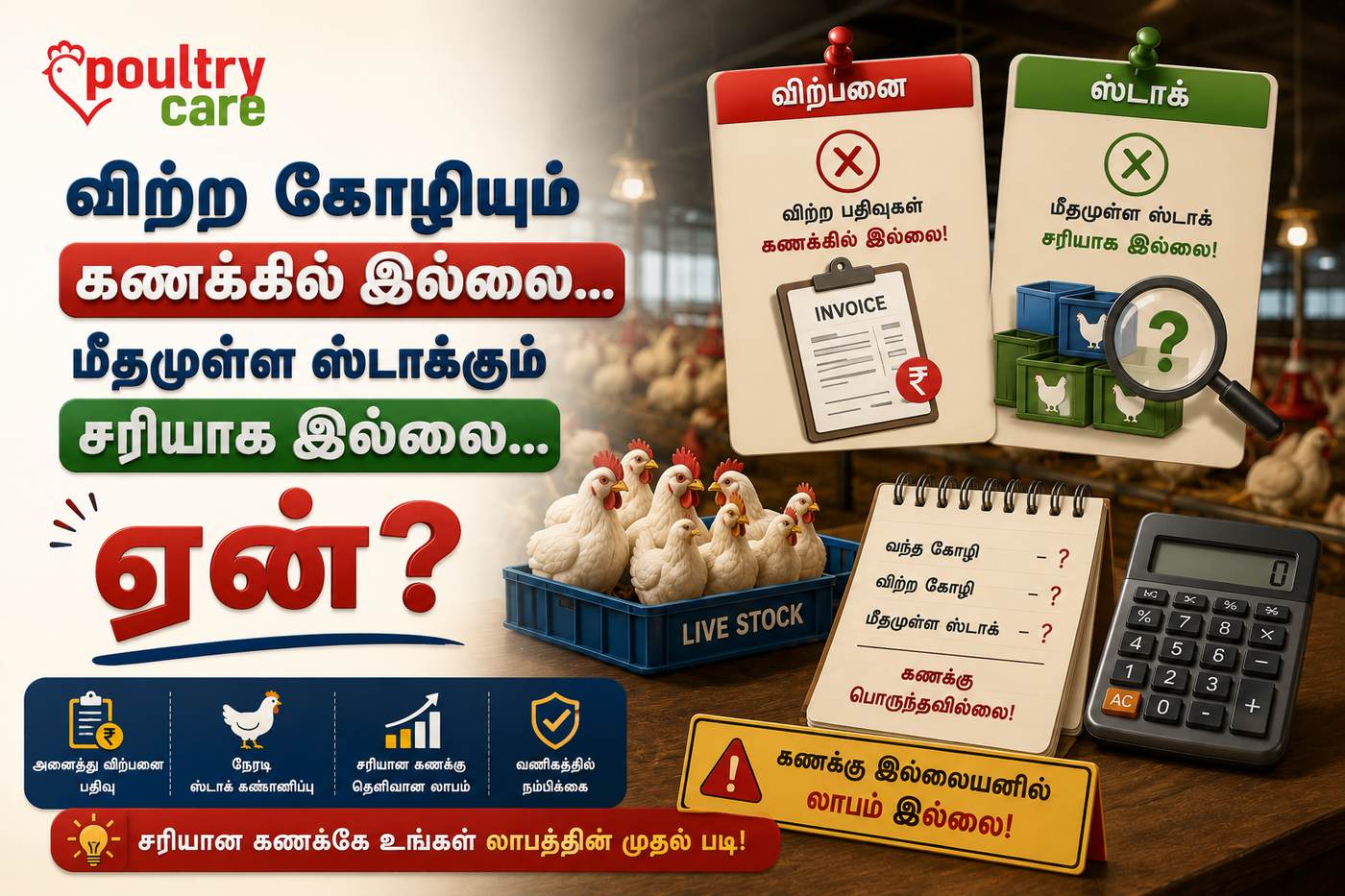

A poultry farmer finishes a successful sale day. Birds are loaded, invoices are written, transport leaves the farm, and the market rate looks good. On paper, profit exists.
But when evening comes and accounts are checked, cash is still missing.
Feed suppliers are waiting. Farm workers expect wages. Transport payments are due. Yet money that should have arrived remains somewhere between the market and the trader.
This situation is not rare. It is one of the most common silent problems in poultry trading today.
Many farmers believe low profit is the reason for financial stress. In reality, the bigger issue is often cash flow timing, not sales performance.
Understanding why cash does not come even after a sale is the first step toward building a stable poultry trading business.
Sale Completed Does Not Mean Payment Completed
In poultry trading, a sale happens physically before it happens financially.
Birds move instantly, but money moves slowly.
This gap creates hidden pressure.
When birds are sold, several stages still remain before payment reaches the trader:
Buyer verification
Weight confirmation adjustments
Market settlement cycles
Credit period agreements
Collection follow ups
Each stage introduces delay. Farmers often focus on production efficiency but overlook payment efficiency.
A trader may sell thousands of birds weekly yet still struggle to purchase the next batch simply because collections lag behind operations.
The business looks active but cash remains blocked.
The Credit Culture in Poultry Markets
One major reason cash delays happen is the traditional credit culture.
Many traders extend credit to maintain relationships with wholesalers, retailers, or market agents. Credit feels necessary to retain buyers, especially in competitive markets.
However, credit without visibility becomes risk.
Common situations seen across poultry markets include:
Buyers requesting extra days after delivery
Partial payments becoming normal practice
Verbal agreements replacing written commitments
Multiple outstanding balances across buyers
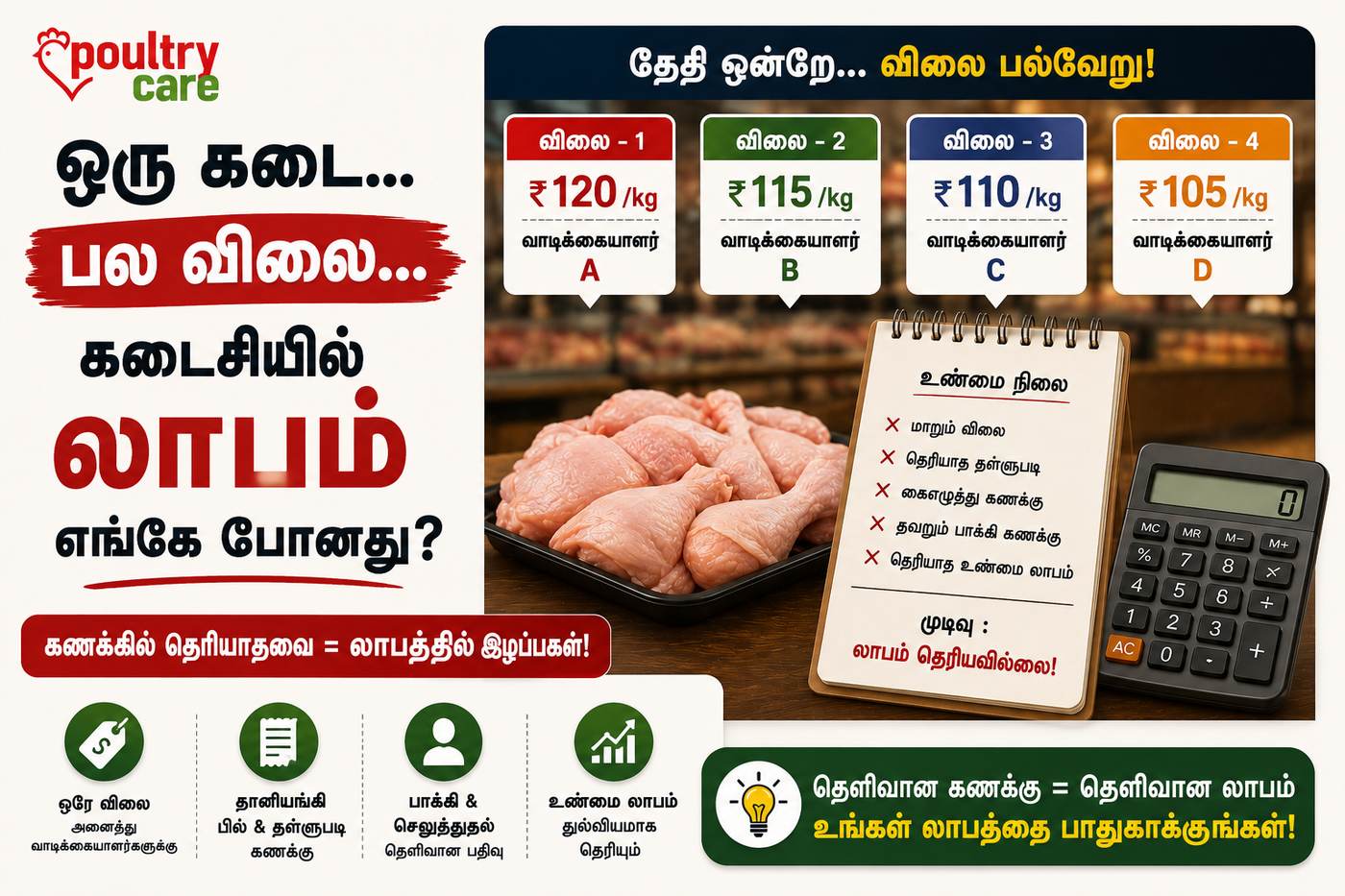
Over time, traders lose track of who owes what and when payment is expected.
Instead of managing sales, they start chasing collections.
The business slowly shifts from trading birds to managing debts.
Invisible Losses Created by Payment Delays
Payment delay is not just a timing issue. It creates real financial damage.
When cash does not arrive on time, traders experience indirect losses such as:
Inability to purchase birds at the right market rate
Emergency borrowing with high interest
Delayed feed payments increasing supplier pressure
Missed market opportunities during price drops
Mental stress affecting decision making
Even profitable traders can face financial instability because expenses happen daily while income arrives unpredictably.
This imbalance quietly reduces business growth.
The Cash Flow Trap Most Farmers Do Not Notice
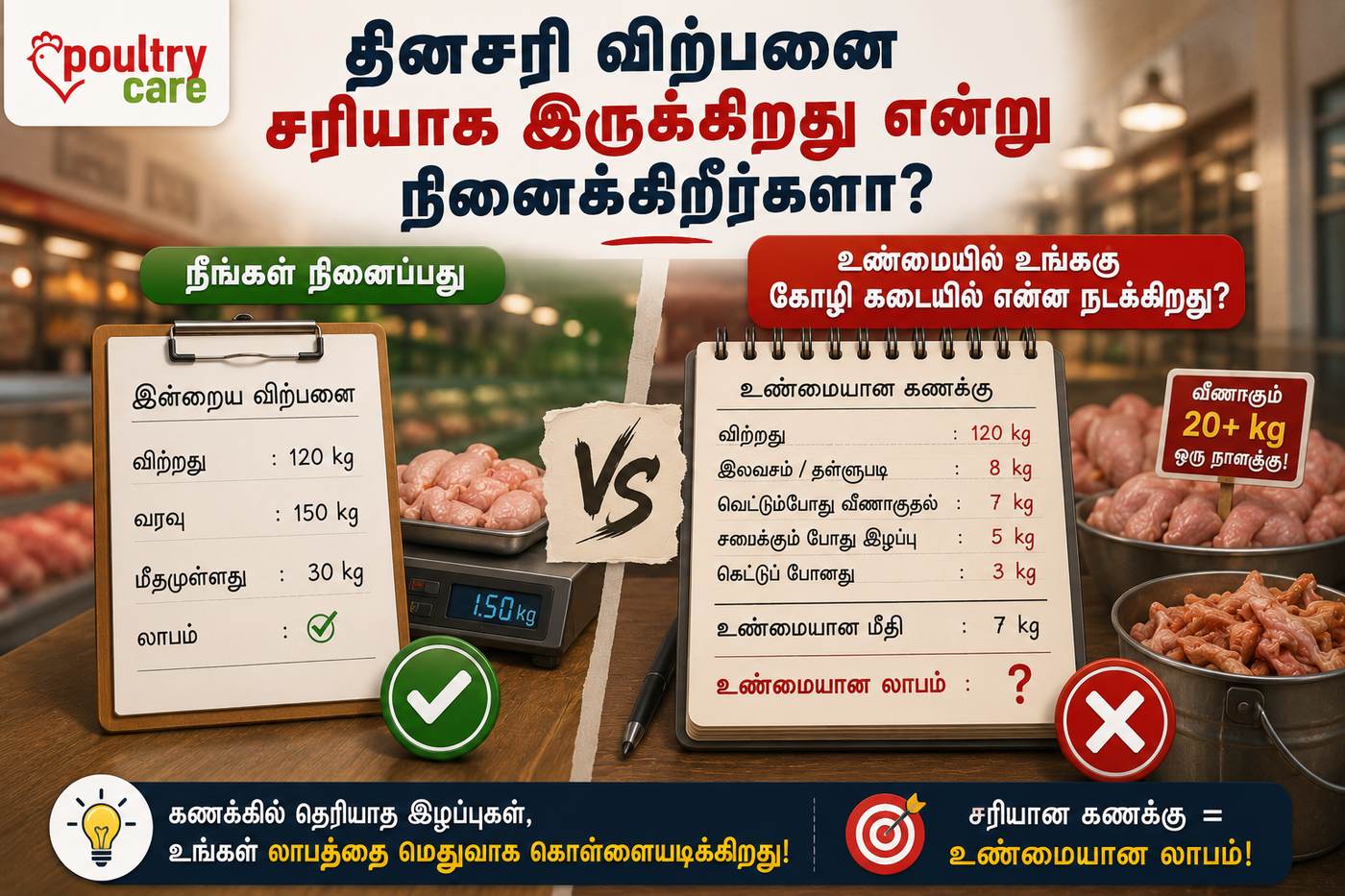
Many poultry traders measure success using sales volume.
They ask how many birds were sold instead of asking how much money was collected.
This creates a dangerous illusion.
A trader selling large quantities on credit may appear successful but actually operate with negative cash flow.
The real business health depends on three movements:
Bird movement
Money movement
Time movement
If these three are not aligned, growth becomes risky.
Farmers often expand trading volume without strengthening collection discipline. Eventually, working capital becomes locked in unpaid invoices.
The business grows outward but weakens internally.
Lack of Daily Visibility Creates Financial Confusion
Another major challenge is lack of daily financial visibility.
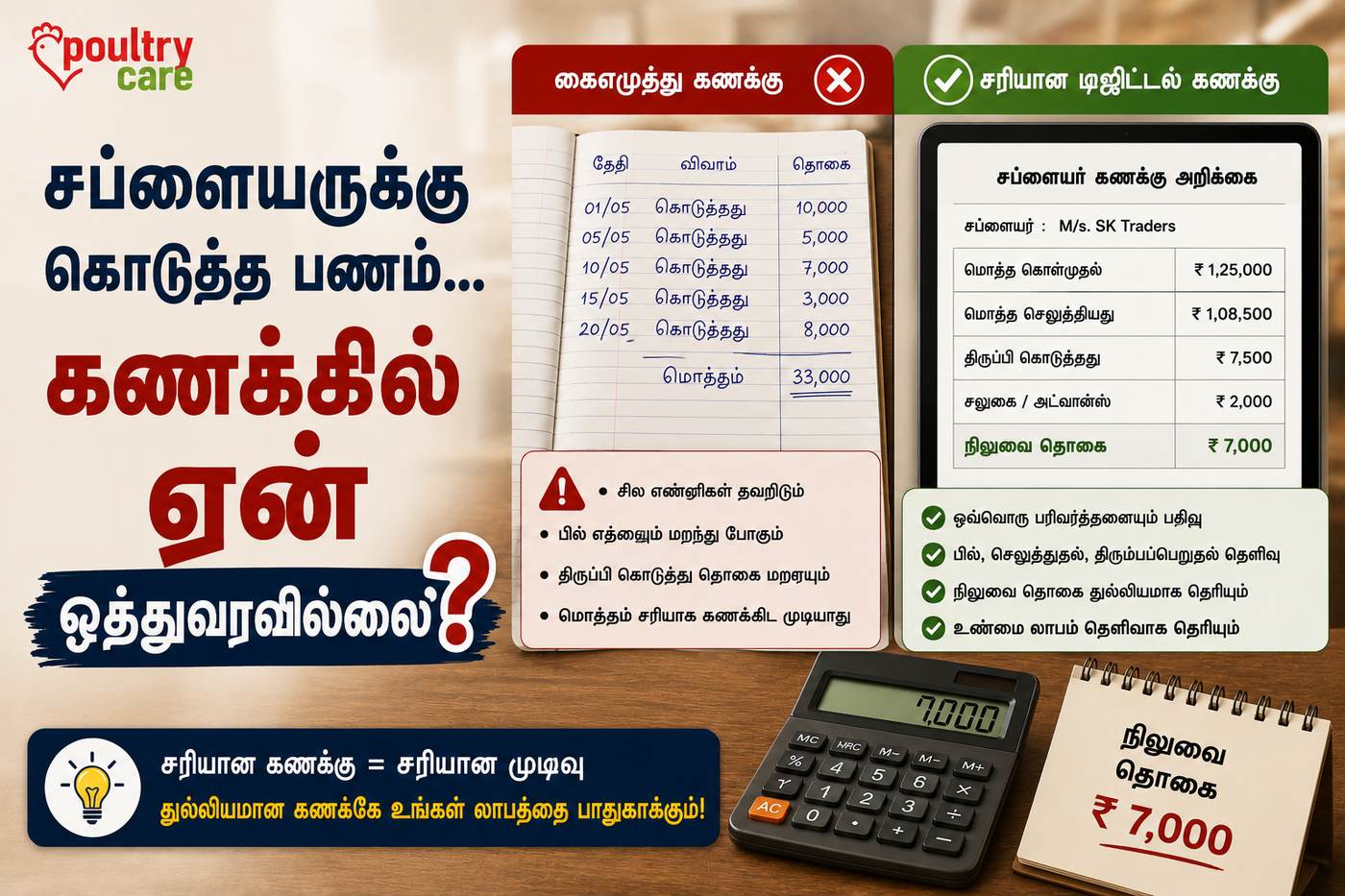
Many traders still rely on memory, notebooks, or scattered records. When transactions increase, tracking becomes difficult.
Questions start appearing:
Who has to pay today
Which payments are overdue
How much money is expected this week
Which buyer regularly delays payment
Without clear daily tracking, collections become reactive instead of planned.
Farmers only realize payment problems when cash shortage already affects operations.
Daily visibility changes this completely. When traders clearly see receivables every day, collection becomes proactive rather than stressful.
Emotional Decisions vs Business Decisions
Poultry trading relationships are often personal.
Farmers hesitate to request payments strictly because they fear losing buyers. Emotional decisions replace financial discipline.
Common thoughts include:
He is a regular customer, payment will come later
Market is slow this week, let me wait
I should not pressure buyers too much
While relationships are important, unclear payment boundaries slowly weaken business stability.
Professional systems do not damage relationships. Instead, they create mutual clarity.
Buyers also respect structured traders because expectations are transparent.
The Chain Reaction of Delayed Cash
One delayed payment rarely stays isolated.
It triggers a chain reaction across the entire poultry operation.
Delayed buyer payment leads to delayed supplier payment. Supplier pressure leads to reduced supply flexibility. Reduced flexibility leads to missed market opportunities.
Soon, the trader operates under constant financial pressure.
The business begins reacting to problems instead of planning growth.
Understanding this chain reaction helps farmers realize that payment management is not accounting work. It is business survival work.
How Successful Traders Maintain Cash Discipline
Experienced poultry traders follow simple but powerful practices.
They maintain clear payment terms before delivery. Buyers understand timelines in advance.
They review outstanding balances daily instead of monthly.
They separate sales success from collection success.
They monitor buyer payment behavior over time and adjust credit exposure accordingly.
Most importantly, they treat cash flow as seriously as bird health.
Healthy birds sustain production. Healthy cash flow sustains business.
Building a Collection Mindset in Poultry Trading
Collection should not start after delay happens. It should begin at the time of sale.
A strong collection mindset includes:
Confirming payment timelines clearly
Tracking expected payment dates daily
Communicating reminders professionally
Identifying high risk buyers early
Balancing credit and cash sales
When collections become systematic, traders gain confidence in expansion decisions.
Growth becomes planned instead of stressful.
Technology Is Changing Trading Awareness
Modern poultry businesses are gradually moving toward data driven decision making.
Farmers who gain daily visibility into trading operations experience major improvements in financial clarity.
Instead of asking where money went, they know where money is.
Instead of waiting for problems, they predict them.
Visibility transforms trading from uncertainty into control.
The difference is not intelligence or experience. The difference is awareness.
Conclusion: Sales Bring Revenue but Collections Bring Survival
Selling birds is only half the business.
Collecting payment completes the business.
Many poultry traders work extremely hard yet struggle financially because cash flow management receives less attention than production or pricing.
When farmers begin tracking payments with the same seriousness as flock performance, financial stability improves naturally.
The goal is not simply to sell more birds.
The goal is to ensure every sale turns into timely cash.
Because in poultry trading, profit is not measured by birds sold but by money received at the right time.