
How Shrinkage Affects Cost Per Kg
In most poultry retail shops, pricing decisions are based on purchase cost and market selling rate. Retailers focus on how much they buy and how much they sell. But there is one important factor that quietly changes the entire calculation.
That factor is shrinkage.
Shrinkage does not just reduce weight. It increases your cost per kilogram without you realizing it. This is why many retailers feel that profit is shrinking even when sales are stable.
Why Cost Per Kg Is Not What You Think
When a retailer buys birds, the cost is calculated based on total purchase weight. At that moment, everything looks clear.
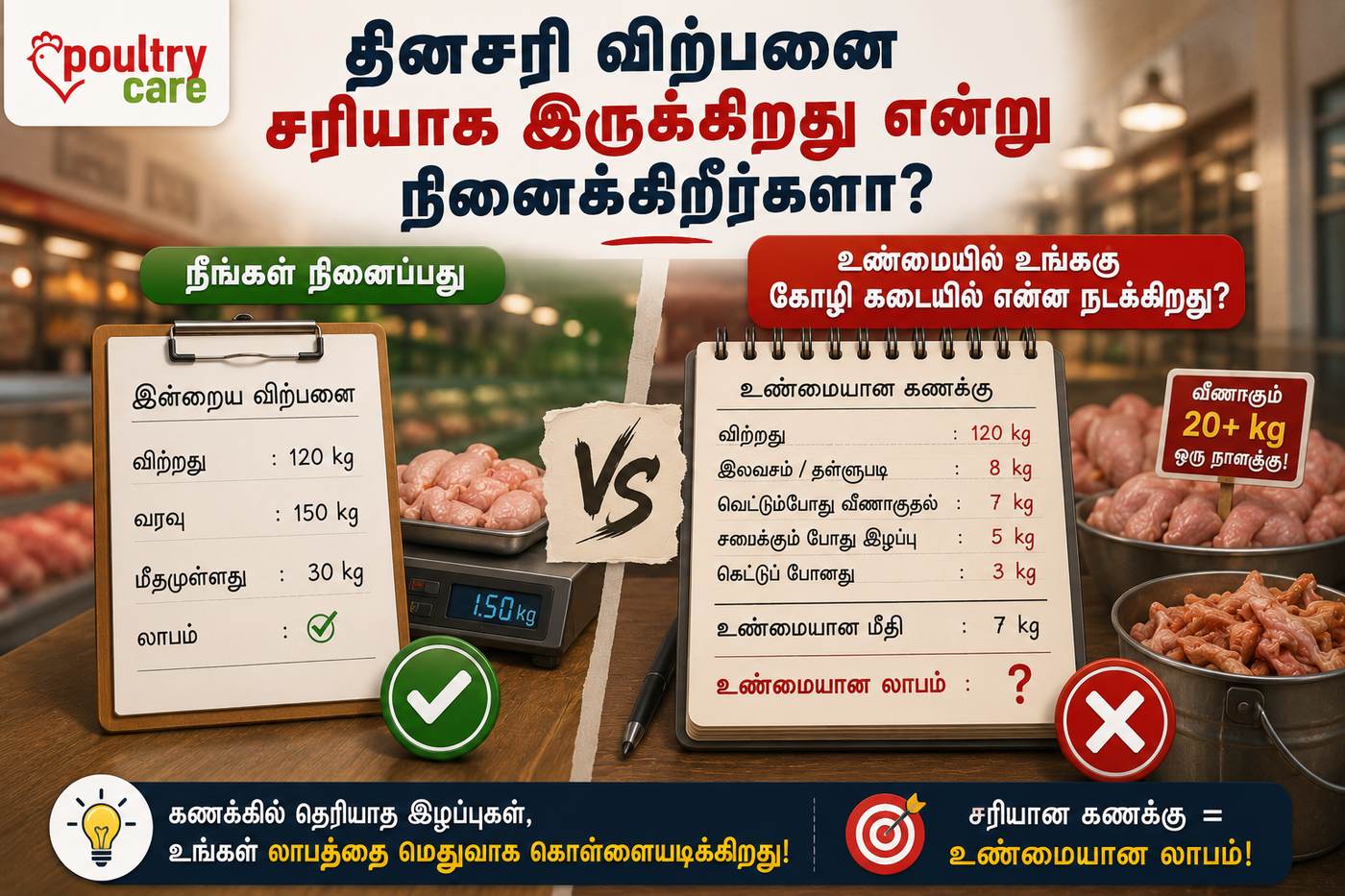
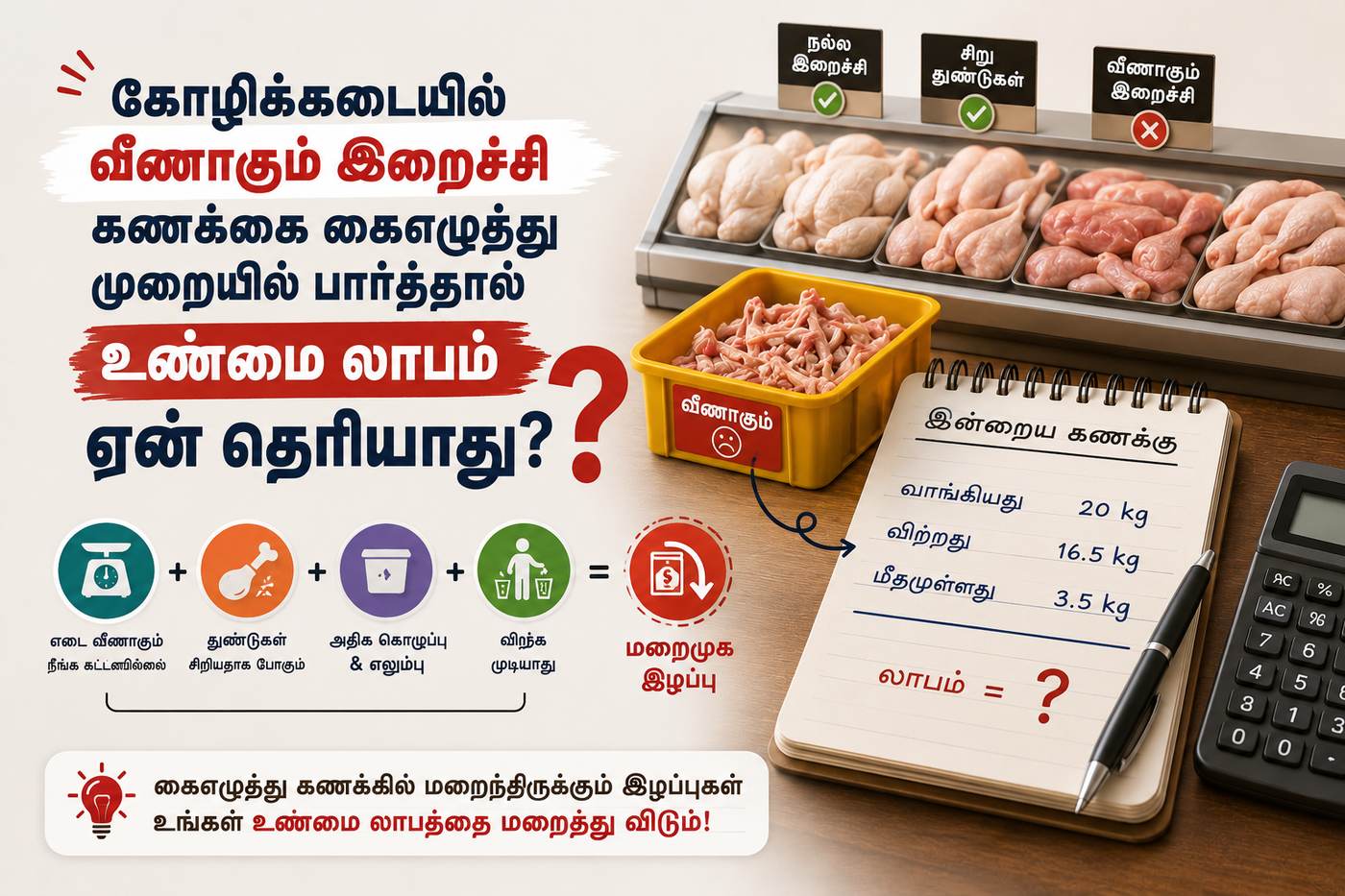
But after processing, cutting, and handling, the weight available for sale reduces. This means you are not selling the full weight you paid for.
As a result, your effective cost per kilogram increases.
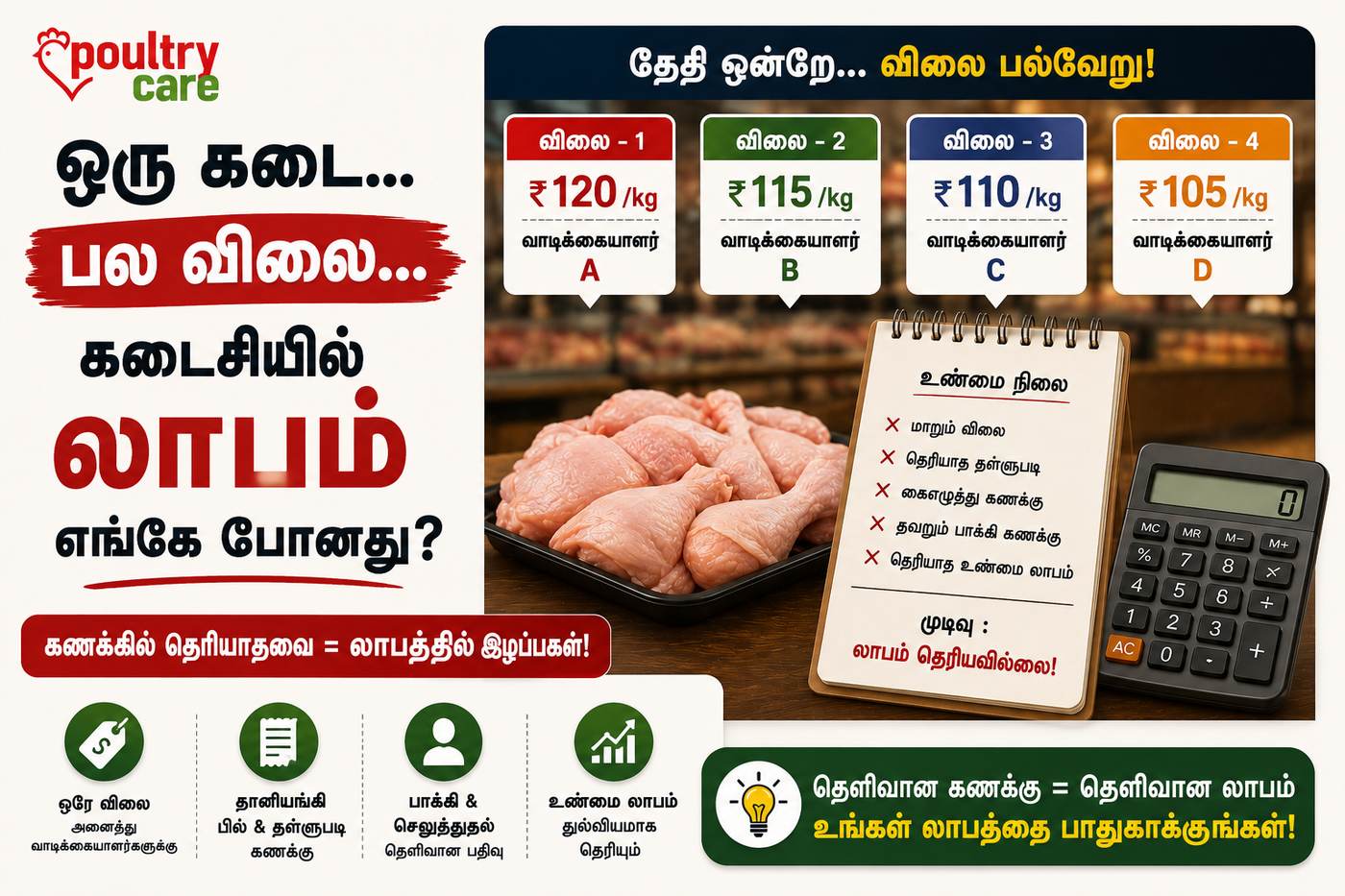
This increase is not visible in billing. It is hidden inside daily operations.
That is why many retailers feel that margins are reducing without any obvious reason.
Understanding the Real Cost Behind the Sale
To understand this clearly, we need to look beyond purchase price.
Your actual cost is not based on what you buy. It is based on what you are able to sell.
Simple formula to understand:
Effective Cost Per Kg = Total Purchase Cost ÷ Actual Saleable Weight
This formula changes everything.
Because even a small reduction in saleable weight increases the cost per kilogram.
A Practical Example That Shows the Impact
Consider a simple situation.
A retailer purchases 200 kilograms of birds at 120 rupees per kilogram. The total purchase cost becomes 24000 rupees.
Based on normal expectations, the retailer assumes around seventy percent yield, which should give 140 kilograms of saleable meat.
But due to shrinkage, the actual sales recorded are only 134 kilograms.
24000 divided by 134 gives approximately 179 rupees per kilogram.
Even though the purchase cost was 120 rupees, the effective cost becomes 179 rupees.
This difference comes purely from shrinkage.
Now imagine selling at 180 rupees per kilogram.
The margin becomes extremely low, almost negligible.
This is how shrinkage silently eats into profit.
Why Retailers Fail to Notice This Change
The biggest reason is visibility.
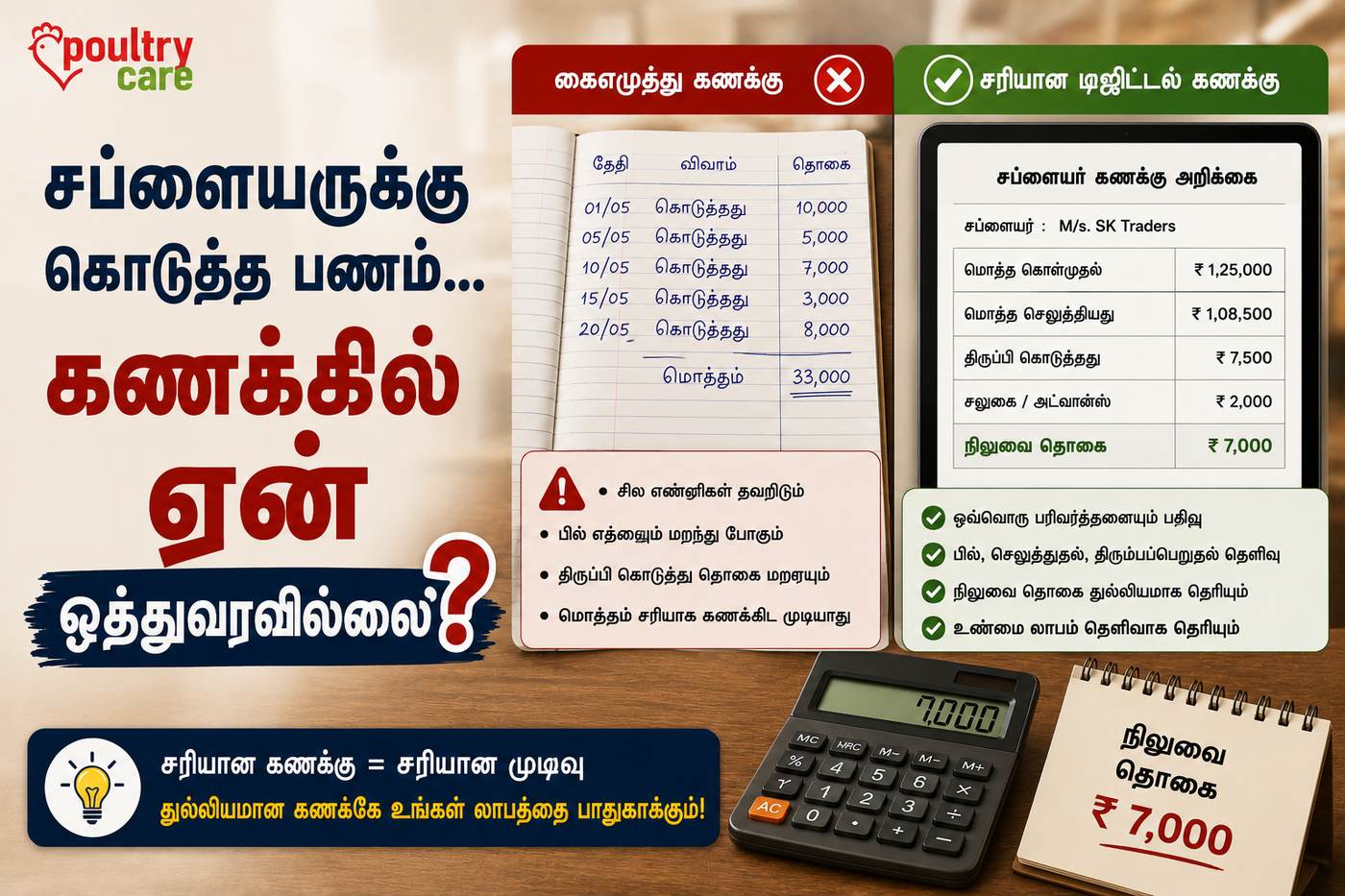
Retailers calculate purchase cost and selling price, but they do not calculate effective cost after shrinkage.
Since shrinkage is not measured daily, its impact on cost remains hidden.
Over time, retailers feel pressure on margin but cannot identify the exact reason.
They may think market price is low or expenses are high, but the real issue is often internal.
How Shrinkage Turns Profit Into Loss
When shrinkage increases, cost per kilogram rises.
If selling price does not increase accordingly, margin reduces.
In some cases, retailers may unknowingly sell at a price that does not cover actual cost.
This creates a situation where sales are happening, but profit is not growing.
In extreme cases, it can even lead to loss without the retailer realizing it immediately.
Small Improvement Creates Big Cost Advantage
Now look at the impact of a small improvement.
If the retailer reduces shrinkage and increases saleable weight from 134 kilograms to 136 kilograms, the calculation changes.
24000 divided by 136 gives approximately 176 rupees per kilogram.
Just 2 kilograms improvement reduces cost by around 3 rupees per kilogram.
This difference directly increases profit.
This shows that controlling shrinkage is not just about saving weight. It is about improving cost efficiency.
Connecting Daily Operations to Cost Control
Shrinkage is influenced by daily shop practices.
Cutting consistency affects how much meat is recovered.
Storage conditions influence moisture loss.
Weighing accuracy determines how much is billed correctly.
Handling discipline reduces unnecessary waste.
Each of these factors contributes to the final saleable weight.
When these are controlled, shrinkage reduces and cost per kilogram improves automatically.
Moving from Assumption to Calculation
Many retailers operate based on assumption.
They assume yield, assume margin, and assume profit.
But real control comes from calculation.
When retailers start calculating effective cost per kilogram regularly, they gain clarity.
This clarity helps in better pricing decisions.
It also helps in identifying operational gaps that need improvement.
Building a Cost-Aware Retail Mindset
Understanding shrinkage is not enough. Retailers need to connect it with cost.
When cost per kilogram is clearly understood, decision-making improves.
Retailers become more careful with operations.
Staff become more aware of handling practices.
Pricing becomes more confident.
This shift in mindset creates long-term stability in the business.
Final Takeaway for Poultry Retail Owners
Shrinkage does not just reduce weight.
It silently increases your cost per kilogram.
If not measured, it reduces your margin without warning.
If understood and controlled, it improves your profitability without increasing sales.
Start by calculating your real cost based on actual sales weight.
Because in poultry retail,
profit is not decided by purchase price alone
it is decided by how much weight you actually convert into sales 👍