
🐔 Employee Accountability in Weight Loss Control
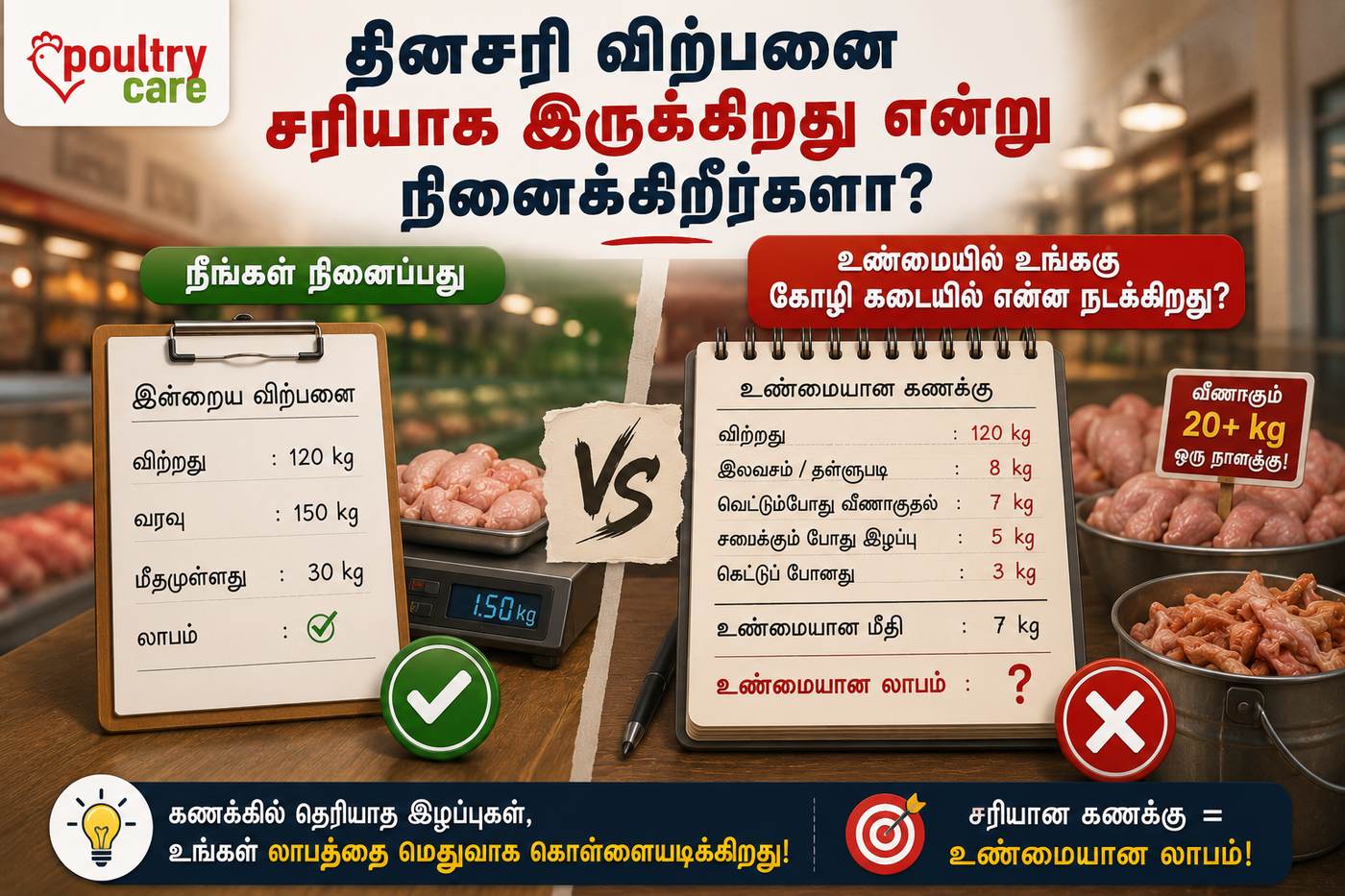
In most poultry retail shops, shrinkage is seen as a natural part of the business. Some level of weight loss is expected, but when shrinkage goes beyond control, it starts affecting profit in a serious way.
Many retailers try to solve this problem by focusing on systems, pricing, or purchase decisions. But one important factor often gets ignored.
That factor is employee accountability.
Because in day-to-day retail operations, it is not systems that handle the birds. It is people.
And when people are not aligned with outcomes, loss increases quietly.
Why Shrinkage Is Often Linked to Staff Behavior
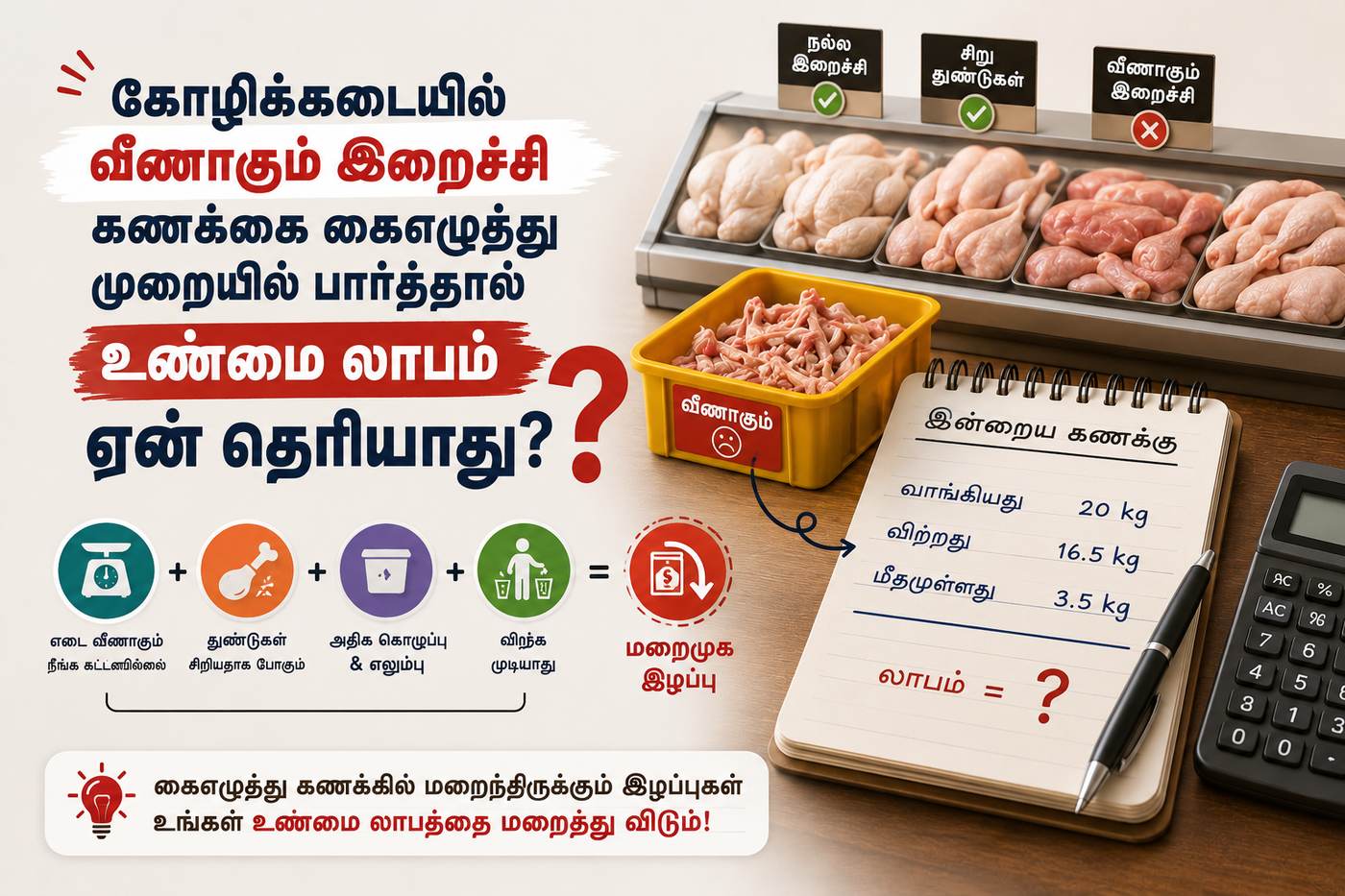
Shrinkage does not happen only because of technical reasons like moisture loss or yield variation. A large portion of it comes from how the product is handled inside the shop.
Cutting style differs from person to person. Some staff extract maximum meat, while others leave more wastage.
Weighing practices also vary. Small inaccuracies in weighing, repeated across many transactions, lead to measurable loss.
Handling during peak hours becomes rushed. In that rush, discipline reduces, and wastage increases.
These are not intentional mistakes. They are behavioral gaps.
And behavioral gaps cannot be solved by instructions alone.
They require accountability.
The Gap Between Responsibility and Accountability
In many shops, staff are given responsibilities but not accountability.
A person may be responsible for cutting, but no one tracks how efficiently the cutting is done.
A person may handle weighing, but no one checks whether the weight matches the expected output.
When there is no connection between work and outcome, performance does not improve.
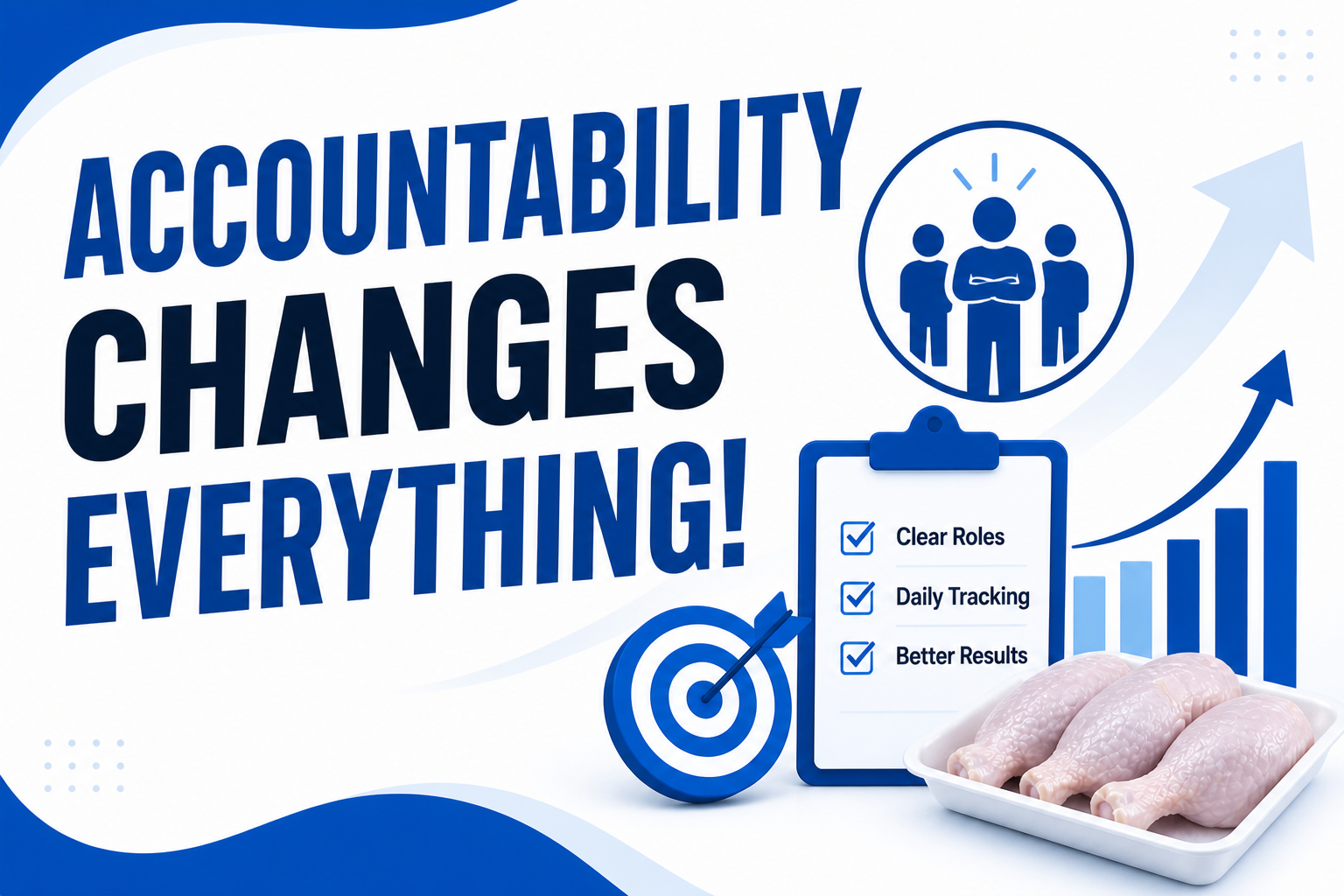
Accountability means linking daily actions to measurable results.
When staff understand that their work directly impacts shrinkage, their approach changes.
Making Shrinkage Visible to Everyone
One of the biggest reasons for lack of accountability is lack of visibility.
If shrinkage is not measured daily, no one knows the actual loss.
And when no one knows the loss, no one feels responsible.
The moment shrinkage becomes visible, behavior starts changing.
When staff can see daily numbers, they begin to understand how small actions affect overall performance.
This creates awareness.
And awareness is the first step toward accountability.
Simple Ways to Build Employee Accountability
Accountability does not require strict control or pressure. It can be built through simple practices.
Clearly defining expected output helps staff understand what is normal and what is not.
Regularly checking daily shrinkage connects performance with results.
Discussing numbers openly creates shared responsibility instead of blame.
Keeping tracking simple ensures consistency in monitoring.
When these practices are followed, accountability becomes part of the system without creating stress.
How Accountability Improves Shop Performance
When employees become accountable, small improvements begin to appear.
Cutting becomes more consistent, leading to better meat recovery.
Weighing becomes more accurate, reducing unnoticed loss.
Handling improves, especially during busy hours.
Storage discipline becomes stronger, reducing avoidable shrinkage.
These improvements may look small individually, but together they create a significant impact on overall profitability.
From Monitoring to Ownership
The goal of accountability is not to control employees. It is to create ownership.
When staff feel that their work is being observed fairly and measured clearly, they begin to take responsibility for outcomes.
Instead of being told what to do, they start improving on their own.
This shift from monitoring to ownership is what creates long-term stability in operations.
Avoiding Common Mistakes in Staff Management
Some retailers try to control shrinkage by increasing pressure on staff. This approach often fails.
Too much pressure reduces morale and leads to resistance.
Lack of clarity creates confusion instead of improvement.
Irregular tracking breaks the system and reduces trust.
The better approach is to create a balanced environment where expectations are clear, tracking is consistent, and communication is open.
Final Takeaway for Poultry Retail Owners
Shrinkage is not only a process issue. It is also a people issue.
Without employee accountability, even the best systems will not deliver results.
With accountability, even simple systems can create strong control.
Start by making shrinkage visible. Connect daily work with outcomes. Build awareness inside your team.
Because in poultry retail,
profit is not controlled only by what you buy and sell
it is controlled by how your team handles every kilogram