
In poultry trading, most people watch the rate per kilogram very carefully. They negotiate hard. They compare markets. They track price movement daily.
But at the same time, many ignore grams.
Not kilograms — grams.
Because grams look too small to matter.
In real field trading, I’ve seen this many times. A trader argues for ₹2 better rate but ignores 15 grams average shrinkage per bird. On paper he wins the deal. In reality he loses the margin.
The uncomfortable truth is this — in volume poultry trading, grams decide profit more often than rate difference.
Let us break this down in simple farm-level understanding so every trader can see the real picture.
Why 10–20 Grams Looks Small — But Isn’t Small in Trading
When you hold a bird, 10–20 grams feels like nothing. Even on a weighing scale, it looks like a minor variation. Many treat it as rounding difference.
But poultry trading is not a one-bird business. It is a volume chain.
Let us take a simple working example from field conditions.
If you trade 3,000 birds in a day
and each bird shows 15 grams lower landing weight
you lose 45 kilograms of sellable weight.
Now multiply this across 25 trading days.
That becomes more than 1,100 kilograms in a month.
That is not a rounding error. That is truck-level weight.
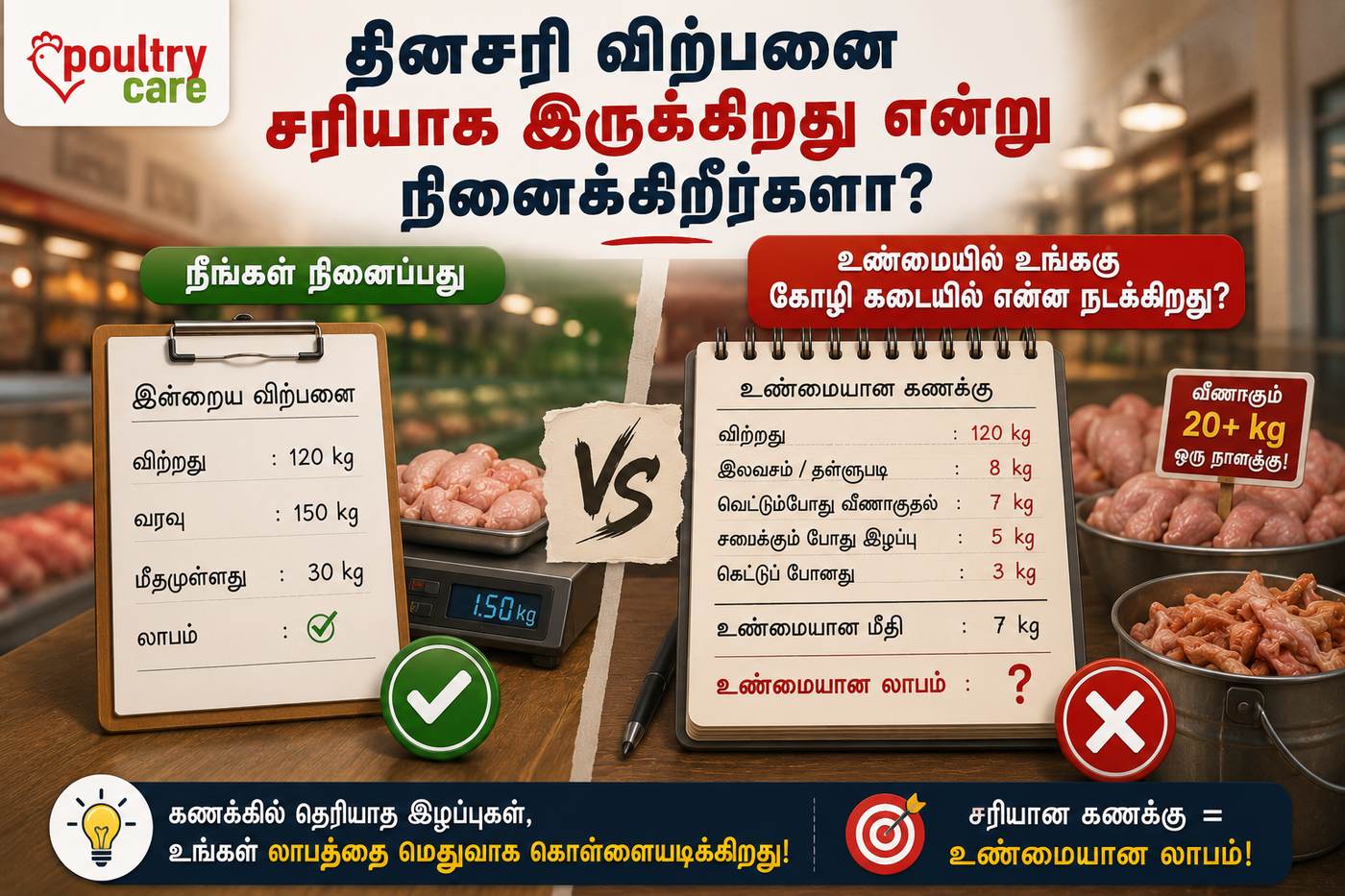
And this happens quietly — without noise, without complaint, without visibility.
Small per-bird loss becomes big business loss only because of repetition.
Where These 10–20 Grams Disappear in Real Operations
Many traders think shrinkage happens only during travel. But micro weight loss starts earlier.
It begins during catching. Rough handling increases bird activity and stress. Stress increases metabolic burn. Birds lose moisture faster.
Then comes holding time. Birds caught early but loaded late stay longer without feed and water balance.
Then crate density. Slight overloading creates heat stress. Heat stress increases respiration rate. Fast respiration means faster moisture loss.
Then transport vibration and airflow issues add more pressure.
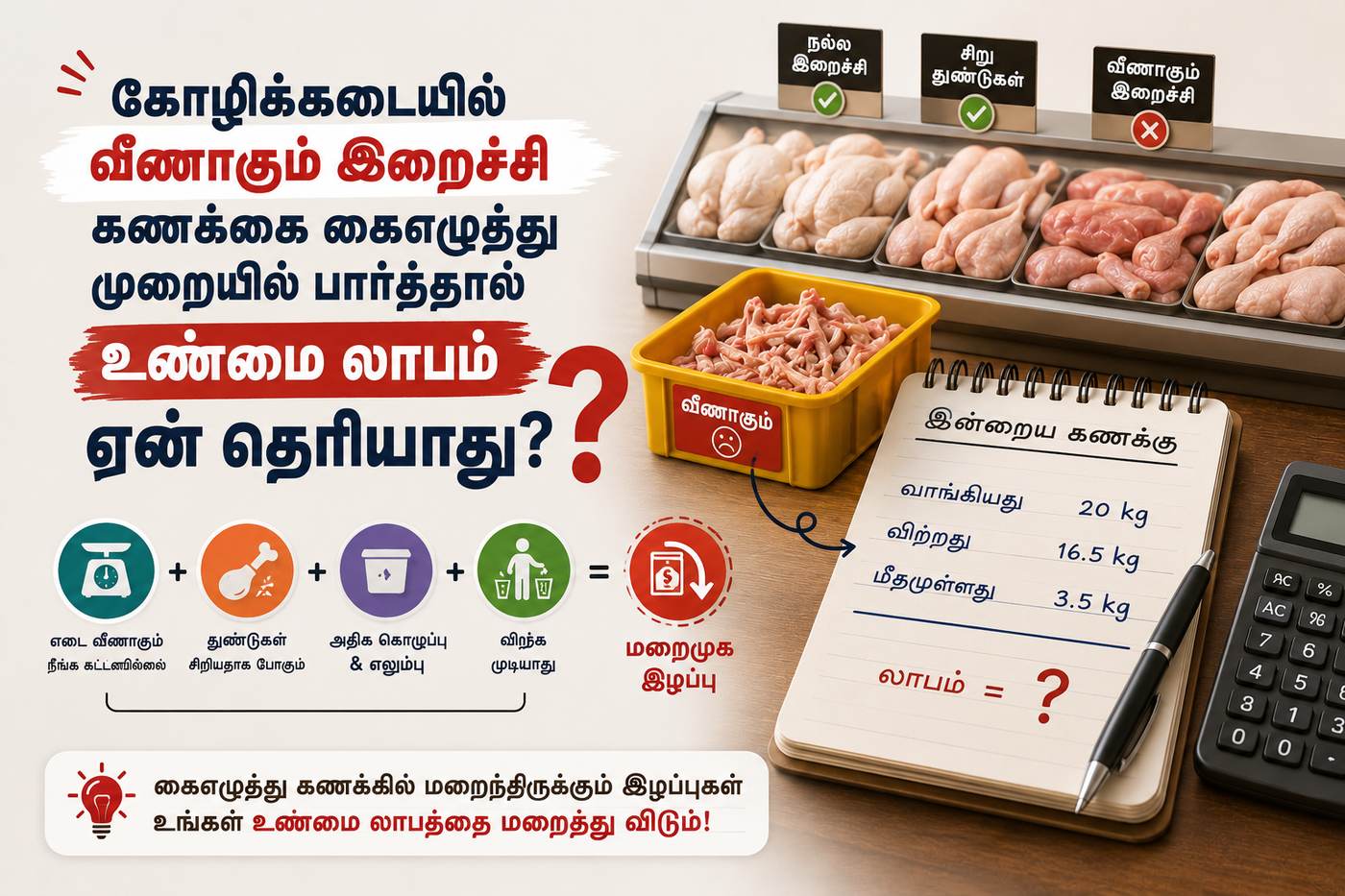
Each stage takes a few grams. No single stage looks guilty. Combined effect becomes measurable loss.
Loss is rarely one big mistake. It is many small habits.
Why Most Traders Don’t Calculate Gram-Level Loss
Because accounts are usually done in kilograms and cash totals — not per-bird variance.
Invoices show total weight. Payments show total value. But variance between dispatch weight and arrival weight is often treated as adjustment, not analysis.
Also, poultry trading is fast-paced. Decisions are quick. Loads move daily. There is little habit of pattern tracking.
But experienced margin-focused traders do something different — they compare batch averages, not just totals.
They don’t ask: “What was total weight?”
They ask: “What was per-bird difference?”
That question changes business visibility.
How Gram Loss Cancels Your Price Negotiation Advantage
This is where reality becomes uncomfortable.
Suppose you negotiate ₹1 better rate per kilogram. That feels like a good win.
But if average bird weight drops 20 grams more than expected, your improved rate advantage is already diluted.
Better rate with lower landing weight is not a better deal — it is a disguised neutral deal.
Smart traders evaluate deals using two numbers together:
Rate per kg
Landing weight accuracy
If both are not protected, margin is unstable.
Good trading is not just buying right. It is landing right.
Transport and Waiting Time Multiply Gram Loss
Weight loss speed increases with stress duration. Many losses happen not during movement — but during waiting.
Loaded vehicles parked in heat
market queue delays
late unloading
buyer-side coordination gaps
Birds continue losing moisture the entire time.
A two-hour delay can easily convert a 10-gram shrinkage into 18–20 grams.
Time under stress is weight under loss.
That is why coordinated dispatch planning is not logistics — it is margin management.
Why Regular Shrinkage Tracking Changes Trader Behavior
When traders begin recording per-bird arrival differences regularly, behavior automatically improves.
Handling teams become more careful.
Loading timing becomes tighter.
Transport choices become selective.
Market coordination becomes proactive.
Measurement creates responsibility.
Without numbers, shrinkage feels normal.
With numbers, shrinkage becomes controllable.
In field practice, even simple trip-wise logs reduce loss because awareness changes decisions.
The Practical Control Mindset — Not Zero Loss, But Lower Loss
Let us stay practical. Zero shrinkage is not realistic. Birds are biological, not mechanical.
But controllable shrinkage is realistic.
Better catching discipline
proper crate density
reduced waiting time
season-adjusted transport timing
planned unloading slots
These do not require heavy investment. They require management attention.
Most poultry profit improvements come from process correction, not price luck.
Final Field Lesson — Grams Are Silent Profit Signals
In poultry trading, big mistakes are easy to see. Small leaks are not.
But small leaks repeat daily. And repetition builds damage.
10–20 grams per bird is not a weighing scale issue — it is a business signal.
It tells you how strong your handling, timing, and coordination systems are.
Rate decides your deal.
Weight accuracy decides your profit.
Smart traders respect grams — because grams become tons over time.
And tons decide yearly margin.