
In poultry trading, one common line is heard almost everywhere:
“Some weight loss is normal — nothing can be done.”
Most traders accept this without question. When birds leave the farm at one weight and reach the buyer lighter, it is often treated as routine adjustment. Bills get corrected. Rates get renegotiated. Business moves on.
But here is the important question — is it truly unavoidable, or have we simply become used to it?
From years of working closely with poultry farmers, traders, transporters, and market handlers, one clear truth stands out: weight loss during bird movement is common — but not always fully normal. A part of it is natural biology. A part of it is operational mistake.
Knowing the difference is where profit begins.
Let us break this down in simple, field-level understanding.
Understanding What “Normal” Weight Loss Really Means
Birds are living bodies, not packaged goods. The moment they are caught, crated, and moved, their environment changes. That change triggers stress response. Stress causes energy burn and moisture loss. That reflects on the weighing scale.
A small percentage of weight drop between dispatch and arrival is biologically expected. This happens due to:
-
Temporary feed withdrawal
-
Physical activity during catching
-
Travel stress
-
Water loss through respiration
This is what we can call natural movement shrinkage.
But here is where confusion starts — many traders label all weight loss as natural, even when it is actually operational.
Natural loss is small and predictable. Operational loss is larger and irregular.
Understanding this difference changes how you manage trading.
Where Avoidable Weight Loss Quietly Happens
Avoidable loss does not come from bird biology — it comes from human process gaps.
It starts at catching time. Rough handling, loud noise, overcrowded crates, and rushed loading create panic. Panic increases muscle activity. Muscle activity burns energy. Energy burn reduces weight.
Next comes crate density. When birds are packed beyond comfort level, airflow reduces and body heat rises. Birds start breathing faster and losing moisture faster.
Then comes timing gaps. Birds caught too early but transported too late remain under stress longer than necessary.
None of these are natural causes. These are controllable conditions.
In trading, small process discipline often saves more money than price negotiation.
Transport Conditions Decide More Than Distance
Many people believe weight loss depends mainly on how far birds travel. Field reality shows something different. Travel condition matters more than travel distance.
A short trip in a hot, poorly ventilated vehicle can cause more loss than a longer trip in a well-ventilated moving truck.
Important transport factors include:
-
Airflow through crates
-
Heat buildup
-
Travel interruptions
-
Vibration and jerks
-
Midway waiting time
Birds standing in a stationary loaded vehicle under heat lose weight faster than birds moving steadily in airflow.
Good traders track which vehicle patterns consistently deliver better landing weights. That observation itself becomes a business advantage.
Market Delay — The Most Ignored Loss Stage
One of the biggest hidden loss points is after arrival. Birds reach market — but not the weighing scale immediately. Queue delays, buyer coordination, and unloading slowdowns extend crate time.
During this waiting period, birds continue losing moisture and energy.
Because the journey is “finished,” traders mentally stop tracking loss here. But biologically, stress continues until birds are unloaded and settled.
Better buyer coordination and scheduled arrival slots reduce this invisible weight drop significantly.
Sometimes one phone call saves more kilograms than one price negotiation.
Seasonal Impact — Why Summer and Winter Results Differ
If you observe closely, weight loss patterns change with seasons. But many trading practices remain unchanged across the year.
In hot weather, dehydration happens faster. In cold weather, birds burn more energy to maintain body temperature. Both conditions affect landing weight differently.
Smart seasonal adjustments include:
-
Night or early morning loading in summer
-
Reduced crate density in heat
-
Wind protection in winter
-
Faster transfer from vehicle to buyer
Season-aware trading is not extra work — it is margin protection thinking.
Is Weight Loss Avoidable? The Practical Field Answer
Let us be clear and practical — weight loss cannot be reduced to zero. Anyone promising zero shrinkage is not speaking from field reality.
But meaningful reduction is absolutely possible.
When traders start measuring dispatch vs arrival weight regularly, patterns appear. When patterns appear, improvements become possible.
Better handling teams. Better crate loading. Better timing. Better transport choice. Better buyer coordination.
None of this needs expensive technology first. It needs attention first.
Avoidable loss reduces when awareness increases.
Why Smart Traders Track Movement Data
Experienced traders do one thing differently — they track numbers instead of relying on assumptions.
They compare:
-
Farm dispatch weight
-
Arrival weight
-
Time taken
-
Vehicle used
-
Season
-
Market delay
Within weeks, they know which routes, teams, and timings give better outcomes.
What gets measured gets improved.
What gets ignored gets repeated.
In poultry trading, data is not paperwork — it is profit memory.
Final Thought — Don’t Accept Loss Without Understanding It
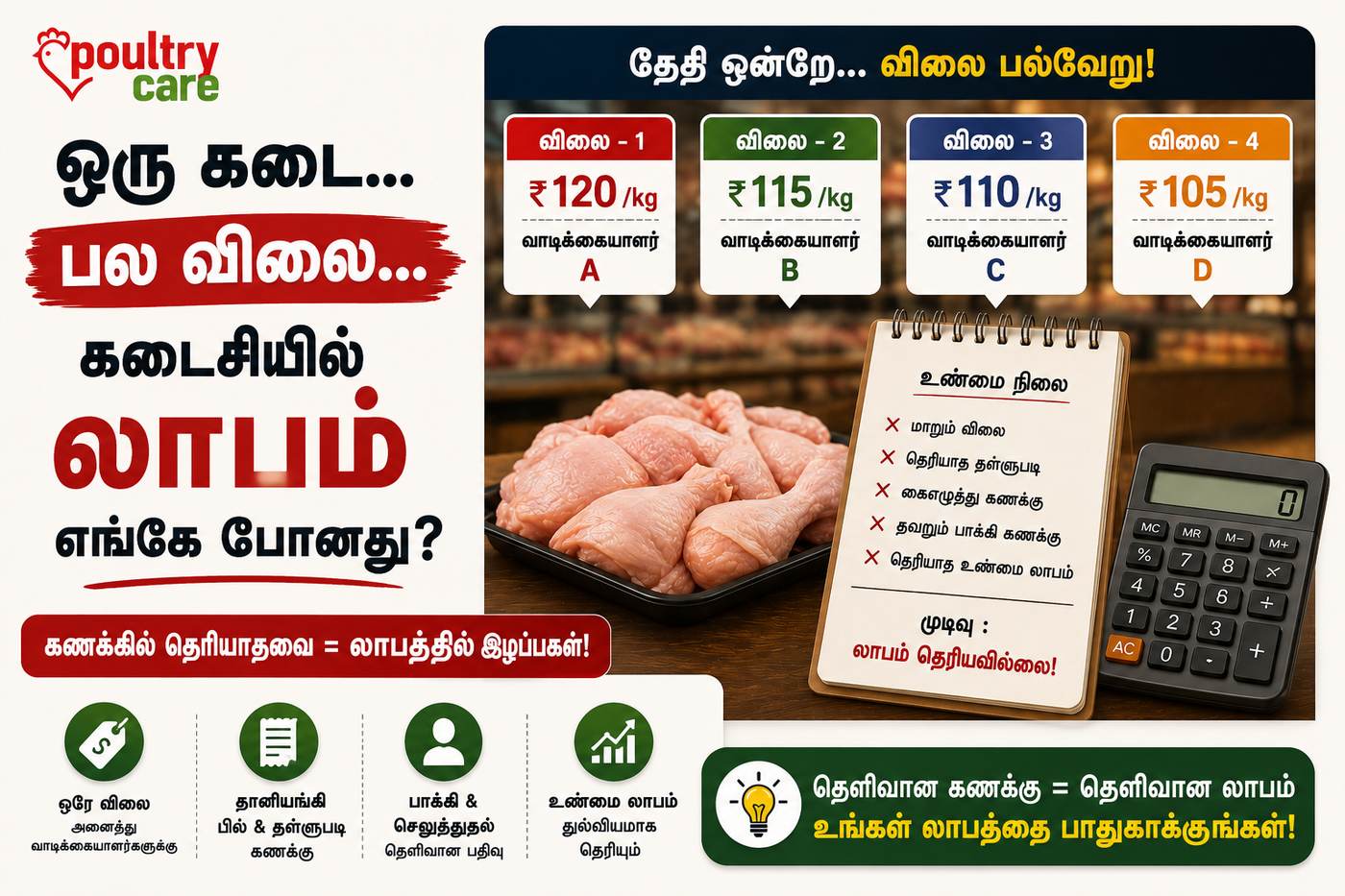
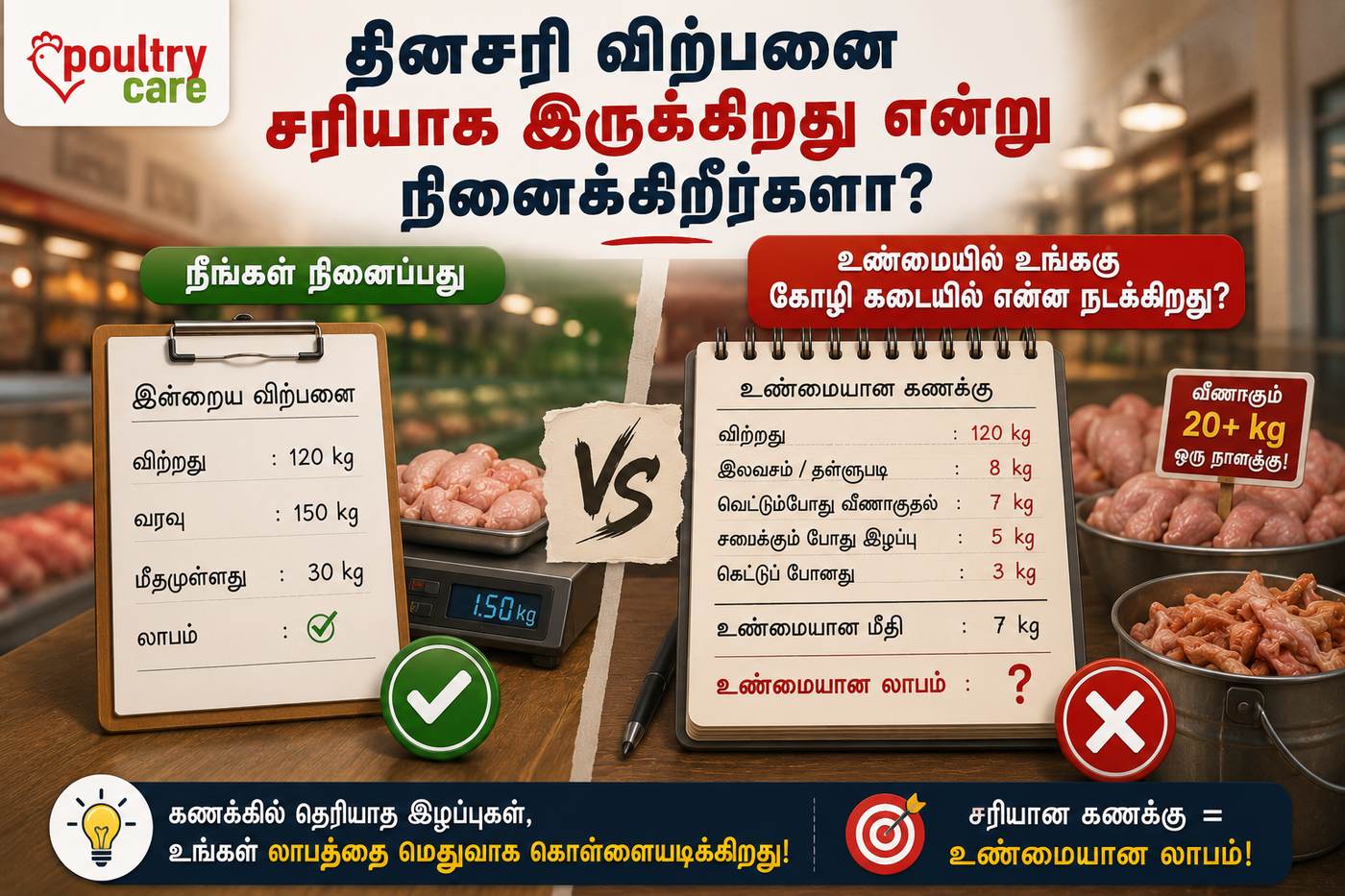
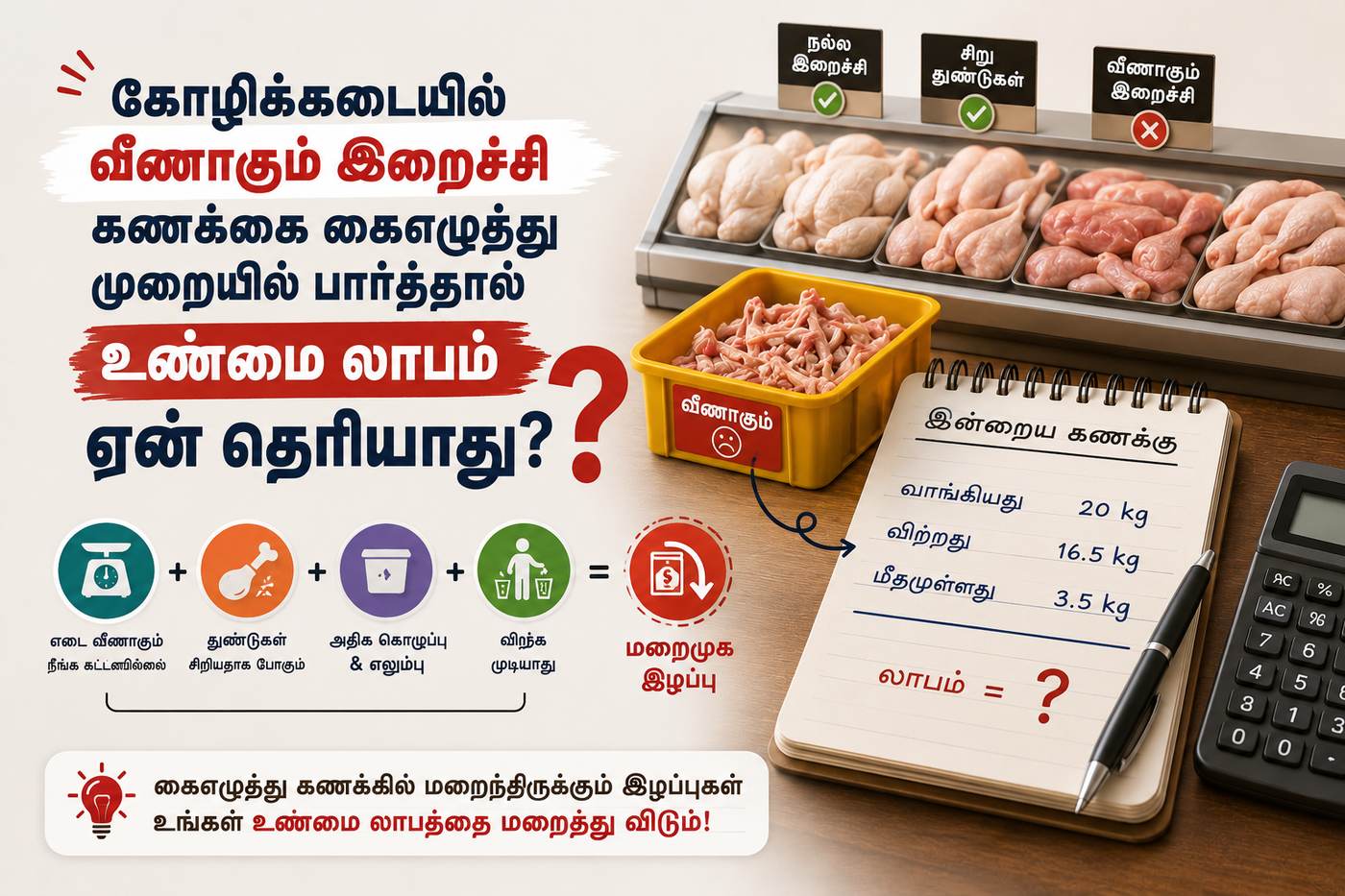
In poultry trading, margins are already tight. Feed cost, bird price, fuel cost, labor — everything moves. When weight loss is blindly accepted, profit leaks silently.
The better approach is not to blame — but to understand. Not to complicate — but to observe. Not to assume — but to measure.
Some weight loss is normal.
Excess weight loss is preventable.
The difference between the two is where smart trading lives.
And traders who learn to see this clearly grow more steadily than those who simply accept it.