
Every poultry trader has experienced this moment.
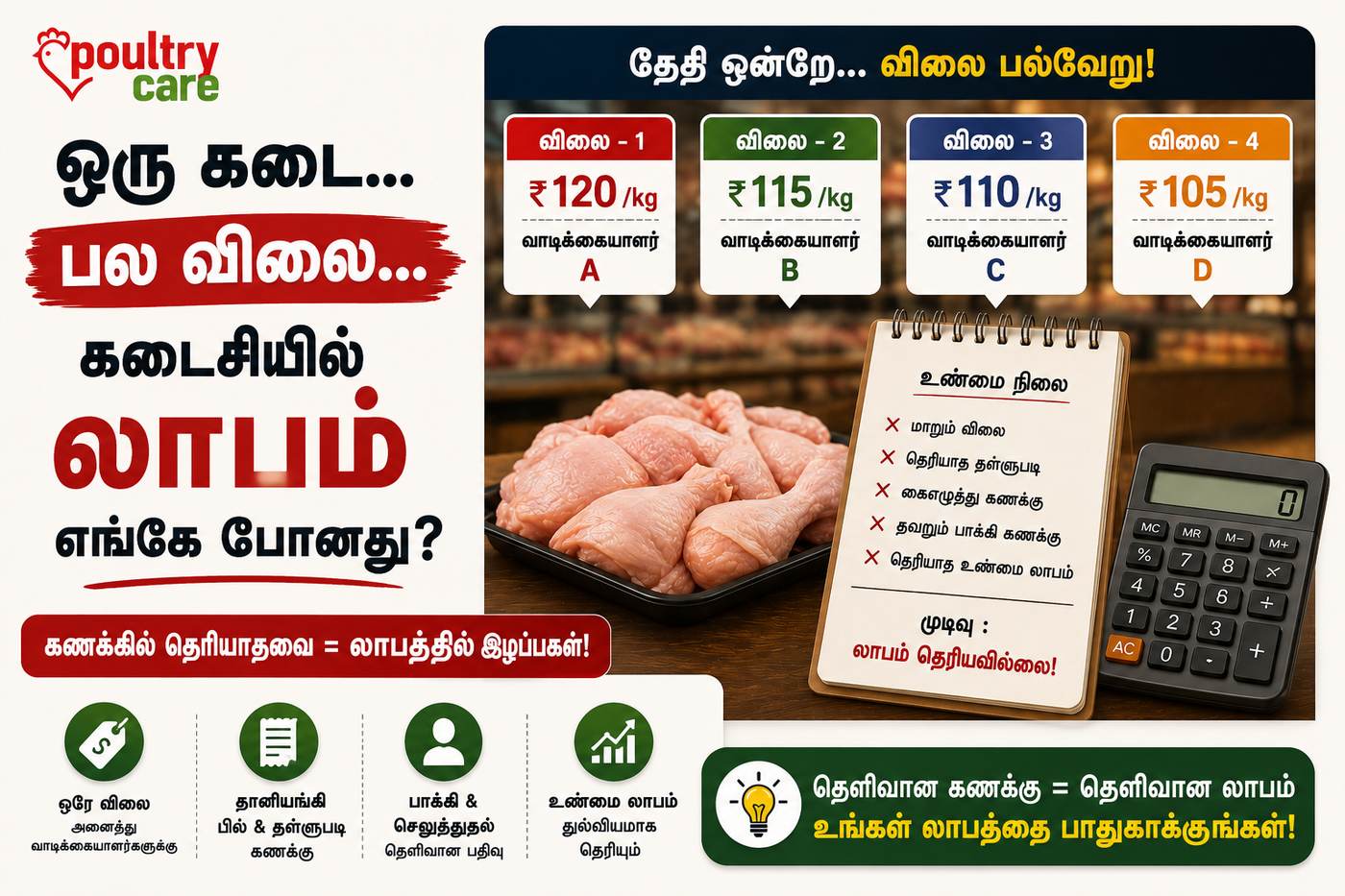
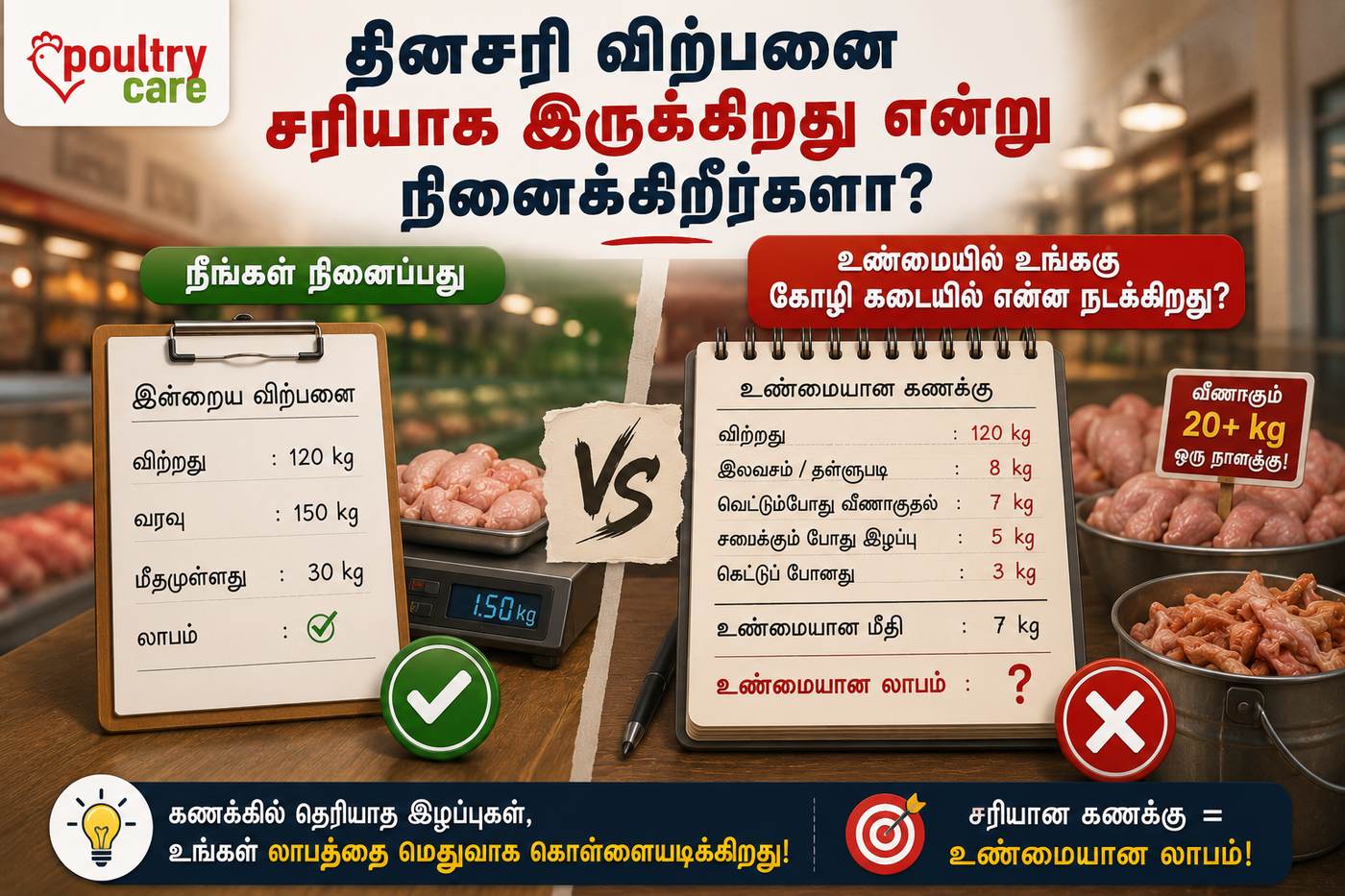
The buying rate felt reasonable. The selling price looked strong. Volumes moved smoothly. Trucks went out on time. On paper, the trade should have delivered a decent margin. Yet, when the day ends and accounts are checked, the profit feels thinner than expected—or worse, missing.
This gap between expectation and reality is not a coincidence. It is not bad luck. And it is certainly not because poultry trading is no longer profitable.
The real issue lies deeper, in how trading decisions are made, how costs behave quietly in the background, and how profit is often assumed rather than truly understood.
In poultry trading, profit does not disappear suddenly. It leaks slowly, silently, and consistently.
The Dangerous Comfort of “Estimated Profit”
In poultry trading, most profit calculations are mental. Traders often calculate margin at the time of purchase itself. A quick subtraction between buying rate and expected selling rate gives a sense of confidence. Once that mental number is fixed, everything else is assumed to fall into place.
This is where the problem begins.
Expected profit is not real profit. It is only a hope based on incomplete information. Real profit is shaped later, during transport, during holding, during negotiations, during collections, and sometimes during delays that feel unavoidable.
Marketing teaches us that customers don’t buy products—they buy outcomes. In the same way, traders don’t earn profit from prices—they earn it from control. When control is missing, expectations collapse.
Hidden Costs Don’t Announce Themselves
The most dangerous costs in poultry trading are not the obvious ones. Everyone knows the cost of purchase. Everyone remembers the selling rate. What quietly eats into margin are the costs that feel too small to track individually.
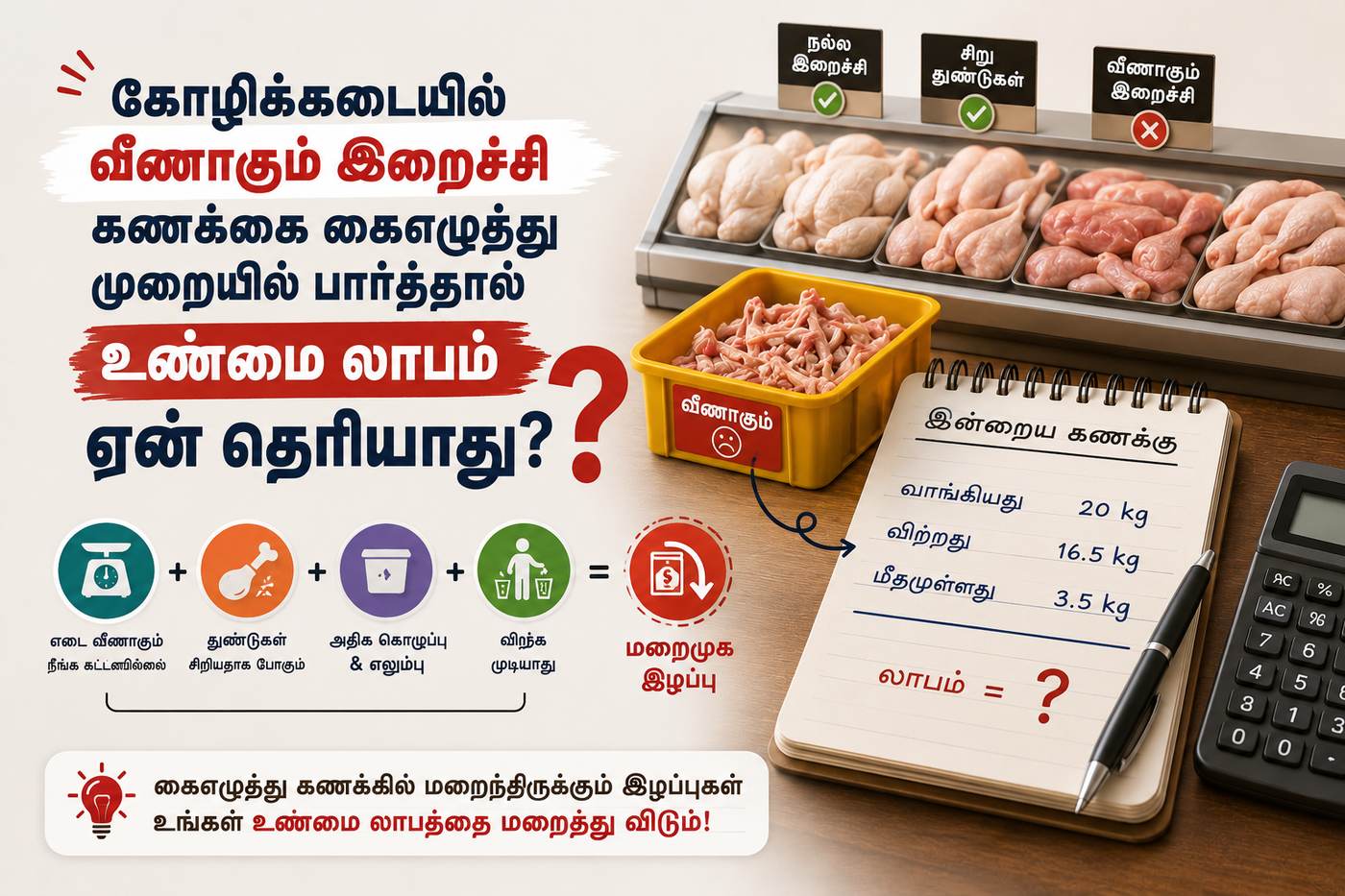
Transport rarely goes exactly as planned. A delayed truck changes feed withdrawal timing. Mortality during transit is mentally adjusted, not financially recorded. Loading and unloading losses are accepted as “normal.” Informal expenses appear during movement and vanish without records. Credit given to buyers stretches longer than expected, locking working capital.
None of these costs feel large enough to worry about on their own. But marketing psychology teaches us something important: people underestimate cumulative impact when costs are fragmented.
In poultry trading, fragmentation hides the truth.
Price Is a Story, Timing Is the Reality
Many traders believe that a good selling price guarantees profit. This belief is emotionally comforting but economically flawed.
Price alone does not define profitability. Timing does.
Buying on a high-confidence day and selling after a delay can quietly flip margins. Holding birds for one extra day introduces feed cost, weight variation, stress, mortality risk, and negotiation pressure. By the time the birds move, the price may still look acceptable, but the cost base has already shifted.
Markets reward speed and clarity, not optimism. The longer a trader stays exposed to uncertainty, the more profit becomes vulnerable to forces beyond control.
In marketing terms, this is a value chain problem. Profit is created when every link in the chain aligns. When even one link stretches, value leaks out.
Volume Often Creates the Illusion of Growth
Scaling up trading volume feels like progress. More birds moved, more trucks running, more activity in the yard—it all feels like growth.
But volume without visibility is not expansion. It is amplification.
When systems are weak, increasing volume increases loss at scale. Traders often believe they will recover losses in the next load. This belief keeps them moving, but it also keeps them blind.
True growth in trading is not measured by volume handled. It is measured by margin stability. Traders who survive long-term are not the busiest ones. They are the clearest ones.
The Missing Question: “What Did One Bird Really Cost Me?”
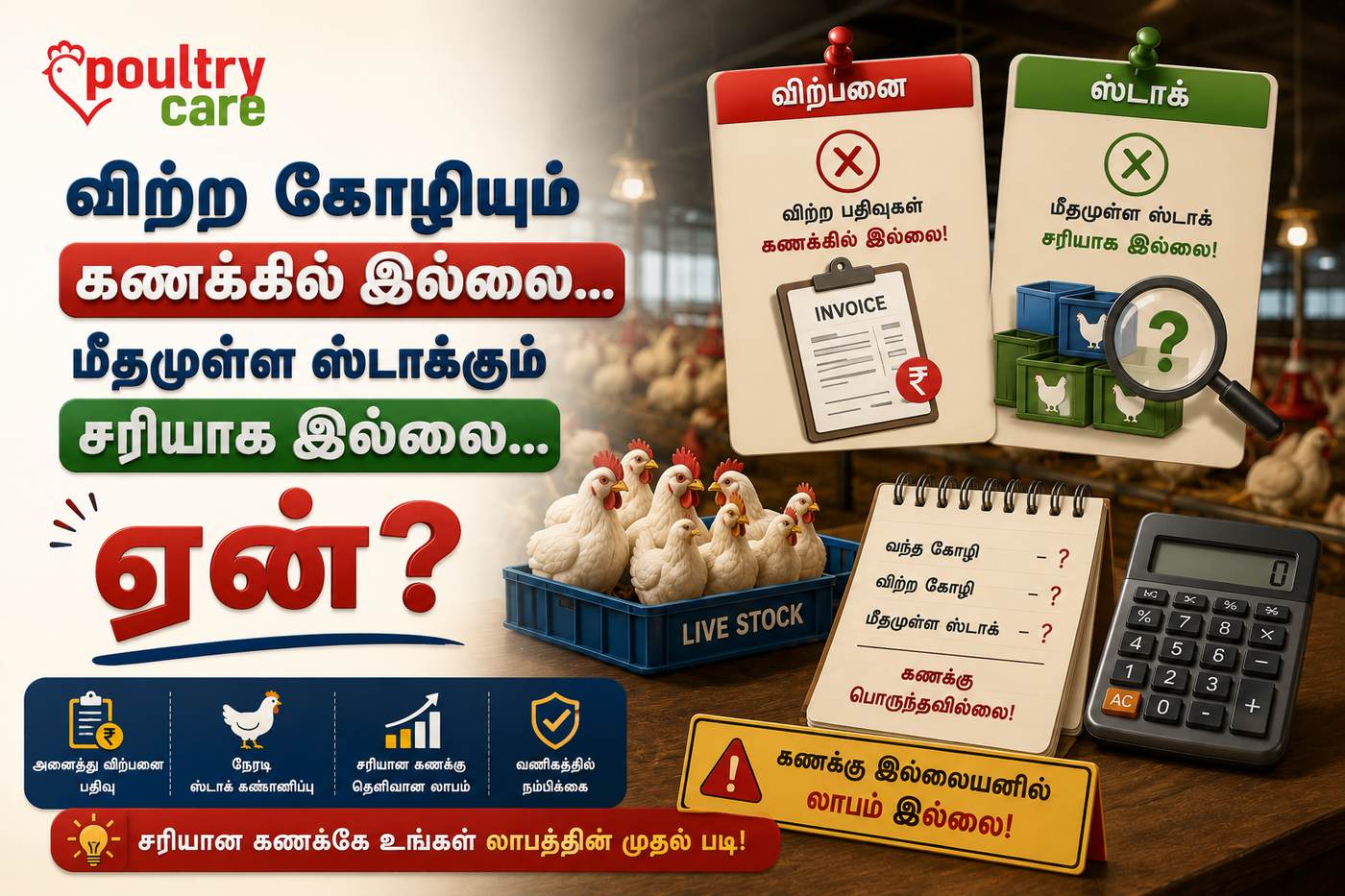
Ask most poultry traders what their buying rate was, and the answer comes instantly. Ask what their selling price was, and they remember it clearly. But ask what one bird truly cost them from entry to exit, and silence follows.
This silence is not ignorance. It is habit.
Costs are scattered across days, people, and processes. Personal expenses mix with business expenses. Cash moves faster than records. Memory replaces measurement. Over time, traders stop asking precise questions because rough estimates feel sufficient.
Marketing wisdom tells us that people avoid data when it threatens comfort. But avoiding clarity never protects profit—it only delays loss.
Why Profit Feels Unpredictable (But Isn’t)
Profit inconsistency creates emotional stress. Traders begin to blame markets, seasons, competition, or luck. While these factors influence outcomes, they are not the root cause.
The real reason profit feels unpredictable is because it is not visible daily. When profit is checked weekly or monthly, the trail has already gone cold. Decisions are made emotionally because feedback arrives too late.
In well-managed trading operations, profit is not a surprise at the end of the month. It is a daily signal. When traders see deviations early, corrections happen naturally. When they don’t, losses grow quietly.
Marketing success works the same way. Brands that listen continuously adapt faster. Traders who observe continuously protect margin better.
The Trader’s Mindset That Protects Profit
Profitable poultry traders don’t chase every opportunity. They filter them.
They understand that not every trade deserves execution. They know that saying no is sometimes the most profitable decision. They separate emotion from numbers and discipline from hope.
They focus less on how much they can move and more on how well they can see. Their confidence comes not from market rumors but from clarity of their own operation.
This mindset is not built overnight. It develops when traders stop reacting to markets and start understanding their own economics.
Profit Is Not Missing. It’s Unmeasured.
The uncomfortable truth is this: most poultry traders are working hard, taking risks, and moving volumes—but operating with partial visibility.
Profit does not disappear randomly. It fades where attention is absent.
Once traders begin to see their real costs, understand timing impact, and respect margin over movement, profit stops feeling mysterious. It becomes predictable. Stable. Manageable.
And when profit becomes predictable, growth becomes intentional—not accidental.
Clarity Is the New Competitive Advantage
In today’s poultry trading environment, information travels fast. Prices change quickly. Competition is everywhere. The only sustainable advantage left is clarity.
Traders who understand their numbers don’t panic in bad markets. They adjust. Traders who rely on estimates feel confident in good markets and confused in bad ones.
The difference is not experience. It is visibility.
The day a trader truly understands why profit differs from expectation is the day trading stops being stressful—and starts becoming strategic.