
Let me talk to you like we usually talk after a delivery day, when birds are unloaded and everyone feels the job is finished. Most poultry traders focus strongly on two points only — farm rate and customer rate. Buy price and sell price. But the real story of profit or loss often lives in the journey between these two points.
What happens between farm and customer delivery decides whether your margin stays safe or slowly leaks away.
Many traders think transport is just movement. Load the birds, send the vehicle, deliver, collect money. Simple. But in real ground work, that middle journey is full of small events that affect weight, mortality, fuel cost, timing, and customer satisfaction.
Let us walk through that journey together in a practical way.
The Journey Starts Before the Vehicle Moves
Most people think the trip begins when the vehicle starts. Actually, profit impact begins even before that. Planning stage itself decides whether the trip will be smooth or stressful.
If loading time is not fixed clearly, vehicles arrive and wait. Birds are kept ready too early and sit longer in crates. If crate count is not matched properly, loading becomes slow and confused. If route and timing are not discussed in advance, driver makes decisions on the go.
This early confusion creates delay pressure. Delay pressure creates rough handling. Rough handling creates bird stress and sometimes weight loss. All this begins before the tyre even turns.
Good trips are planned calmly. Bad trips are rushed into motion.
Loading Time Is Not Just a Small Step
Loading is often treated as routine work. But I have seen many profit leaks starting exactly here. When loading is slow, birds stay longer without movement. When crate arrangement is poor, airflow reduces. When counting is not careful, mismatch happens at delivery.
If birds are loaded during hotter hours without shade planning, stress increases. If vehicle is overloaded to save one more trip, transport risk increases. If loading team and driver do not coordinate, time is lost and tempers rise.
Every extra minute at loading point adds cost. Engine may be running. Driver time is running. Bird comfort is reducing. None of this appears in sale invoice, but all of it affects margin.
The Road Reality Is Different from the Plan
On paper, route looks simple. On road, reality changes. Traffic jams appear. Diversions happen. Road quality changes. Market rush hours slow movement. Check posts delay flow.
A driver under time pressure may take rough shortcuts. That increases vibration and bird stress. Sudden braking and harsh turns affect live bird condition. Long idle time with engine running increases fuel burn.
Many owners assume planned travel time equals actual travel time. But without trip review, the gap is never known. That gap is where cost grows silently.
Transport is not only distance. It is condition plus timing plus behavior.
Waiting Time at Market Quietly Adds Cost
One of the most underestimated loss areas is market waiting time. Vehicle reaches but unloading is not ready. Customer is busy. Labor is delayed. Queue is long. Vehicle stands and waits.
During this waiting, engine may run for cooling or ventilation. Fuel burns. Driver hours increase. Next trip gets delayed. If birds stay too long in vehicle, stress impact grows.
Since delivery is finally completed, traders feel the trip succeeded. But financially, waiting time has already reduced trip efficiency. When waiting becomes frequent with certain customers or certain time slots, it must be noticed and corrected.
Waiting is not neutral. Waiting is costly.
What Happens During Unloading Also Matters
Unloading is not just reverse loading. It also affects your result. Rough unloading leads to bird injury or count confusion. Poor coordination creates crate mismatch. Fast but careless handling increases mortality risk.
If counting is not verified calmly, disputes start later. If weight or quantity difference appears after vehicle leaves, recovery becomes difficult. Many traders depend fully on verbal confirmation and discover mismatch only during settlement.
Calm unloading with confirmation protects both relationship and margin. Delivery point discipline is as important as farm point discipline.
The Return Trip Is Part of the Same Story
Most traders mentally close the trip once delivery is done. But the vehicle has not finished its work yet. Return trip also carries cost. If it returns empty without planning, full fuel and time are spent without earning.
Sometimes crates, supplies, or other materials can be brought back. Sometimes next pickup can be aligned nearby. When return planning is ignored, half the trip value is lost.
Smart transport thinking always sees the trip as a full circle, not a one way line.
Hidden Losses That Nobody Writes Down
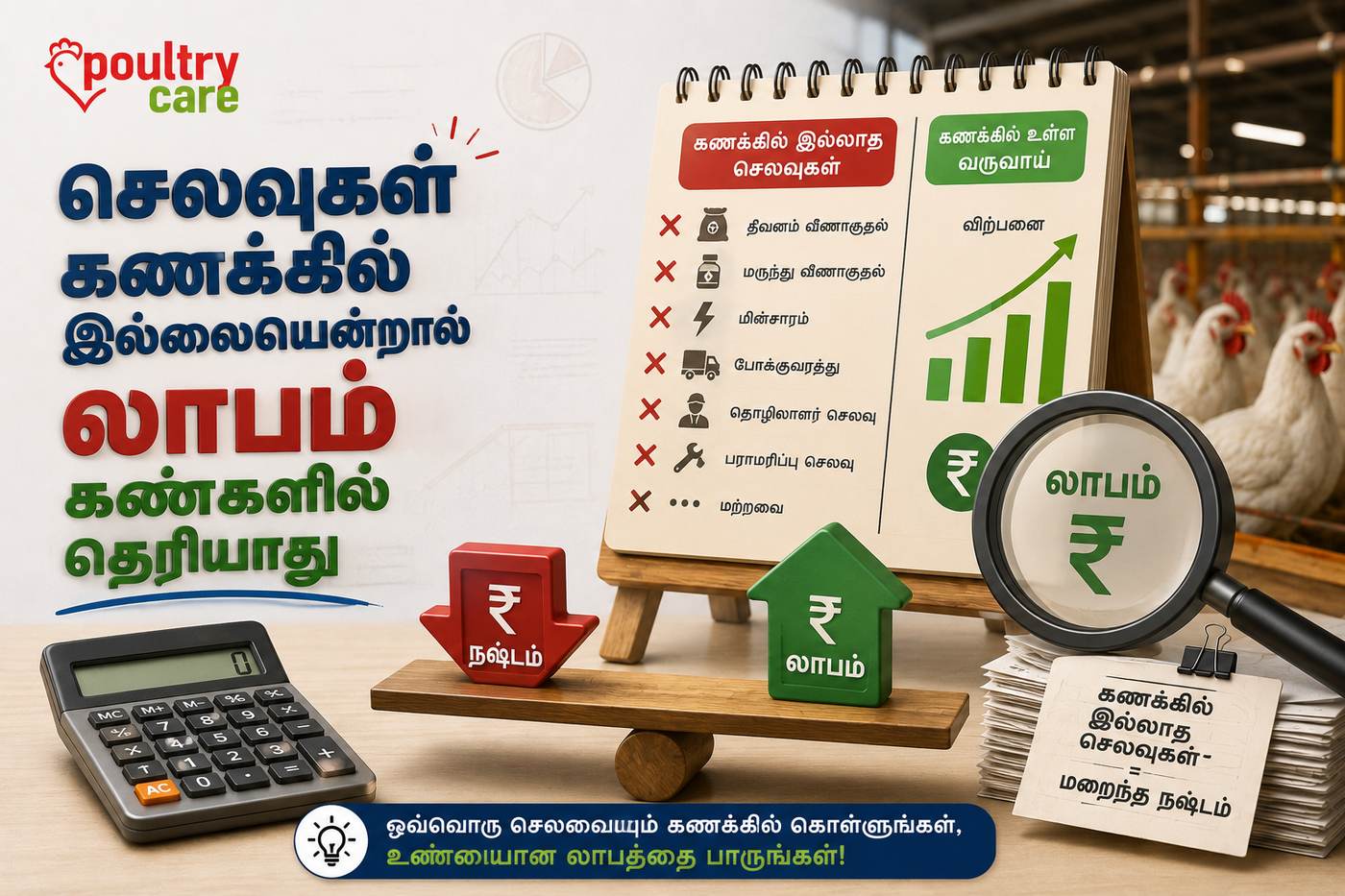
Between farm and customer, several small losses happen that are rarely written anywhere. Extra fuel due to idling. Extra distance due to wrong turns. Bird shrink due to long travel. Driver overtime due to delay. Minor repair due to overload. Informal road expenses.
Because each one is small, nobody records them seriously. Because nobody records them, nobody totals them. Because nobody totals them, nobody controls them.
But when added across many trips, these small items become heavy monthly leakage. Traders feel margin pressure but cannot see the exact hole.
Why Simple Trip Visibility Changes Everything
From my experience working closely with poultry businesses, one simple change gives big control — trip visibility. When each trip has a simple record of start time, load, route, fuel, delay, and return status, awareness increases quickly.
No need for complicated language. Just simple facts. Once facts are visible, patterns appear. Certain routes show more delay. Certain customers create more waiting. Certain vehicles use more fuel. Certain time slots work better.
With that visibility, decisions improve naturally. Dispatch timing improves. Route choice improves. Driver discussion improves. Customer coordination improves.
Profit improves without increasing selling price.
From Movement Thinking to Margin Thinking
Many poultry traders grow up with movement thinking. Move birds fast. Move vehicles daily. Keep activity high. That is good for operations. But for profit, margin thinking is needed.
Margin thinking asks different questions. Was this trip efficient. Was load full. Was timing right. Was waiting controlled. Was return planned. These questions protect money.
Between farm and customer delivery, money is either protected or reduced. The road decides more than we admit.
When you start respecting the journey, not just the deal, trading becomes more stable and predictable. Transport stops being a blind cost and becomes a managed profit path.
That is when you truly understand what really happens between farm and customer — and how to keep your margin safe through that entire journey.