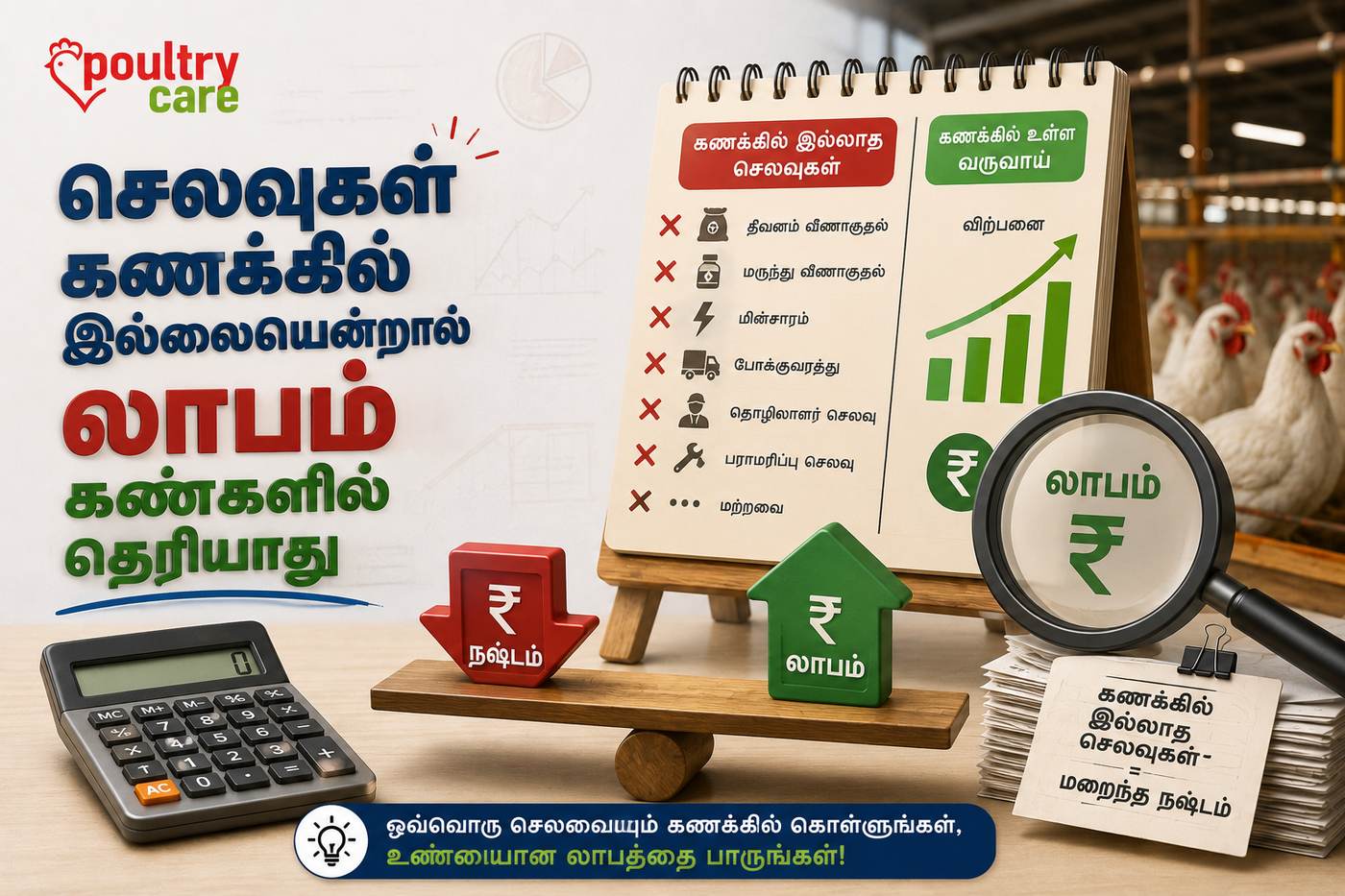

When Your Shop Is Busy but Profit Feels Missing
Many poultry retail owners experience the same confusion. Customers visit regularly. Daily sales look healthy. The cutting table rarely stays empty. Cash flows every day. Yet, when expenses are settled at the end of the month, profit feels smaller than expected.
You may wonder where the money is going.
Feed price is not your concern. Chick cost is not your responsibility. Market demand is steady. Still, savings do not grow as they once did.
This situation is more common than most retailers realize. The reason is often not visible in accounts or bills. It hides inside daily shop operations.
That hidden factor is called shrinkage.
Shrinkage does not appear suddenly. It grows slowly through routine activities. Because it happens quietly, many shop owners accept it as normal business behavior without understanding how deeply it affects profit.
Understanding shrinkage is not only accounting knowledge. It is operational awareness that separates a surviving shop from a growing retail business.
Understanding Shrinkage in Simple Retail Language
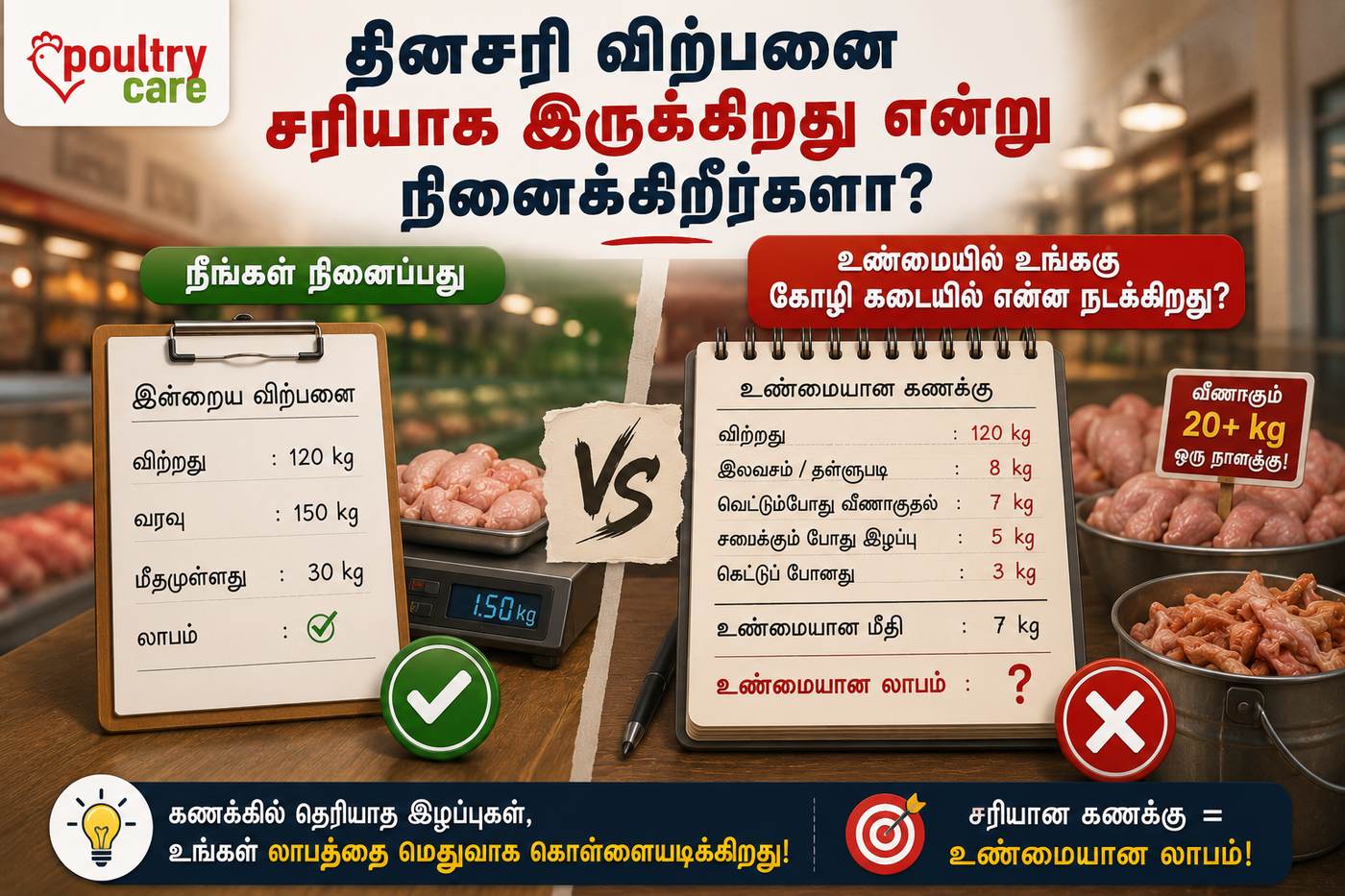
Shrinkage in poultry retail means the difference between the weight you purchase and the weight you finally sell to customers.
Birds arrive at a certain live or dressed weight. After slaughtering, cleaning, cutting, storage, and display, the total sellable weight becomes lower.
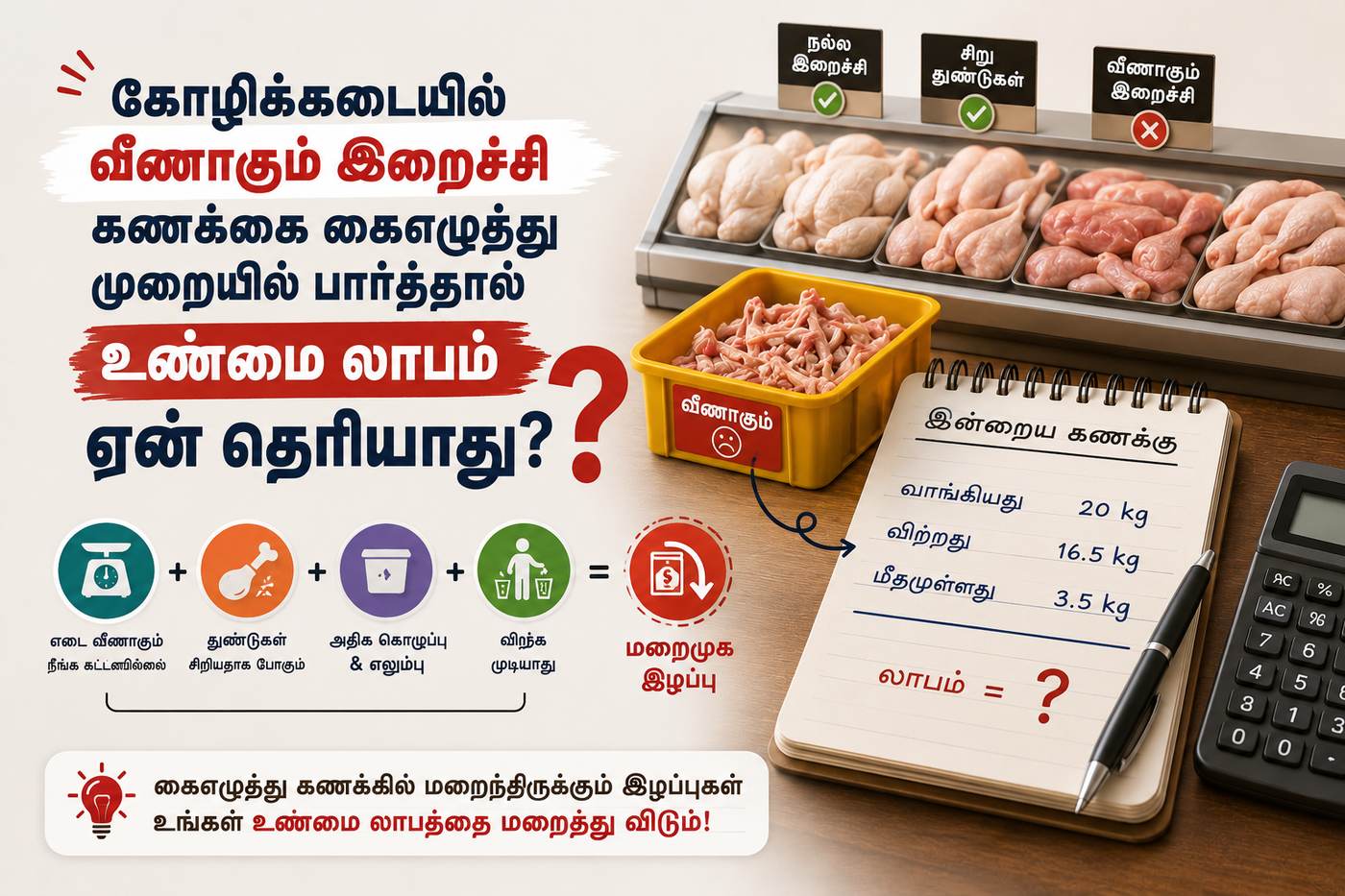
This reduction happens due to several natural and operational reasons. Blood drainage after processing removes weight. Moisture evaporates during storage. Cutting removes unwanted portions. Repeated handling causes additional loss.
All these small reductions combine to create shrinkage.
Shrinkage is not always a mistake or wrongdoing. Some level of loss is natural in poultry processing. The problem begins when the loss goes beyond acceptable limits without anyone noticing.
Retail owners usually track cash carefully but rarely track weight movement with the same attention. Profit in poultry retail depends more on weight control than cash counting.
If weight reduces silently, profit reduces automatically.
How Shrinkage Changes Your Real Cost Without Warning
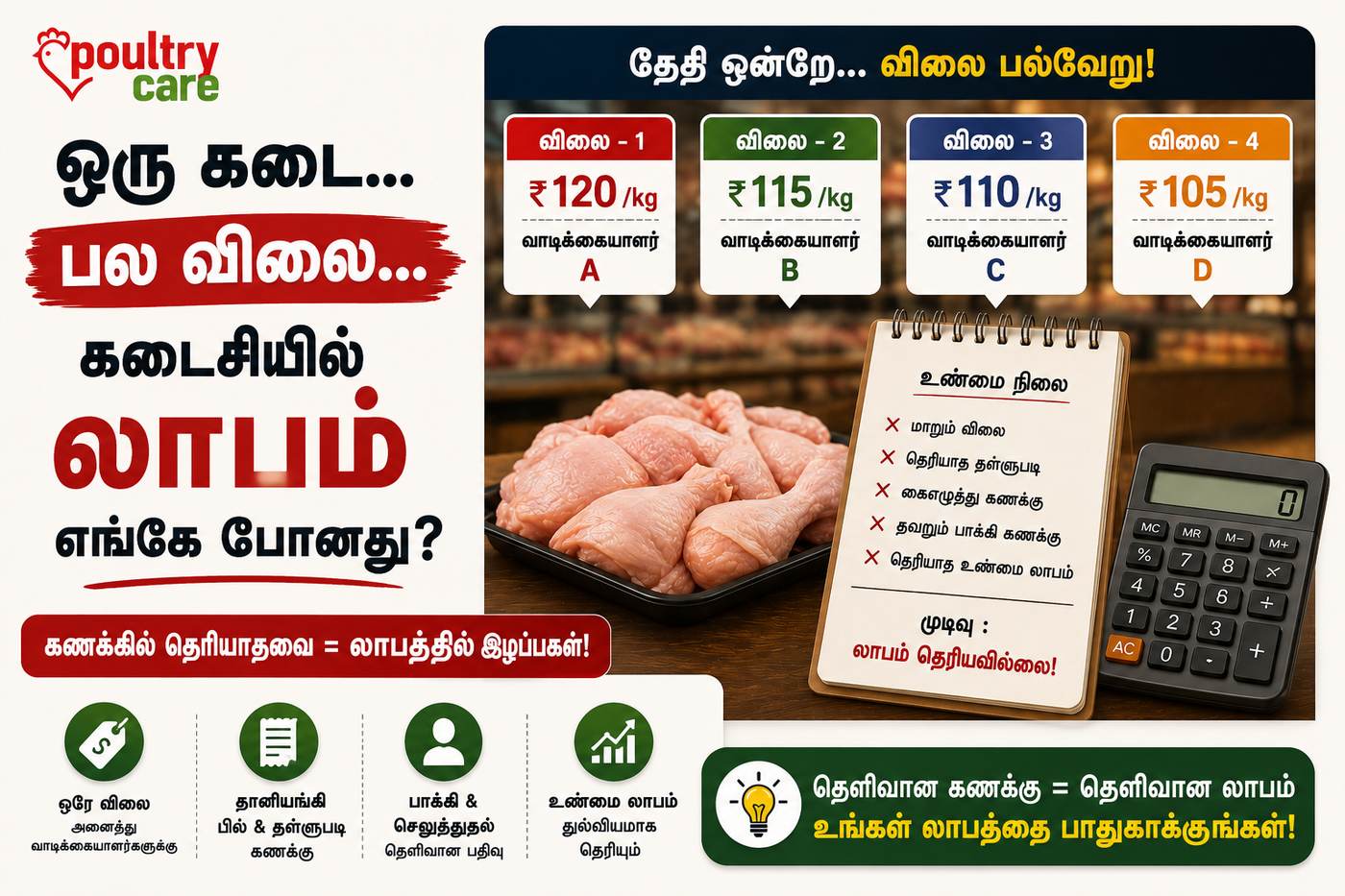
Most retailers calculate selling price based on purchase cost per kilogram. This method works only when purchased weight equals sold weight.
But shrinkage changes this equation.
Imagine purchasing one hundred kilograms of poultry meat. After processing and selling, only ninety-five kilograms remain billable. Even if selling price stays the same, your actual cost per kilogram increases because five kilograms disappeared within operations.
You did not raise expenses intentionally. Yet your margin reduced.
This is why some shop owners feel forced to increase selling price even when market competition is strong. They sense profit pressure but cannot identify the exact reason.
Shrinkage slowly reshapes your cost structure. It creates invisible expense without appearing as an expense line.
Over months, this leads to:
reduced savings, pricing stress, cash flow imbalance, and difficulty expanding business.
Retail success depends not only on selling more but on protecting what is already purchased.
Where Shrinkage Actually Happens Inside the Shop
Shrinkage begins the moment birds enter the shop. Every operational step influences weight retention.
Processing stage plays a major role. Improper bleeding time or excessive washing removes unnecessary weight. Water management during cleaning directly affects final yield.
Cutting practices also matter significantly. Different staff may cut differently. Some remove more meat during trimming. Some leave uneven portions. Without standard cutting methods, daily variation becomes cumulative loss.
Storage conditions create another major impact. Temperature fluctuations accelerate moisture evaporation. Frequent opening of storage units exposes meat to air, reducing weight gradually throughout the day.
Display handling adds further reduction. Meat exposed to open air dries faster. Delayed sales increase moisture loss. Unsold inventory kept overnight continues losing weight even when quality remains acceptable.
Even weighing practices contribute. Incorrect scale calibration or inconsistent weighing habits produce unnoticed discrepancies.
Each individual loss seems small. Together, they form a large profit leak.
The Psychology Behind Ignored Shrinkage
Many retail owners accept shrinkage as unavoidable because they have never defined what acceptable loss looks like.
When something is not measured, it becomes invisible. When invisible, it becomes routine.
Retailers often focus on increasing customer count, improving shop appearance, or negotiating purchase rates. These are important efforts. But without operational measurement, profit improvement remains limited.
There is also a belief that shrinkage is purely natural. While natural loss exists, operational discipline significantly reduces avoidable loss.
Successful retailers shift mindset from “daily selling” to “daily monitoring.”
They begin asking simple questions:
How much weight entered today?
How much weight left the shop?
Where did the difference occur?
These questions transform business awareness.
Awareness alone starts reducing shrinkage because teams automatically handle products more carefully when measurement exists.
Building a Retail System That Controls Shrinkage
Shrinkage control does not require complex technology or strict supervision. It begins with structured habits.
Consistent receiving practices ensure accurate purchase weight recording. Standard cutting methods reduce unnecessary trimming variation. Proper storage discipline maintains moisture balance.
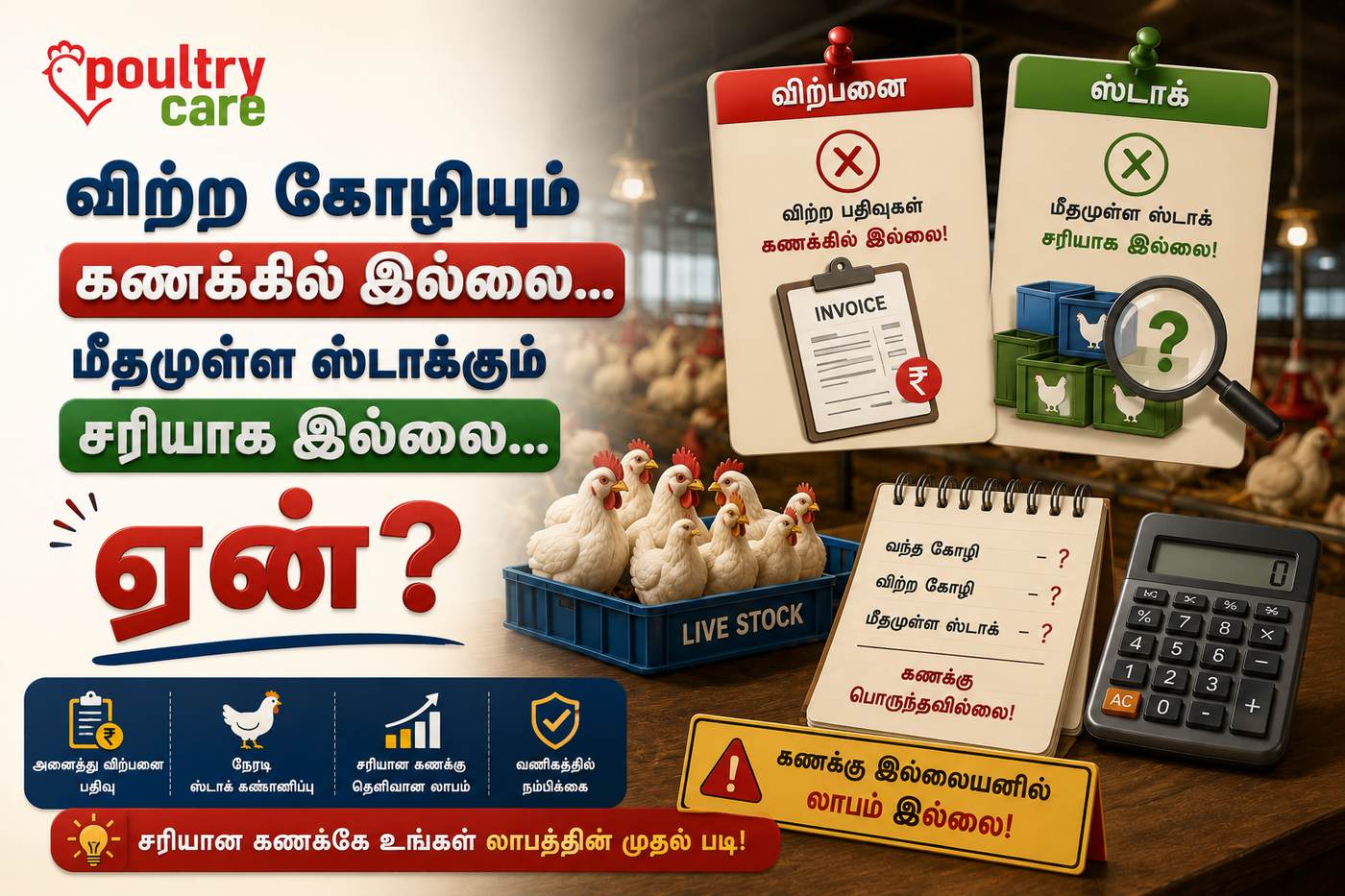
Daily comparison between purchase weight and sales weight creates visibility. Visibility builds accountability. Accountability improves handling behavior naturally.
Training staff about weight value changes mindset. When workers understand that small handling differences affect profit, operational care increases.
Timing also matters. Faster product movement reduces exposure time, preserving weight. Organized workflow between processing and selling minimizes unnecessary handling.
Retail management evolves when operations move from habit-based work to process-based work.
A well-managed poultry retail shop understands yield, monitors loss patterns, and adapts practices accordingly.
Over time, shrinkage stops being a mystery and becomes a measurable parameter.
Moving from Traditional Shopkeeping to Retail Management Thinking
Running a poultry shop traditionally focuses on buying and selling. Modern retail management focuses on efficiency between buying and selling.
The difference may appear small, but the financial impact is significant.
Retail owners who understand shrinkage gain stronger control over pricing decisions. They know their true cost. They avoid underpricing and prevent unnecessary price increases that drive customers away.
Better understanding also improves planning. Purchase quantities become more accurate. Waste reduces. Profit stability improves.
Instead of reacting to market pressure, the retailer begins operating with confidence backed by data awareness.
Growth in poultry retail does not always come from opening new branches or increasing volume. Often, growth begins by protecting margins already available within existing operations.
Shrinkage awareness transforms daily work into controlled retail management.
Conclusion: Profit Protection Starts with Understanding Weight Movement
Shrinkage is not a loud problem. It does not demand attention. It quietly operates inside everyday routines.
Many poultry retail owners work harder each year but feel profit improving slowly. In many cases, the reason is not lack of sales but unnoticed operational loss.
The moment a retailer understands weight movement, business clarity improves. Decisions become sharper. Pricing becomes confident. Profit becomes predictable.
Before closing your shop today, think about one simple question.
Do you clearly know the difference between what entered your shop and what actually left through billing?
That awareness alone can change how your retail business performs.
Retail success is not only about selling poultry. It is about managing every kilogram with understanding.
When weight is protected, profit follows naturally.