
🐔 Sales Were Good... But Where Did the Profit Go?
Yesterday evening, a poultry shop owner was closing his shop.
The cash box was on the table.
The staff had gone home.
The birds purchased in the morning were sold.
Customers had come throughout the day.
Everything looked normal.
But while counting cash, one question kept coming into his mind.
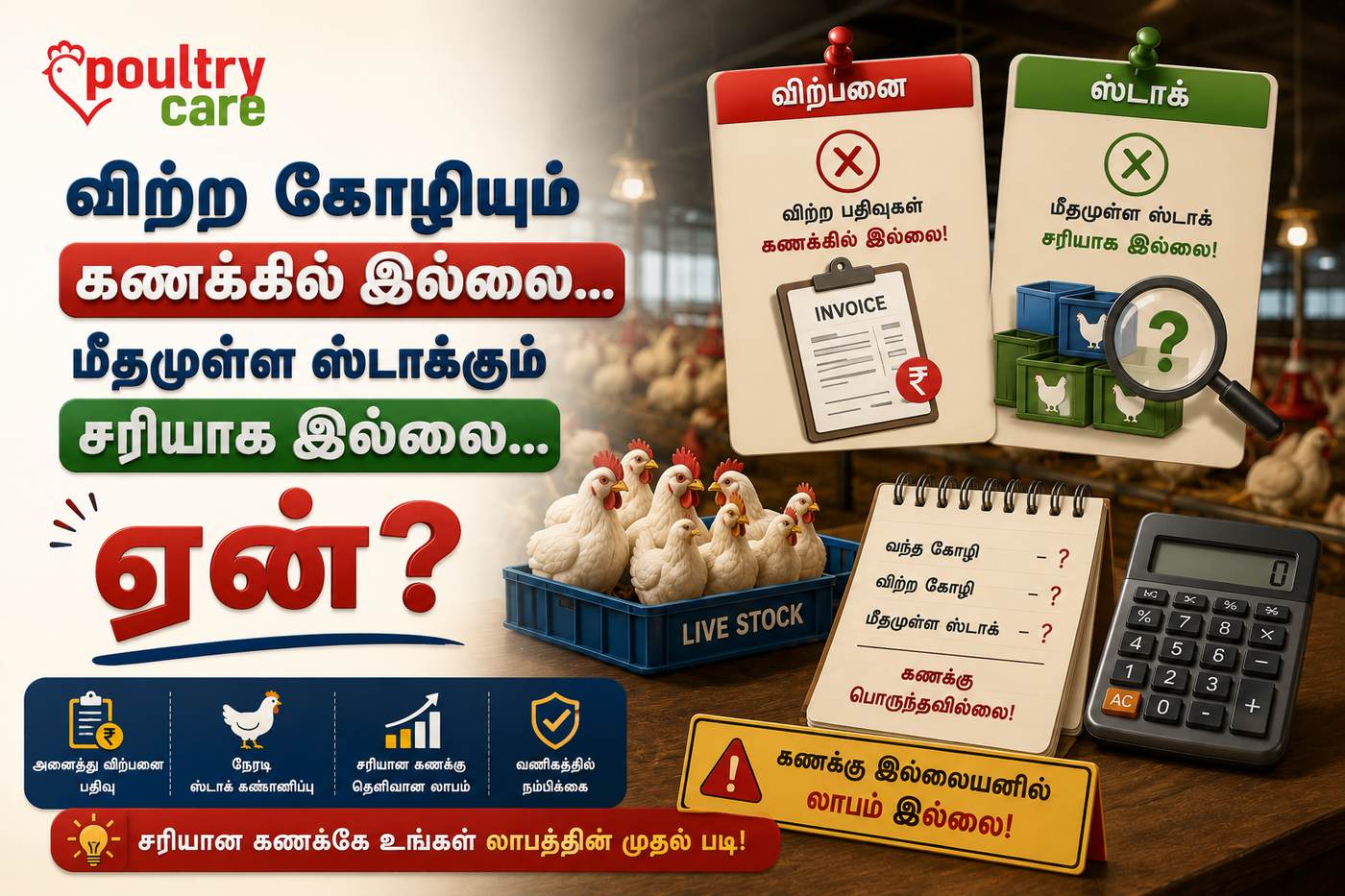
"Sales were good... but how much profit did I actually make?"
He opened the notebook.
Checked the purchase entries.
Looked at the sales records.
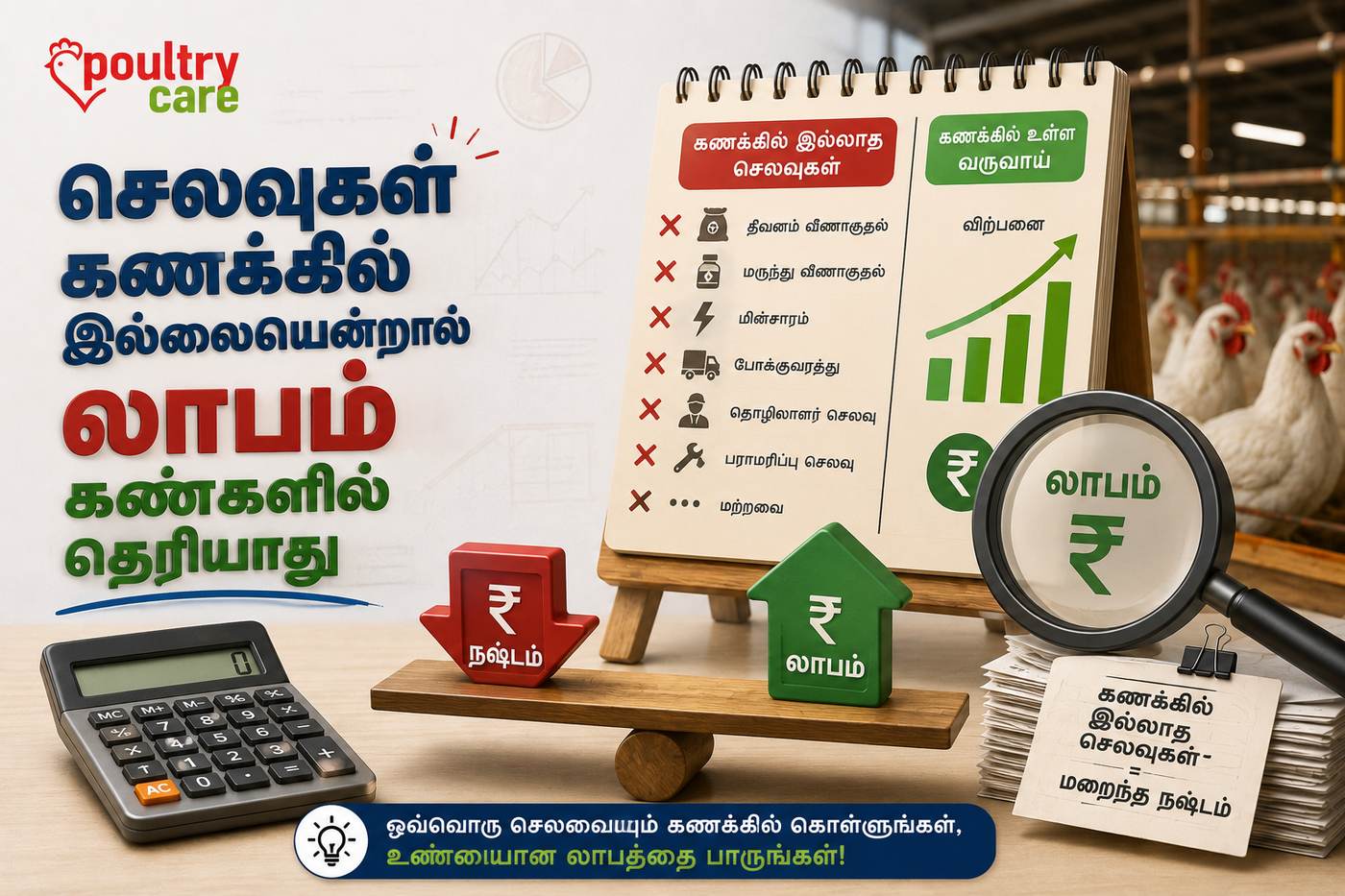
Tried calculating the expenses.
Still, he wasn't sure.
If this feels familiar, you're not alone.
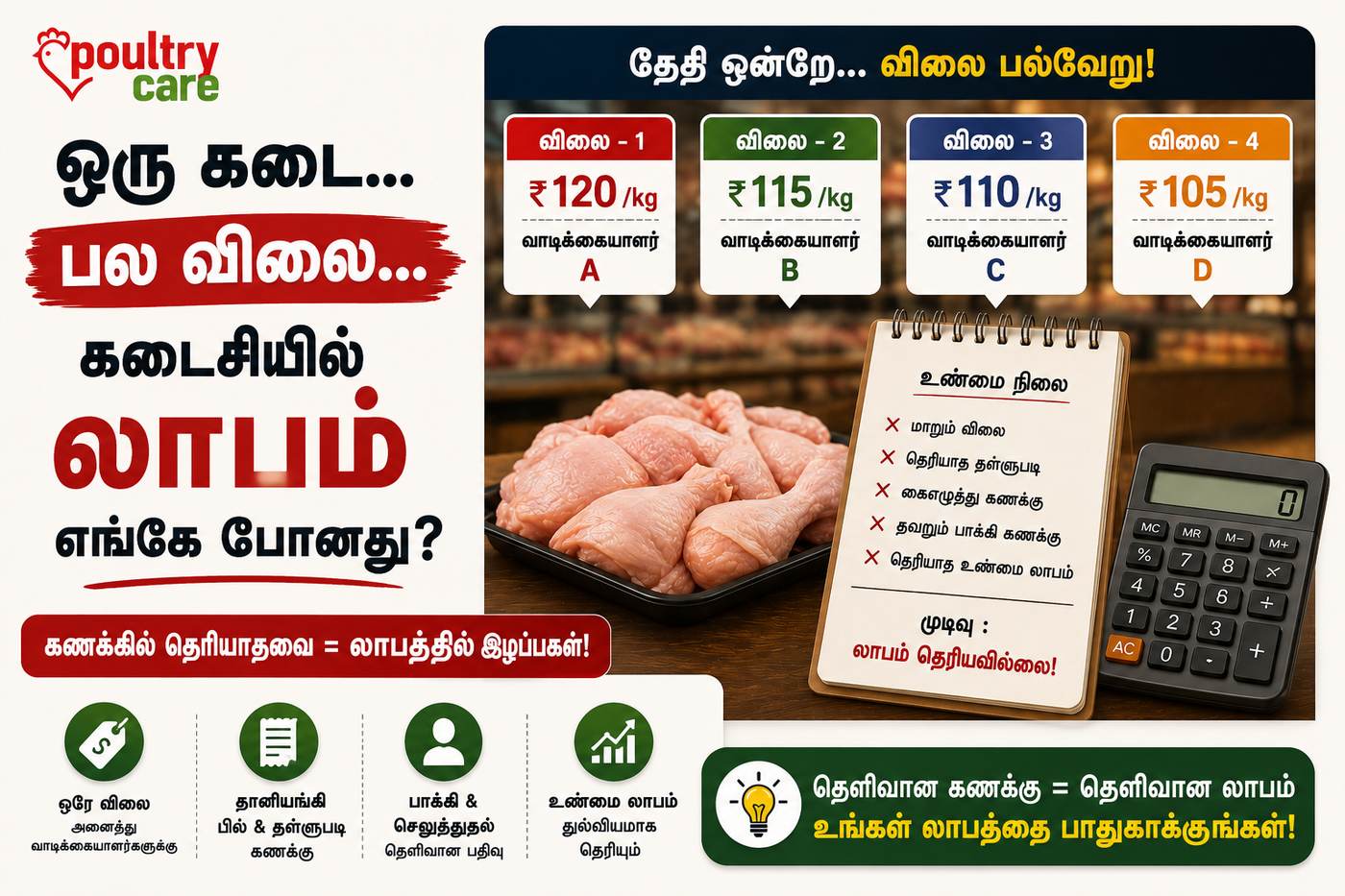
Many poultry shop owners work hard every day but still don't know their exact profit at the end of the day.
😟 The Problem Usually Starts Small
Most poultry retailers don't wake up one day and discover a huge loss.
It starts with small things.
One stock entry isn't written.
One supplier adjustment is forgotten.
A few kilograms are missing from the expected balance.
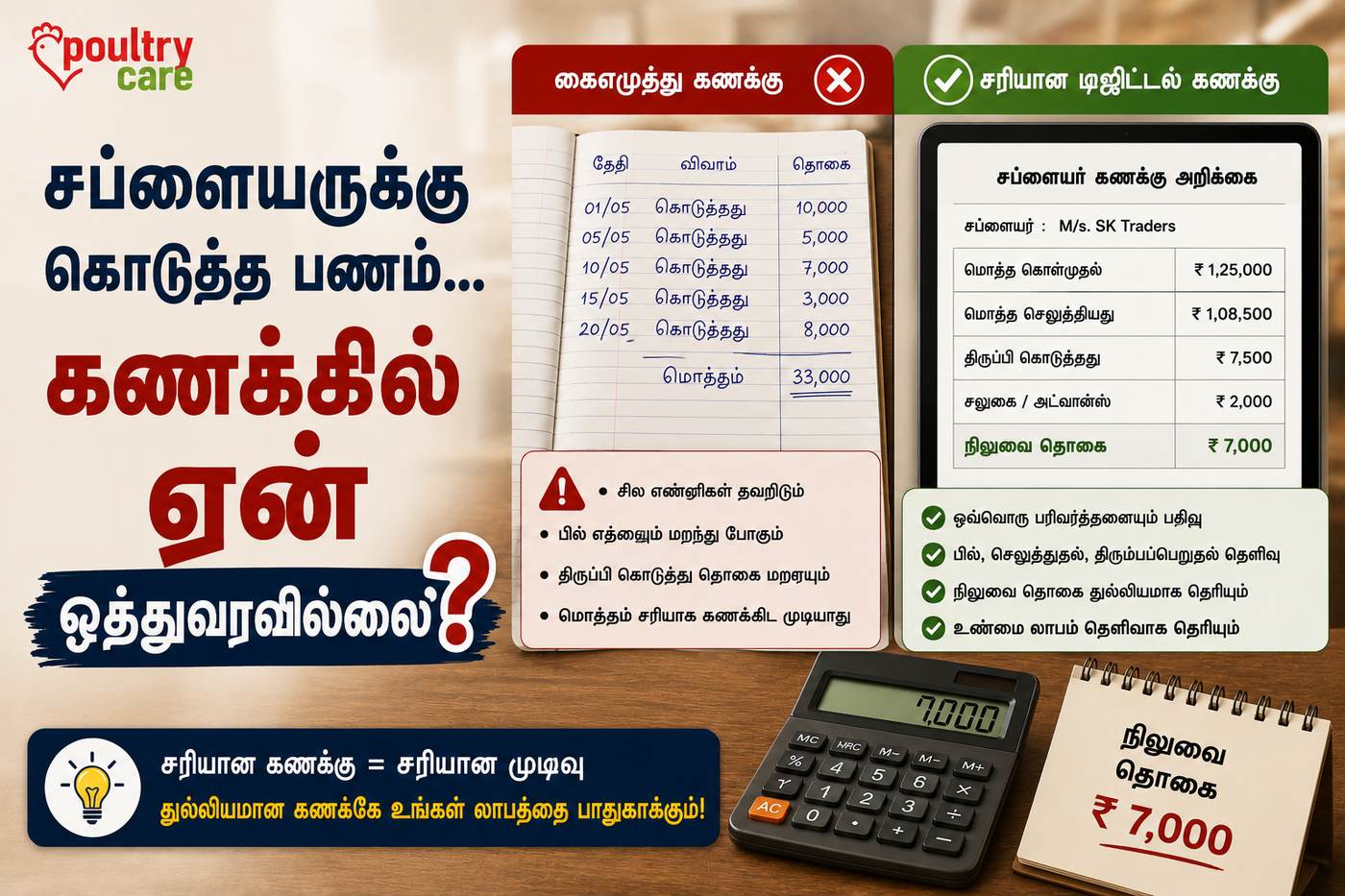
A customer payment is remembered but never recorded.
Nobody notices these things immediately.
The shop is busy.
Customers are waiting.
Staff are asking questions.
Business keeps moving.
And those small mistakes quietly stay hidden inside the notebook.
🔥 When Weight, Stock, and Cash Don't Match
This is where many owners become frustrated.
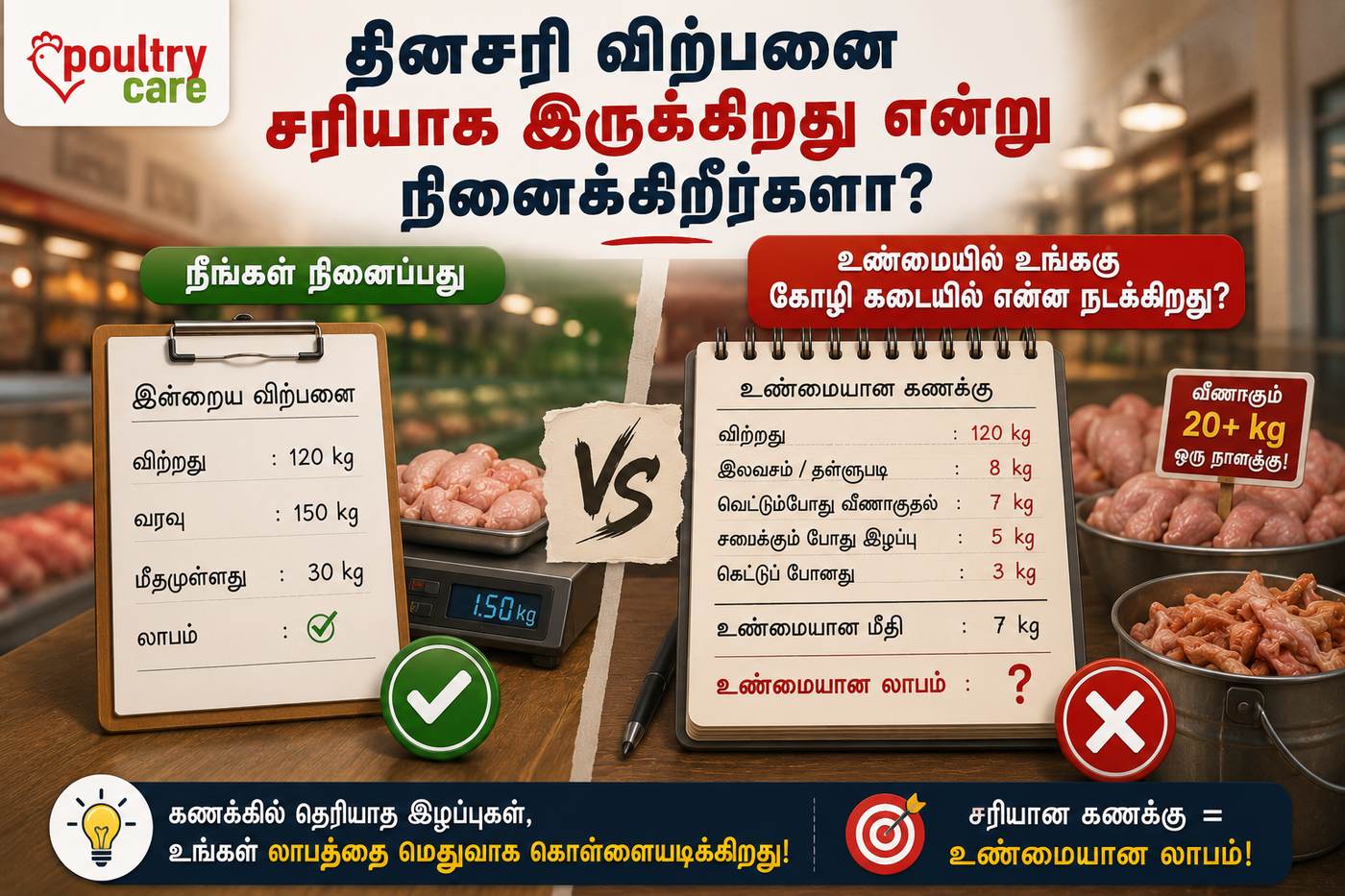
The purchase weight says one number.
The sale weight says another.
The stock balance doesn't look right.
Cash collected feels different from what was expected.
Now everyone starts guessing.
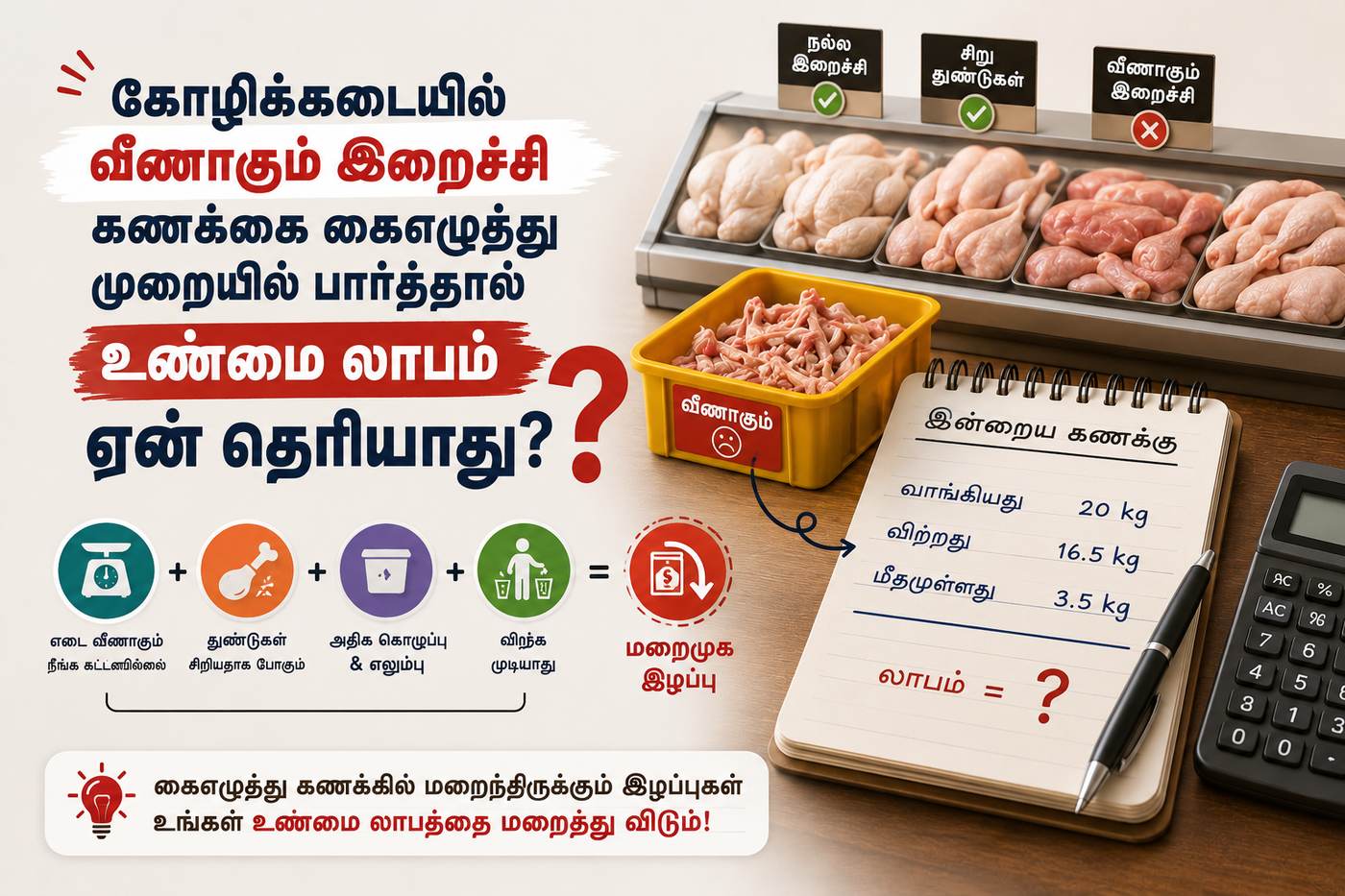
Was it shrinkage?
Was it a weighing mistake?
Was stock wasted?
Did someone forget to record something?
The problem is not only the missing weight.
The problem is that nobody knows exactly where the difference happened.
That uncertainty creates stress.
Because you cannot fix a problem you cannot see.
💰 Small Daily Mistakes Become Big Monthly Losses
Let's keep it simple.
Imagine small recording mistakes, stock differences, and weight mismatches are costing just ₹300 every day.
That doesn't sound dangerous.
But over a month:
₹300 × 30 days = ₹9,000
That's ₹9,000 leaving your business without creating any value.
Now imagine reducing those mistakes by just 1%.
Even that small improvement can save thousands of rupees every month.
Not by selling more.
Not by increasing prices.
Simply by protecting what you already earn.
🧠 Smart Poultry Owners Think Differently
Successful poultry retailers don't depend on memory.
They don't assume numbers are correct.
They ask simple questions every day.
How much weight came in?
How much weight was sold?
How much stock is remaining?
How much cash should be in the box?
These questions may sound basic.
But they help owners spot problems before they become losses.
The goal is not to work harder.
Most poultry shop owners already work hard enough.
The goal is to understand the business more clearly.
🐔 Hard Work Alone Doesn't Protect Profit
Many poultry retailers spend 12 to 14 hours in their shop every day.
They negotiate purchases.
Manage staff.
Handle customers.
Solve problems.
Yet profit still feels unpredictable.
Why?
Because hard work and profit are not always the same thing.
A business can be busy and still leak money.
A business can have good sales and still lose profit.
When stock, weight, and cash are not tracked properly, the owner ends up making decisions based on assumptions instead of facts.
And assumptions are expensive.
Final Emotional Insight
Most poultry shop owners don't lose profit because they are making big mistakes.
They lose profit because small mistakes go unnoticed for too long.
A missed stock entry.
A forgotten payment.
A weight difference nobody checked.
A number written down in a hurry.
Each one looks harmless.
But together they slowly eat away at the profit you worked so hard to earn.
Because in poultry retail, the biggest danger isn't the problem you can see.
It's the problem hiding inside your daily routine while you are busy running the shop.