
Every poultry trader experiences confusion when stock closing time arrives. Records show one quantity while the farm or godown shows something different. This situation creates stress, arguments, and uncertainty inside the business.
Farmers begin asking the same questions again and again. Where did the birds go? Was there a loss during transport? Did someone make a mistake while recording? Or is the issue only inside the books?
Through years of working closely with poultry farmers and traders, one reality becomes clear. In many cases, stock shortage is not a physical loss. It is a visibility problem created by gaps in daily recording and management practices.
The Reality Behind Daily Counting
Many traders believe that counting birds daily guarantees accuracy. Birds are checked in the morning and sales are noted in the evening. Information is written in notebooks or shared through phone calls between staff members.
However, poultry trading moves faster than manual recording. When entries are delayed even slightly, differences begin to grow silently. Mortality may be recorded later, sales may be updated after delivery, and transfers between locations may not be captured immediately.
Each small delay looks harmless at first, but over time these gaps accumulate. The result appears as stock shortage even though the birds were managed normally.
How Stock Mismatch Slowly Builds Inside Operations
Stock problems rarely appear suddenly. They develop gradually as operations expand and become more complex. Birds move through farms, transport vehicles, traders, and customers, yet records often remain disconnected from actual movement.
Weight estimation creates another layer of confusion because poultry trading depends heavily on live weight. When weight assumptions differ from reality, inventory value changes without anyone noticing immediately.
Mortality updates are sometimes postponed, and credit sales create delays between physical movement and financial recording. Duplicate entries or missed entries also contribute to confusion. Over time, book stock and physical stock begin to tell different stories.
Understanding the Difference Between Physical Stock and Book Stock
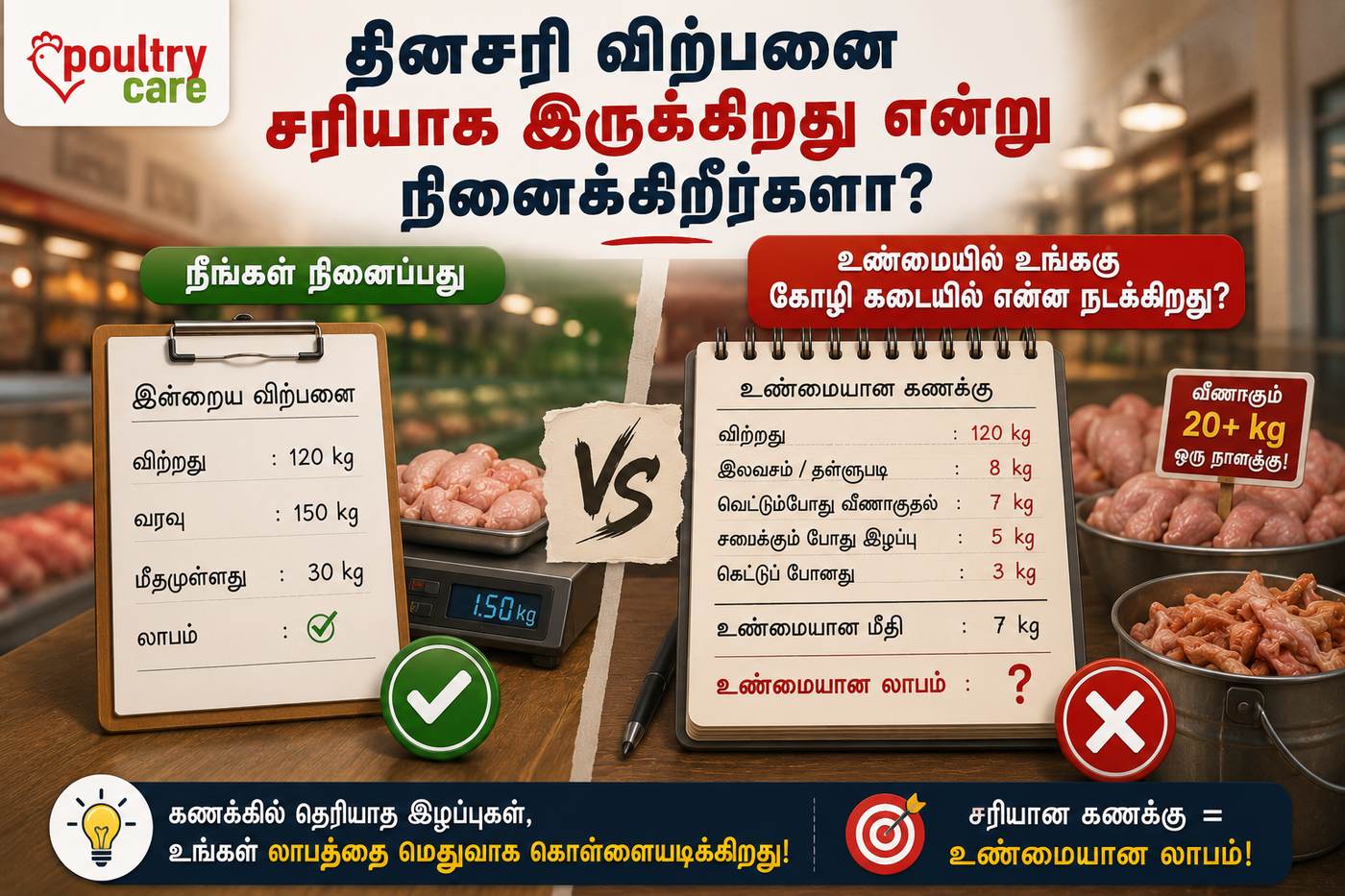
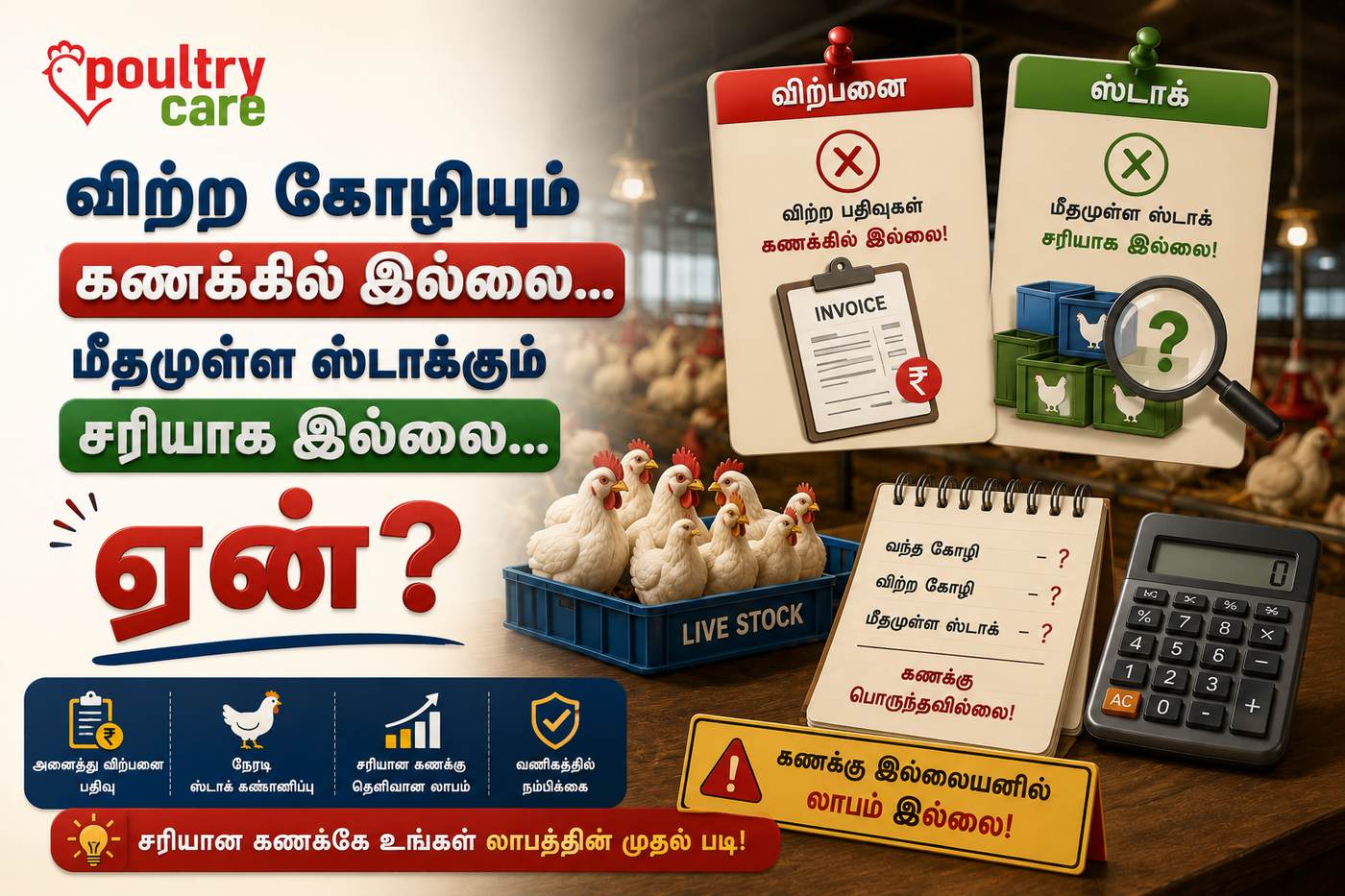
Physical stock represents the birds that are actually present on the farm or in the trading location. Book stock represents what is written in records and accounts.
In poultry trading, birds are living inventory. Their weight changes daily, movements happen frequently, and conditions continuously evolve. Traditional bookkeeping methods treat inventory as fixed goods, but poultry operations are dynamic by nature.
When a dynamic business is managed using static recording methods, mismatch becomes unavoidable. Farmers often mistake this gap as loss, while in reality it is a difference in tracking accuracy.
The Hidden Impact of Invisible Stock Loss
Stock mismatch does more than create accounting confusion. It slowly affects business decisions. Farmers may purchase more birds than required because records appear lower. Feed planning becomes inaccurate, and cash flow projections lose reliability.
When visibility is unclear, profit calculations also become uncertain. Farmers work harder but struggle to understand whether the business is truly growing or silently losing efficiency.
The emotional cost is equally important. Teams begin blaming each other, supervisors feel pressure, and trust within operations weakens.
Why Month End Always Feels Difficult
Month end becomes stressful because corrections are postponed throughout the working period. Small adjustments remain pending while daily operations continue at full speed.
When closing time arrives, all unresolved differences appear together. Farmers must recheck notebooks, contact staff members, and manually adjust records. What should be a simple review turns into a time consuming investigation.
The real need is not better month end correction but clearer daily visibility. When information is updated continuously, closing becomes confirmation rather than correction.
Building Clarity in Poultry Trading Management
Successful poultry traders focus on clarity instead of control. They ensure that every bird movement is recorded at the moment it happens. Information flows through a single reliable process rather than scattered communication channels.
Daily reconciliation creates confidence because problems are identified early. Responsibility becomes clear when each activity has ownership. Weight monitoring improves accuracy and strengthens decision making.
As visibility improves, operations become calmer. Discussions shift from problem solving to growth planning. Farmers gain confidence because numbers begin reflecting reality.
Conclusion
Stock shortage is often misunderstood as a financial loss. In many poultry trading businesses, it is simply a signal that tracking methods need improvement.
Birds move quickly, and information must move just as fast. When visibility becomes consistent, confusion disappears and decision making improves naturally.
The most successful poultry traders are not those who work longer hours but those who clearly understand what is happening inside their business every day. Clear visibility transforms uncertainty into control and turns trading into a predictable and profitable operation.