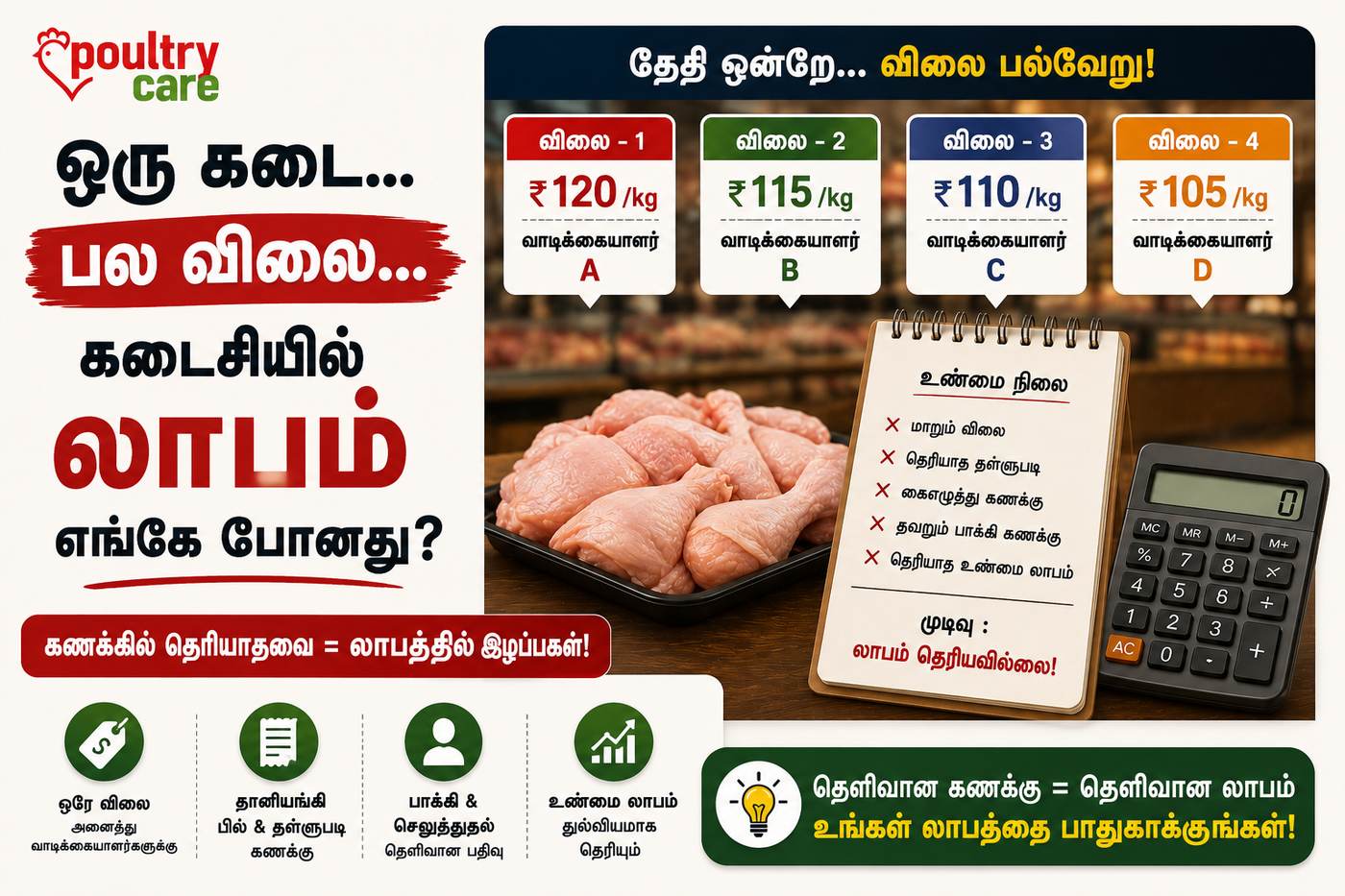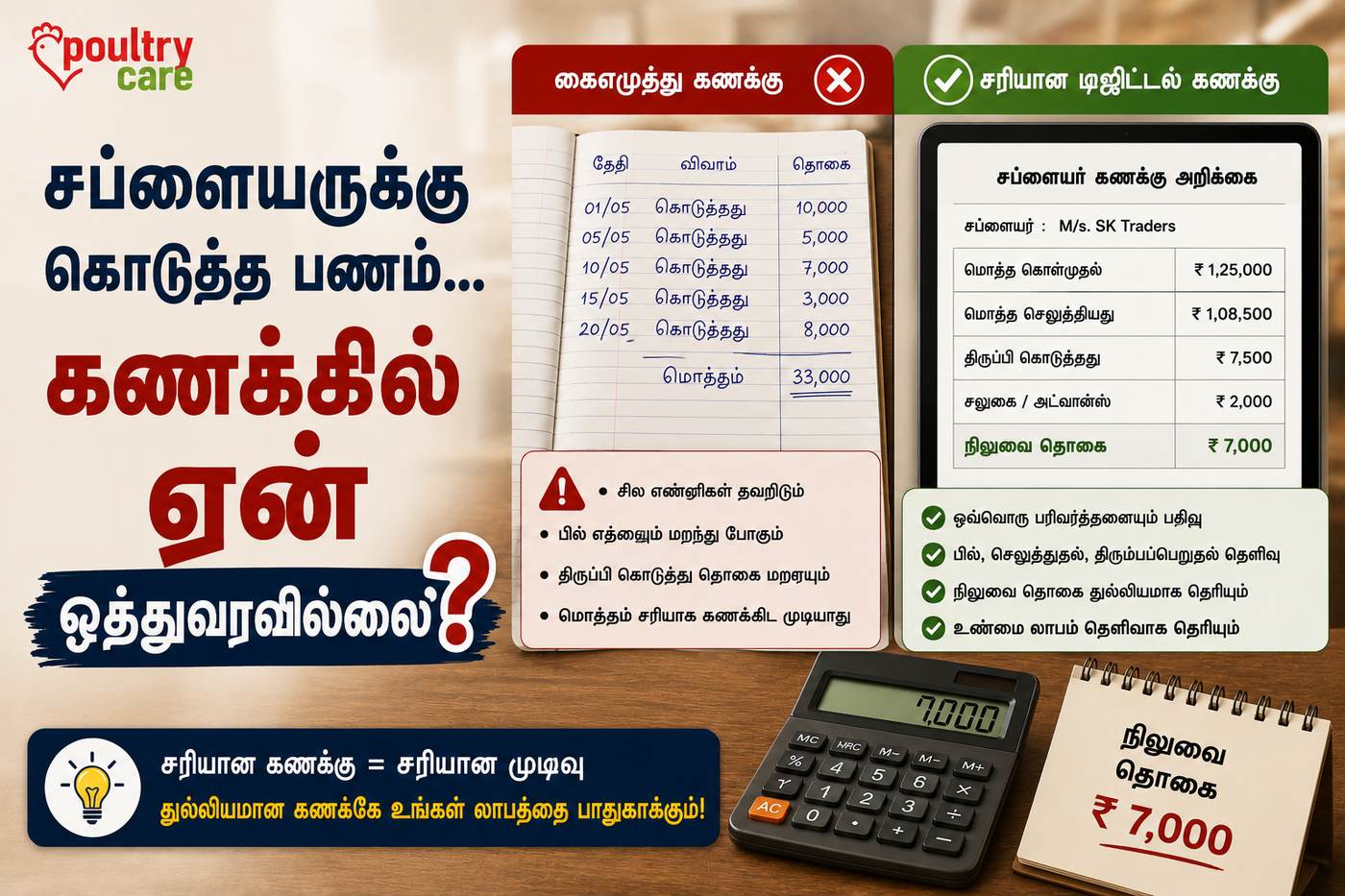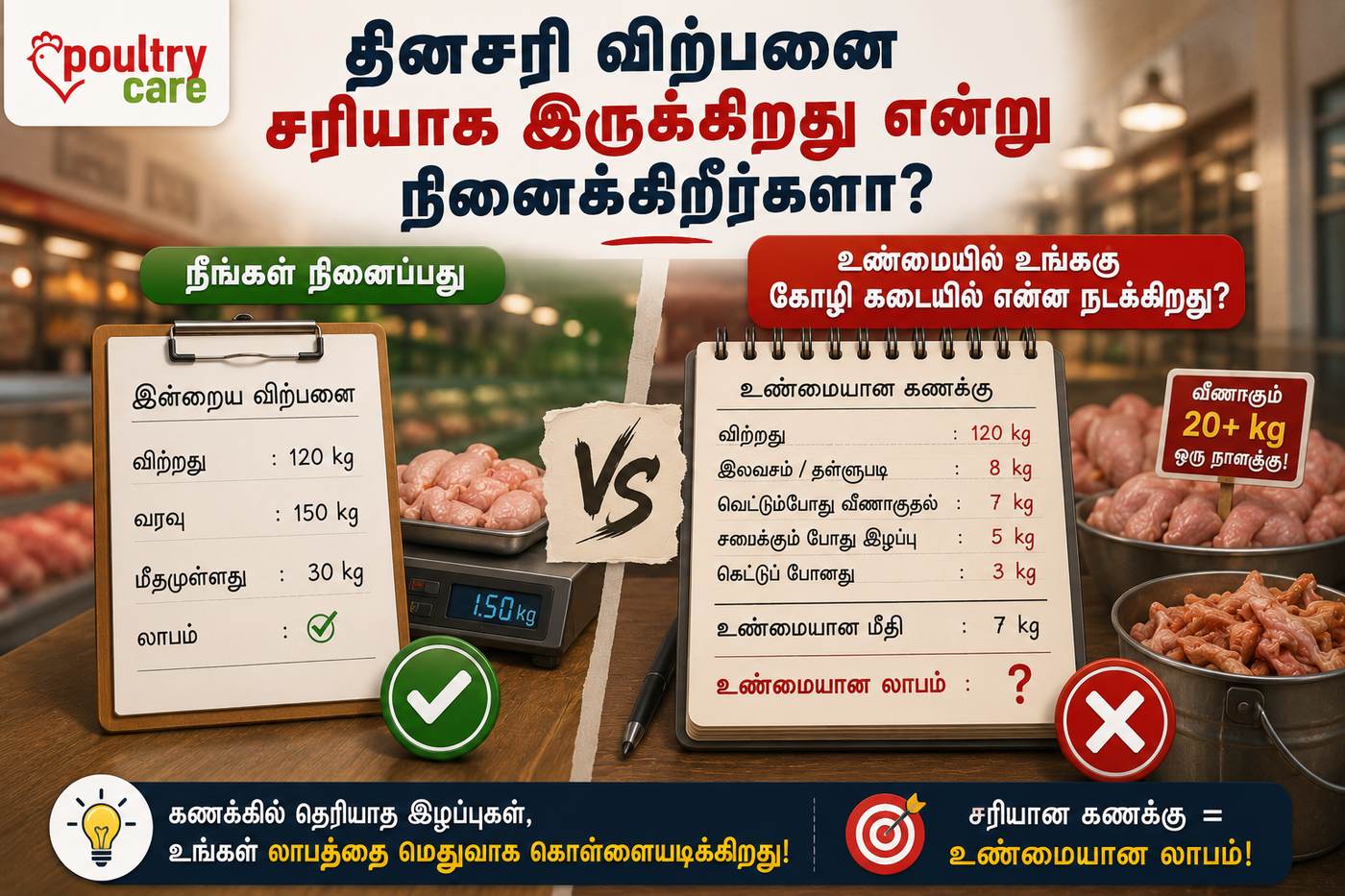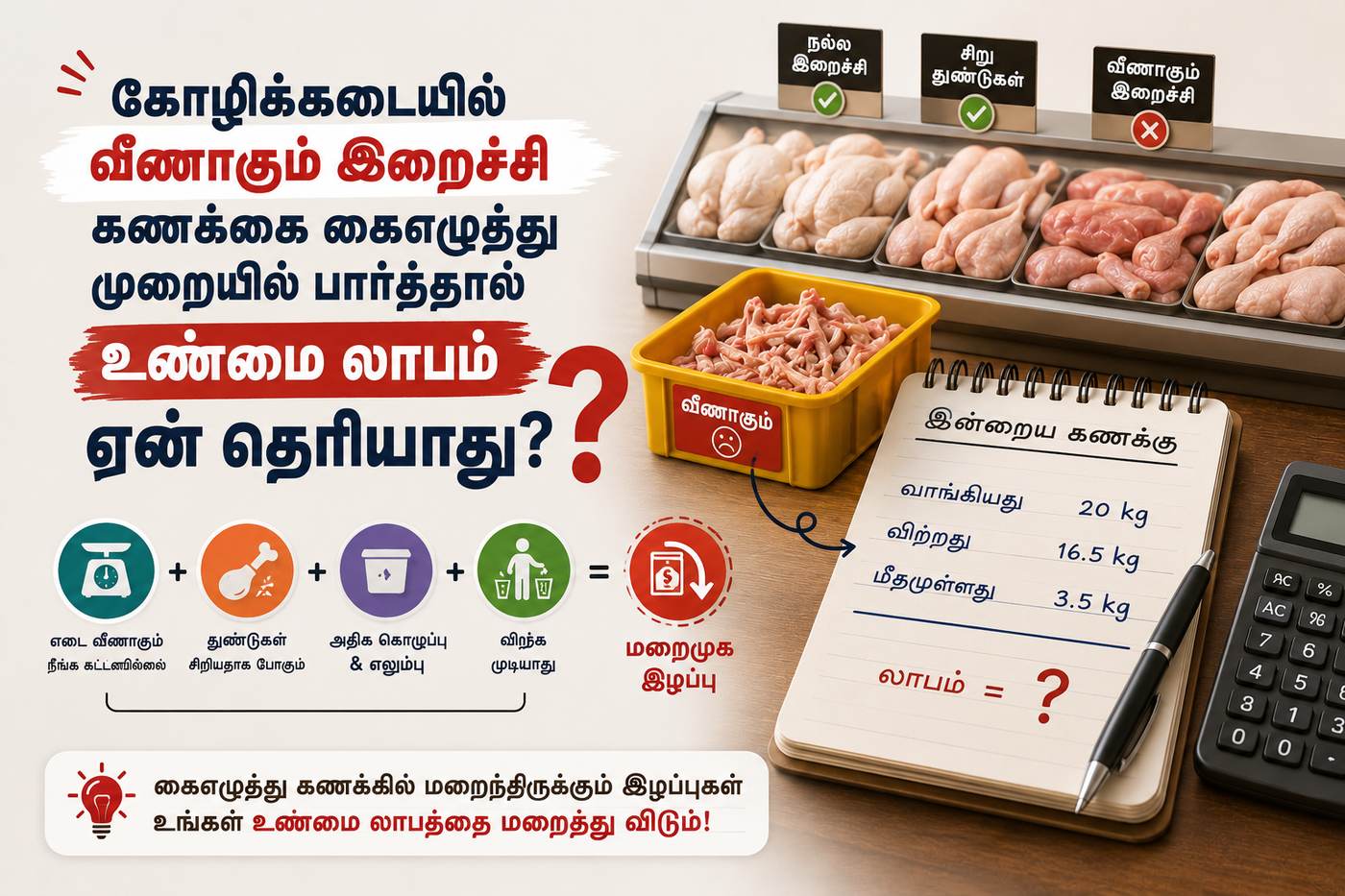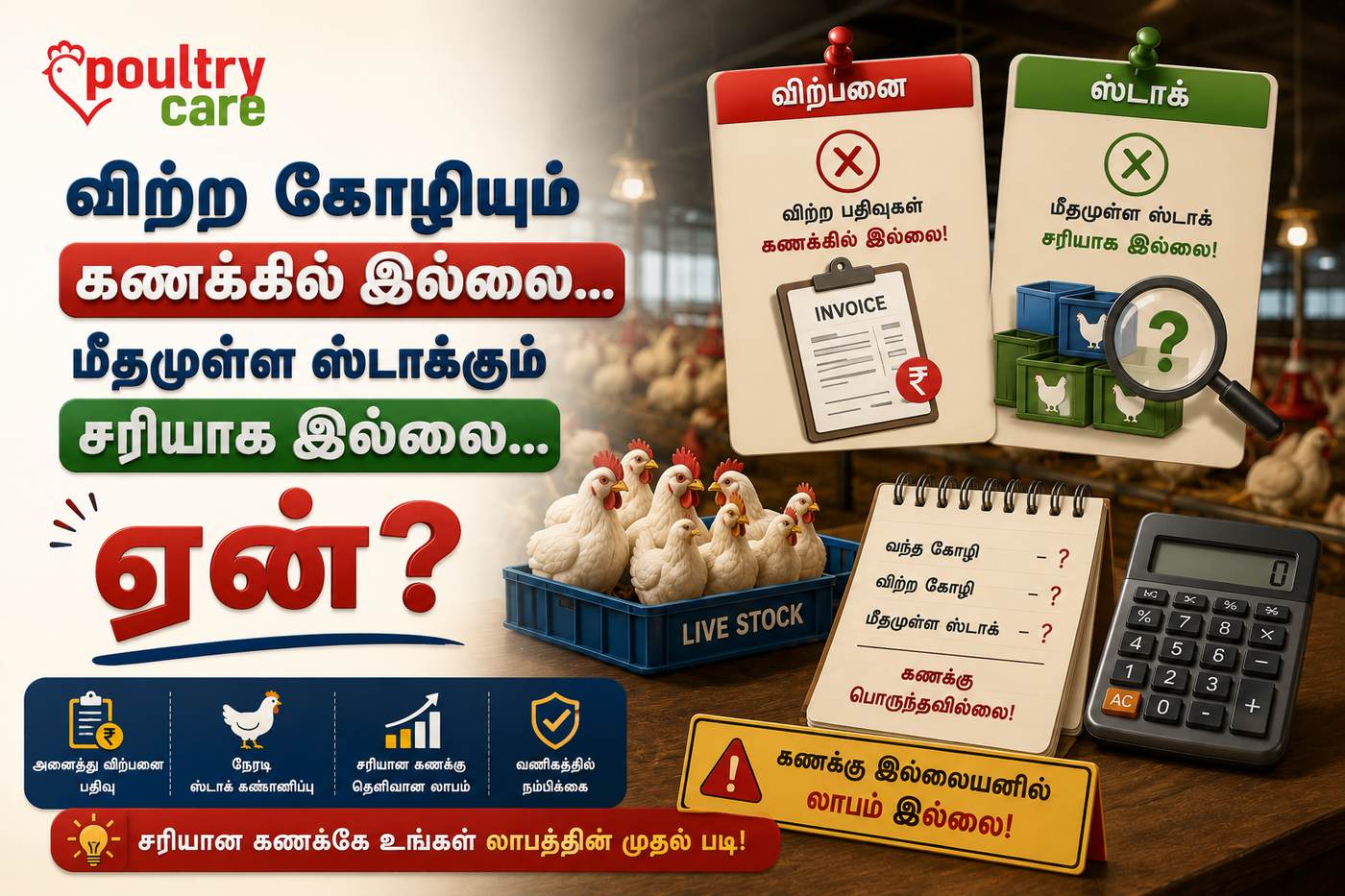

“விலை நம்ம கையில் தானா… இல்ல மார்க்கெட் கையில் தானா?”
Let us start with a simple calculation that every poultry trader has faced.
If your purchase cost including transport is 170 per kg and you sell at 175 per kg, your margin looks like 5 per kg. But if you give just 2 rupees discount under customer pressure, your margin drops to 3. If weight loss during delivery reduces another 2 rupees, your profit becomes almost zero.
This happens every day in poultry trading. Traders think they are controlling the selling price, but in reality, price controls them.
Why Selling Price Changes Too Often in Poultry Trading
In poultry trading, selling price is rarely fixed. It changes based on market talk, customer pressure, competition, and fear of stock remaining unsold. Traders adjust price quickly to avoid arguments or delays.
Because birds are live and cannot be stored, traders feel forced to sell fast. This urgency weakens price discipline. Over time, selling price becomes reactive instead of planned. When price changes daily without calculation, profit becomes unpredictable.
The Hidden Cost of Unplanned Discounts
Discounts are one of the biggest silent profit killers in trading. A small discount looks harmless, but its impact is big.
If you sell 2,000 kg in a day and give a discount of just 2 per kg, you lose 4,000 that day. Over 25 working days, this becomes 1 lakh. Most traders never calculate discounts this way. They remember only the rate, not the lost margin.
Discounts given without clarity slowly train customers to expect lower prices. This makes future negotiation harder and reduces trader confidence.
How Poor Price Control Affects Business Confidence
When traders are not confident about their pricing, every sale feels stressful. They hesitate while quoting rates. They fear losing customers. They agree to terms that hurt margins.
Customers sense this hesitation. Strong customers push harder. Weak price control slowly shifts power away from the trader. This affects not only profit, but also respect in the market.
Why Traders Mix Cost and Market Emotion
Many traders decide selling price based only on market talk. They hear a rate from another trader or customer and adjust immediately. But market rate is not the same as profitable rate.
Each trader’s cost is different. Transport distance, weight loss, vehicle expense, and payment delay all change real cost. When selling price is decided emotionally instead of based on real cost, margin disappears quietly.
What Changes When Traders Know Their True Cost
When traders clearly understand their true cost per kg, price control improves naturally. They know their minimum selling price and do not panic during negotiation.
Even if market rate fluctuates, they know where they can adjust and where they must stop. This clarity brings confidence. Confidence improves negotiation. Better negotiation protects margin.
The Emotional Stress of Weak Price Control
Many traders feel constant tension while selling. They worry whether the price they quoted was right. They replay conversations in their mind. They feel regret after giving discounts.
Many quietly think,
“இவ்வளவு உழைச்சும், லாபம் ஏன் கையில் நிலைக்கல?”
This stress comes not from hard work, but from lack of price clarity.
Conclusion: Selling Price Control Is Profit Control
In poultry trading, selling price decides profit more than sales volume. Without control over pricing, even good sales turn into weak profit.
Price control does not mean being rigid. It means being clear. When traders understand their real cost and margin, they sell with confidence, not fear.
The day selling price comes under control is the day profit stops leaking. And when profit stops leaking, poultry trading becomes a calmer and more respectable business.