
You raise birds with care. You manage feed cost. You monitor mortality. You calculate target weight. You plan dispatch properly. Everything seems under control.
But after delivery, the phone rings.
“Weight is not matching.”
“Shrink is too high.”
“Bird condition is not satisfactory.”
“There is variation in size.”
“Settlement needs adjustment.”
And suddenly, all your hard work feels questioned.
This situation is common in poultry trading. Many farmers focus strongly on production but treat delivery as just a routine step. In reality, delivery is not routine. Delivery is where your reputation is tested.
If customers are complaining after delivery, it is not always about birds alone. It is usually about systems, communication, and control.
Let us understand what really goes wrong between farm gate and customer gate.
Production Quality Alone Does Not Guarantee Customer Satisfaction
Many farmers believe that if farm performance is strong, customer satisfaction will automatically follow. But that is not always true.
On the farm, you measure FCR, mortality, average body weight, uniformity. These are production indicators. They show how well you managed the flock.
But customers experience something different. They experience delivery weight, shrink percentage, bird condition on arrival, unloading process, and settlement clarity.
If their experience does not match expectation, complaints begin.
You may produce excellent birds. But if documentation is unclear, loading is rushed, transport timing is not controlled, or communication is weak, the customer does not see your effort. They only see the final result.
Delivery is the final face of your business.
Weight Disputes: The Most Common Complaint
The most frequent complaint after poultry delivery is weight difference.
Loading weight is declared at farm. Delivery weight is recorded at buyer’s end. If the difference appears higher than expected, discussion starts immediately.
Shrink is natural. Birds lose weight during feed withdrawal and transport. Stress, distance, temperature, and waiting time all affect weight.
But the problem is not shrink itself. The problem is lack of clarity about expected shrink.
Do you know your average shrink percentage for different routes? Do you track it regularly? Do you compare batch-wise loading and delivery weight?
Many farmers do not maintain structured historical records. So when a complaint arises, there is no reference point.
The buyer may feel something is wrong. The farmer may feel unfairly blamed. Without data, both sides rely on memory.
In trading, memory creates confusion. Numbers create confidence.
If loading vs delivery weight is tracked consistently, patterns become visible. Seasonal variations can be understood. Long-distance effects can be measured. Then discussion becomes professional, not emotional.
Bird Condition on Arrival: Handling Matters More Than You Think
Another strong reason customers complain is the physical condition of birds at arrival.
Even if birds were healthy at loading, poor handling during transport can reduce quality perception.
Think practically.
Were birds loaded calmly or under pressure?
Was feed withdrawal timing correct?
Did birds wait too long in crates before truck movement?
Was ventilation proper during travel?
Was unloading immediate on arrival?
Small operational delays increase stress. Stress increases dehydration and shrink. Rough handling increases injury risk. Overcrowding increases mortality during transit.
The customer does not see what happened at farm. They see what arrives at their premises.
If arrival quality fluctuates between batches, customers start doubting consistency.
Consistency builds trust. Variability builds complaints.
Communication Gaps Create Bigger Damage Than Operational Errors
Sometimes the birds are fine. Weight is within acceptable range. Shrink is normal. But complaints still arise.
Why?
Because expectations were not aligned clearly.
Maybe the buyer expected 2.3 kg average weight but received 2.2 kg. Maybe the difference is small, but if it was not discussed clearly before dispatch, dissatisfaction begins.
Verbal communication creates misunderstanding. Written clarity creates protection.
If average weight, bird count, expected shrink range, and payment terms are clearly documented before dispatch, confusion reduces.
When communication is casual, complaints feel personal. When communication is structured, complaints feel manageable.
Trading management is not only about birds. It is about clarity.
Lack of Delivery Data Weakens Your Position
Imagine this situation.
Buyer says shrink was higher than usual. You feel it was normal. But you do not have structured records of previous deliveries.
Now what?
You depend on memory. Buyer depends on memory. Discussion becomes argument.
But if you have batch-wise comparison of loading weight, delivery weight, shrink percentage, transport duration, and seasonal pattern, your position becomes strong.
You can say confidently, “Our average shrink on this route during summer is within this range.” That changes the tone immediately.
Data-backed confidence builds credibility.
Without data, even honest farmers feel uncertain.
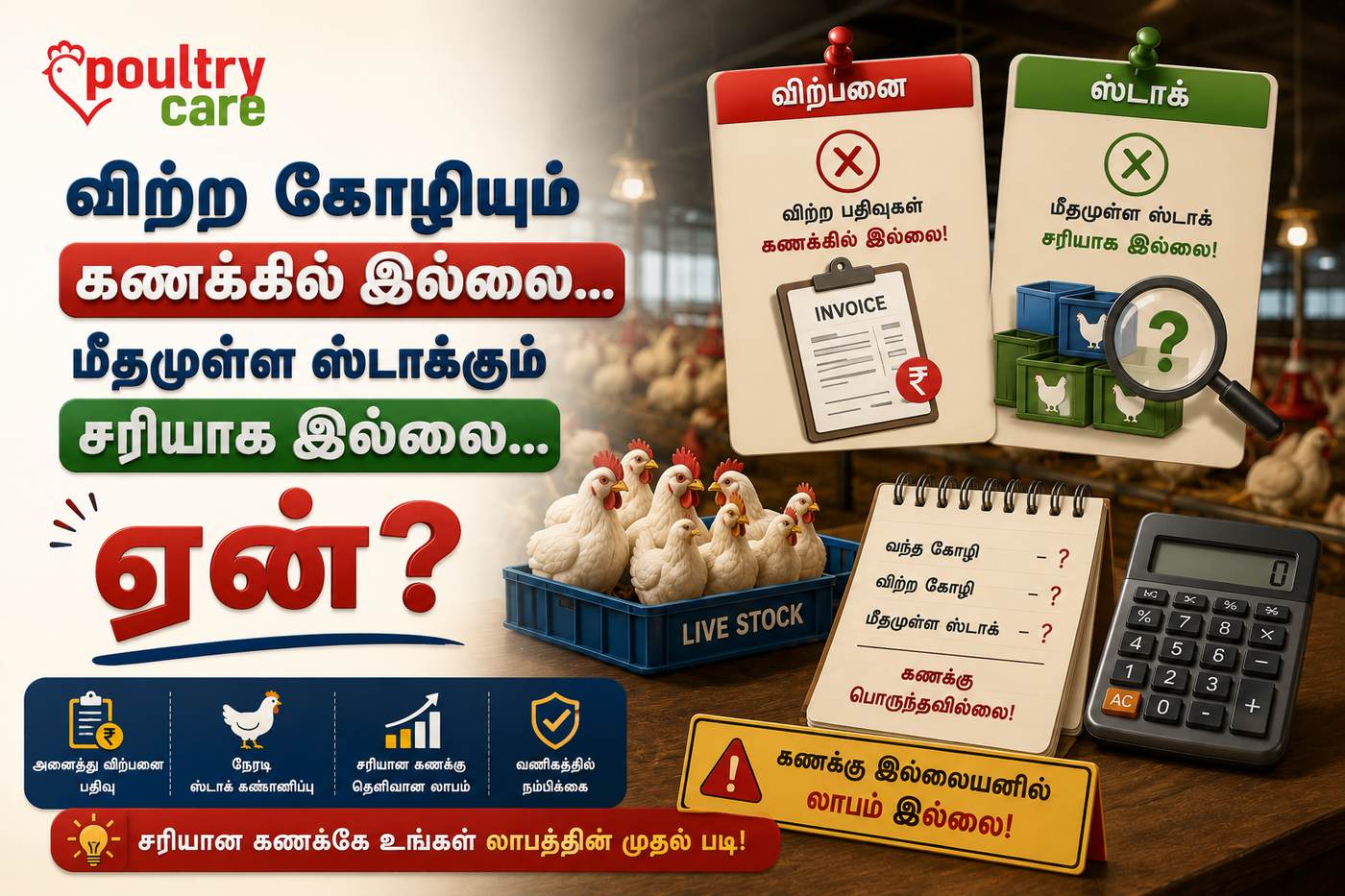
Live bird trading management must move from informal tracking to structured analysis. When every dispatch is recorded properly and compared historically, complaints reduce automatically.
Small Repeated Issues Slowly Damage Long-Term Relationships
One complaint does not break a relationship. But repeated small issues weaken trust.
Buyers prefer suppliers who deliver predictable results. They want consistent weight, stable shrink range, clear documentation, and professional communication.
If after every delivery there is negotiation, clarification, or adjustment, it creates friction.
Over time, friction leads to hesitation. Hesitation leads to exploring alternatives.
Many farmers lose customers not because of one big mistake, but because of repeated small dissatisfaction.
When complaints become frequent, it is a signal that systems need strengthening.
Moving from Reactive Handling to Preventive Discipline
Instead of waiting for complaints and responding emotionally, trading should be managed proactively.
Loading weight must be accurate and verified.
Delivery weight must be compared systematically.
Shrink must be calculated every time.
Transport timing must be recorded.
Customer expectations must be aligned clearly before dispatch.
When these practices become routine, complaint frequency drops.
Professional trading discipline does not require complexity. It requires consistency.
Each dispatch should be treated as a controlled business transaction, not just routine activity.
When you track performance over time, patterns become visible. When patterns are visible, improvement becomes possible.
What Customers Actually Want From You
Most buyers are not trying to reduce your margin unfairly. They want transparency, reliability, and predictability.
If weight difference is explained clearly with supporting records, they accept it.
If shrink increases due to extreme weather and communicated openly, they understand.
But if numbers change without clarity, confidence drops.
Customers complain when they feel uncertain.
Remove uncertainty, and you remove most complaints.
Delivery Is Not the End — It Is the Final Stage of Production
Many farmers think production ends at the farm gate. But from a business point of view, production ends only when the customer receives birds as expected.
Delivery is the final stage of value realization.
If you strengthen delivery management, you protect your brand.
If you reduce complaints, you build long-term customer relationships.
If you control trading data, you improve negotiation power.
The difference between a traditional farmer and a professional poultry trader lies in process discipline.
Ask yourself honestly.
Are complaints random?
Or are they signals that your delivery system needs better control?
When you start measuring loading vs delivery weight consistently, documenting communication clearly, and tracking every transaction carefully, your business shifts from reactive to controlled.
And controlled businesses grow steadily.
Customer trust is not built only on bird quality. It is built on predictable delivery performance.
Fix the gaps between loading and delivery, and complaints will reduce naturally.
That is how poultry trading becomes stable, professional, and profitable.