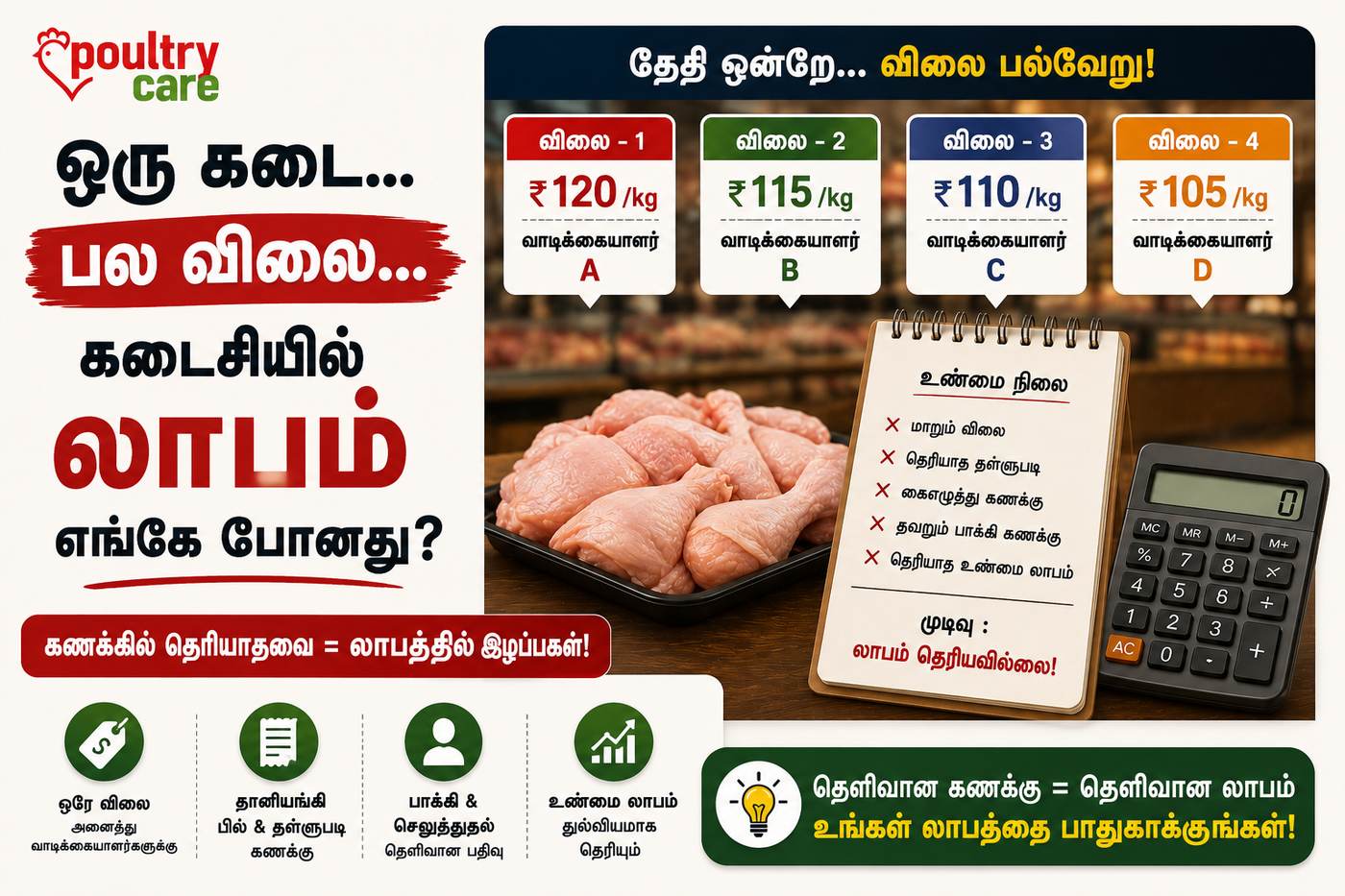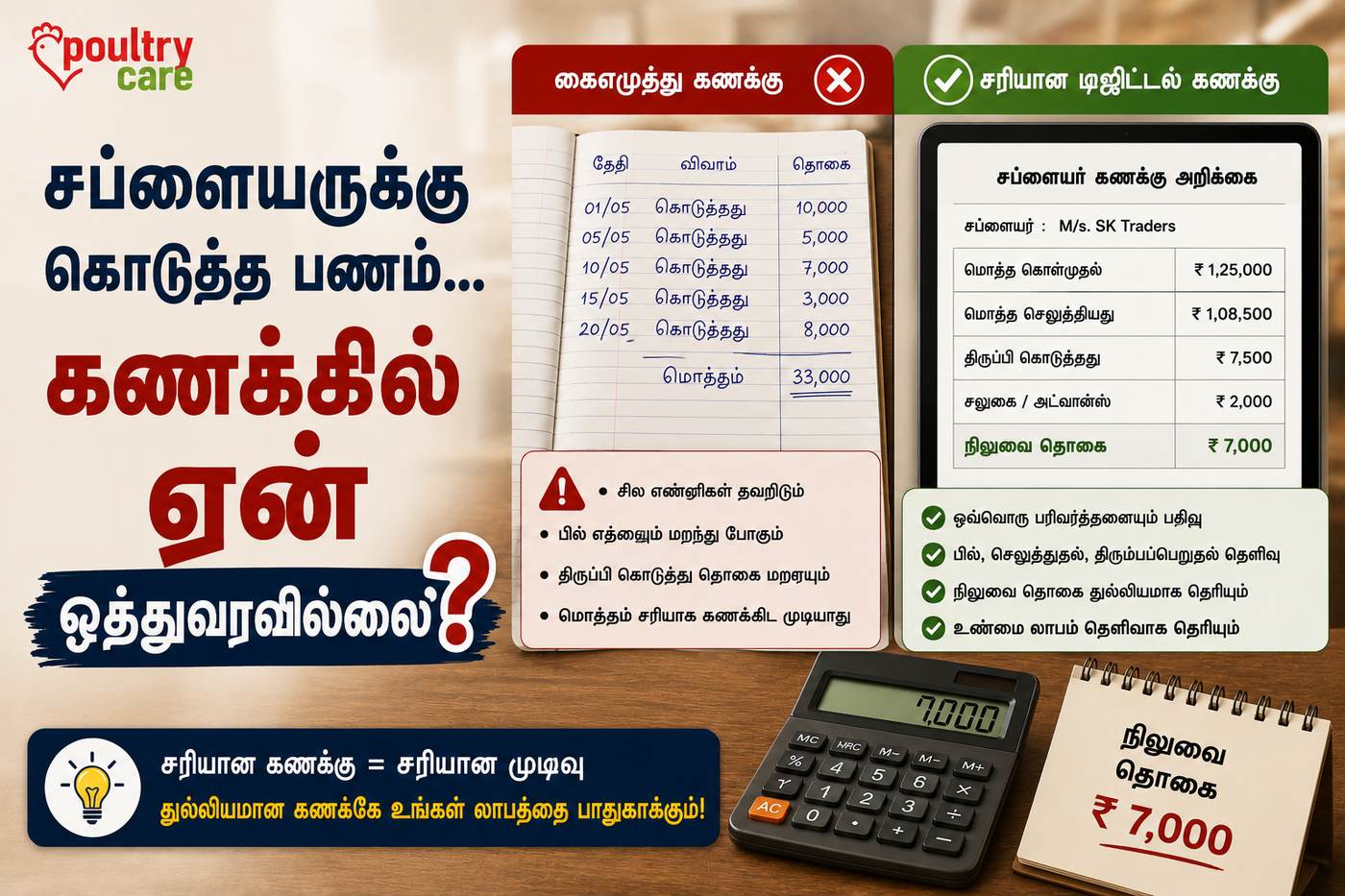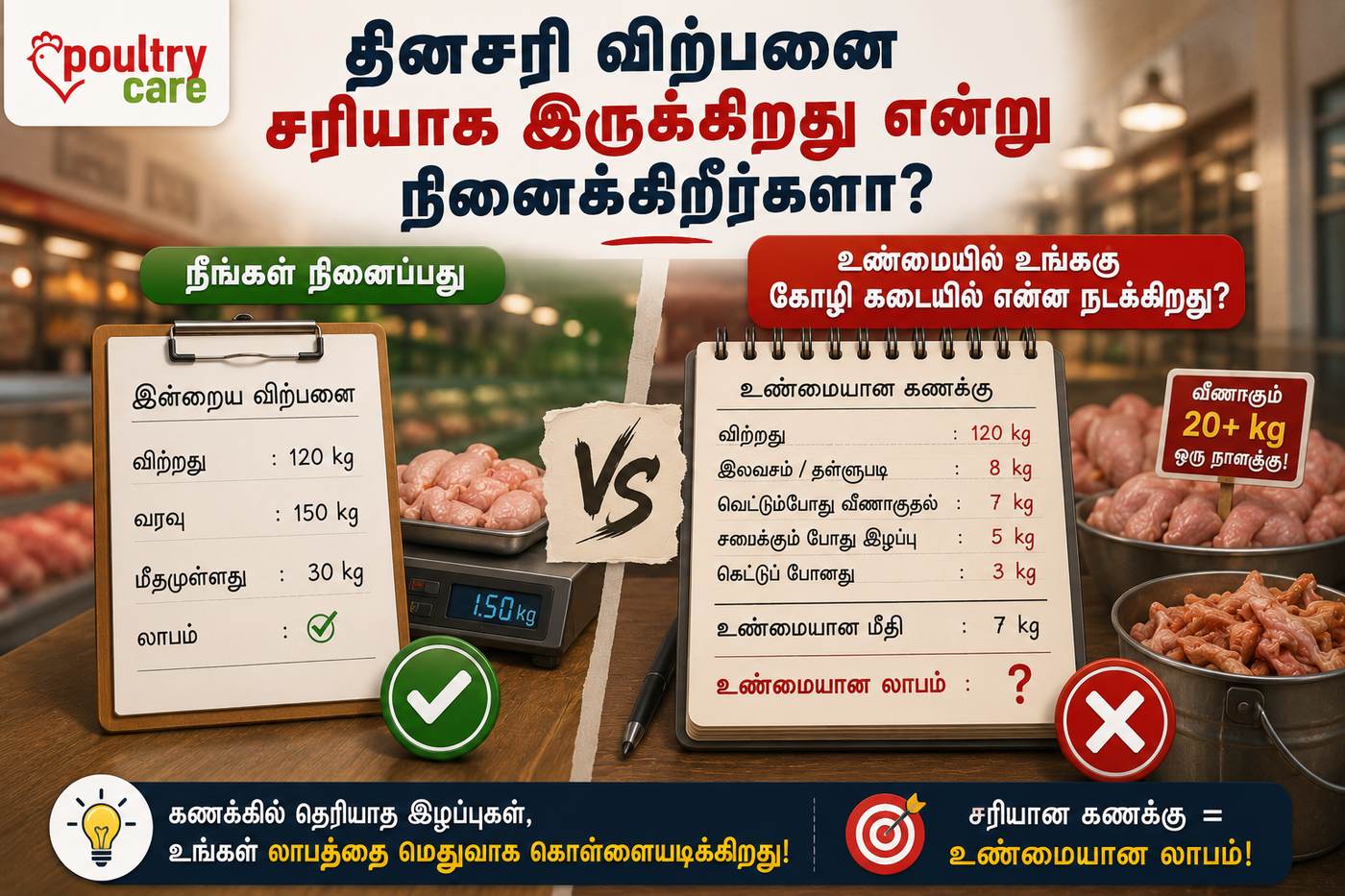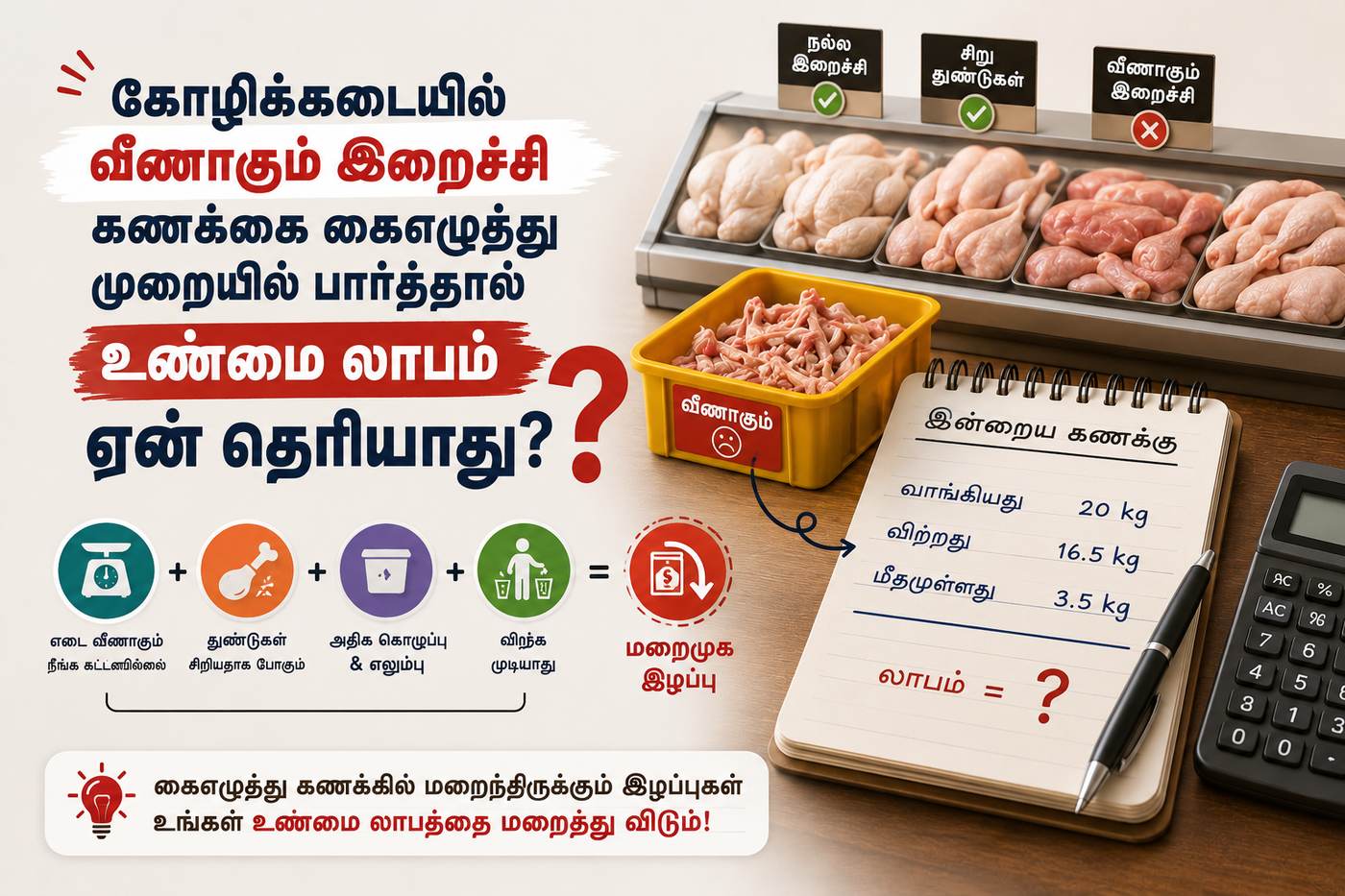

When Profit Feels Smaller Than Sales
Many poultry retail owners measure success through sales quantity. If the shop sells more kilograms today than yesterday, the day feels successful.
But after years of working closely with poultry retailers, one pattern appears repeatedly.
Sales increase. Effort increases. Working hours increase.
Yet profit does not grow at the same speed.
The reason is rarely visible in daily operations. It hides inside numbers that most retailers never calculate — loss per kilogram caused by shrinkage.
Retailers usually know:
-
Purchase price per kg
-
Selling price per kg
But very few know:
How much money is silently lost on every kilogram sold.
This blog explains a simple formula that converts invisible shrinkage into clear financial understanding.
Understanding Shrinkage Beyond Percentage
Most discussions about shrinkage focus only on percentage.
For example, someone may say, “My shrinkage is around two percent.”
But percentages do not create emotional awareness. Money does.
A two percent loss sounds small. But when converted into rupees per kilogram, retailers suddenly understand its real impact.
Shrinkage percentage tells you how much weight is lost.
Shrinkage loss per kg tells you how much profit disappears.
That difference changes decision-making.
Why Purchase Cost Alone Is Misleading
Retailers normally calculate cost like this:
Purchase price = ₹180 per kg
Selling price = ₹220 per kg
Expected margin = ₹40 per kg
On paper, the business looks healthy.
But this assumption works only if every kilogram purchased becomes a kilogram sold.
In real retail conditions, that never happens.
If shrinkage reduces saleable weight, the effective cost per kg automatically increases, even though purchase price remains the same.
This hidden cost adjustment is what most retailers fail to notice.
The Core Concept: Real Cost vs Purchase Cost
Let us understand an important retail truth.
You do not recover money from what you purchase.
You recover money from what you sell.
If you purchase 100 kg but sell only 96 kg, the total purchase cost must be recovered from fewer kilograms.
This means each sold kilogram carries extra hidden cost.
That extra cost is shrinkage loss per kg.
Once retailers understand this concept, pricing and profit clarity improve immediately.
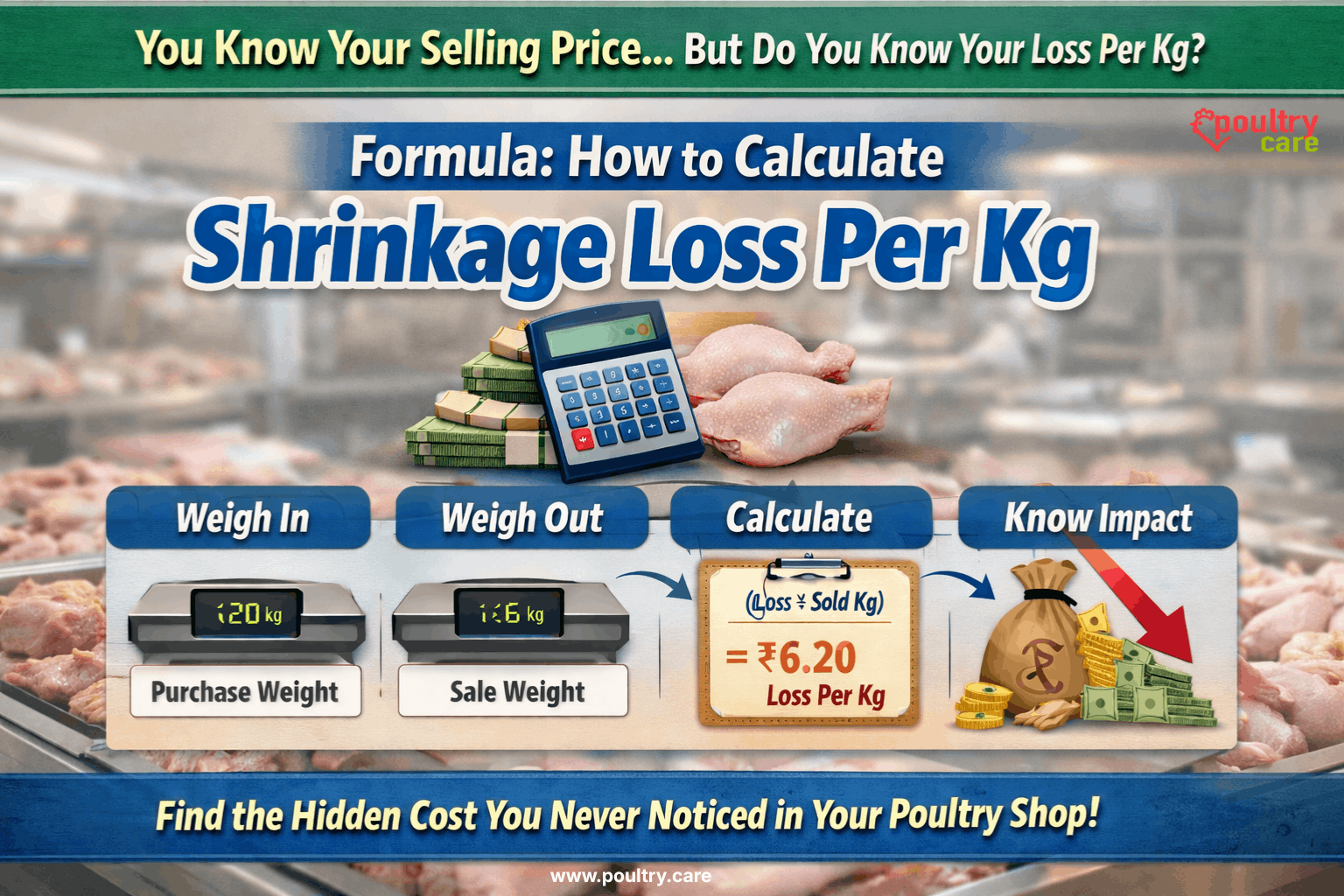
The Simple Formula to Calculate Shrinkage Loss Per Kg
Here is the practical formula every poultry retailer should know.
Step One: Calculate Total Shrinkage Weight
Shrinkage Weight = Purchase Weight – Sale Weight
Example:
Purchase = 120 kg
Sale = 116 kg
Shrinkage = 4 kg
Step Two: Calculate Shrinkage Percentage
Shrinkage % = (Shrinkage ÷ Purchase Weight) × 100
(4 ÷ 120) × 100 = 3.33%
Step Three: Calculate Actual Cost Per Kg
Actual Cost Per Kg = Total Purchase Cost ÷ Saleable Weight
If purchase price = ₹180/kg:
Total purchase cost:
120 × 180 = ₹21,600
Now divide by sale weight:
21,600 ÷ 116 = ₹186.20/kg
Your real cost is not ₹180.
It becomes ₹186.20 per kg.
Step Four: Shrinkage Loss Per Kg
Shrinkage Loss Per Kg = Actual Cost – Purchase Cost
₹186.20 – ₹180 = ₹6.20 loss per kg
Every kilogram sold carries hidden shrinkage cost.
Why This Formula Changes Retail Thinking
Most retailers adjust selling price based only on market competition. But without knowing actual cost per kg, pricing decisions become risky.
Two shops may sell chicken at the same price, yet one earns profit while the other struggles.
The difference lies in understanding real cost.
When shrinkage loss per kg becomes visible:
-
Pricing becomes scientific
-
Purchasing becomes controlled
-
Staff handling improves
-
Overstocking reduces
Numbers begin guiding decisions instead of assumptions.
Common Reasons Shrinkage Loss Per Kg Increases
Shrinkage rarely comes from one single mistake. It grows from multiple small operational gaps.
Moisture evaporation during display slowly reduces weight. Improper refrigeration accelerates dehydration. Excess trimming during cutting removes sellable meat. Delayed sales increase drip loss.
Handling also plays a major role. Repeated washing, exposure to airflow, and inconsistent storage practices increase water loss.
Another hidden contributor is inaccurate recording. Missing entries during busy hours distort actual sale weight.
Each small factor alone appears harmless, but together they raise loss per kilogram significantly.
How Retailers Can Reduce Loss Per Kg
The goal is not eliminating shrinkage completely. Natural product behavior will always create minor loss.
The goal is reducing avoidable loss.
Start by weighing stock immediately upon arrival. Maintain consistent cutting standards across workers. Reduce unnecessary product exposure. Rotate stock faster to minimize holding time.
Daily reconciliation builds awareness. When teams know weight movement is monitored, operational discipline improves naturally.
Most improvements come from awareness rather than investment.
Real Retail Example
Consider a shop selling 140 kg daily.
Shrinkage loss per kg = ₹5
Daily hidden loss:
140 × ₹5 = ₹700
Monthly impact:
₹700 × 30 = ₹21,000
Yearly impact crosses ₹2.5 lakh.
This loss happens without reducing customers or sales volume. It occurs purely because real cost was never calculated.
Understanding loss per kg converts invisible leakage into measurable business insight.
Moving from Activity-Based Retail to Knowledge-Based Retail
Traditional poultry retail focuses on effort — longer hours, faster service, more customers.
Modern retail success comes from understanding numbers behind operations.
When retailers track shrinkage loss per kg, they stop guessing profit. They begin managing it intentionally.
The shop transforms from a selling point into a controlled system where purchase, handling, and sale work together efficiently.
Knowledge replaces uncertainty.
The Psychological Advantage of Knowing Your Numbers
Retail business involves constant pressure. Market prices fluctuate, customer expectations change, and margins feel unpredictable.
But when owners know their exact loss per kilogram, confidence improves.
Decision-making becomes calmer. Negotiations with suppliers become stronger. Pricing discussions become logical rather than emotional.
Clarity reduces stress because uncertainty disappears.
Final Thought: Every Kilogram Has a Story
Each kilogram entering your shop carries cost, effort, and expectation. But only the kilograms sold return income.
Shrinkage decides how much of that effort converts into profit.
The formula shared here is simple, yet powerful. It turns invisible loss into visible understanding.
Before focusing on increasing sales tomorrow, calculate one thing today:
How much are you losing per kilogram without realizing it?
That single number can change how you run your poultry retail business forever.