
“ஒரு கிலோ எடை குறைந்தா, எவ்வளவு பணம் போகுது தெரியுமா?”
Let us start with a simple calculation that every poultry trader will understand.
If you send 1,000 birds from a farm, and each bird loses just 20 grams before reaching the customer, the total weight loss is 20 kilograms. If the market rate is 180 per kilogram, the loss is 3,600 in just one trip.
Now imagine this happening every day. In 25 working days, the loss becomes 90,000. This is only from weight loss, without counting transport expenses, shortages, or discounts.
Most traders do not calculate this daily. That is why the journey from farm to sales becomes the biggest blind spot in poultry trading.
Why Control Feels Strong at the Farm but Weak After Dispatch
At the farm, everything feels clear. Birds are counted, weight is checked, and rates are confirmed. The trader is physically present, so confidence is high.
The moment birds leave the farm, control starts reducing. The trader is no longer watching. Vehicles move, drivers take charge, and information comes later through phone calls. If something goes wrong, it is already over by the time the trader hears about it.
This is where many traders say, “இதெல்லாம் நடக்குறதுதான்.”
But this acceptance is exactly where profit starts leaking.
How Small Delays Create Measurable Losses
Even a short delay has a cost.
If a loaded vehicle waits for one extra hour before dispatch, birds lose moisture due to stress. That weight loss may look small, but it is real money. Add poor ventilation or rough roads, and the loss increases further.
If one vehicle makes two trips a day and both trips face small delays, the loss doubles. Traders rarely connect delay time with money loss, but birds feel every minute.
Where Responsibility Gets Lost in Daily Trading
When birds are at the farm, responsibility is clear. When birds are sold, responsibility is clear. But between these two points, responsibility becomes blurred.
If weight reduces, drivers blame loading. Loading staff blame farm conditions. Sales staff blame transport delay. In the end, the trader adjusts the loss and moves on.
But adjustment is not solution. Adjustment is silence.
When responsibility is not clearly connected to each movement, loss keeps repeating.
How Information Delay Converts Loss into Habit
Another hidden problem is late information.
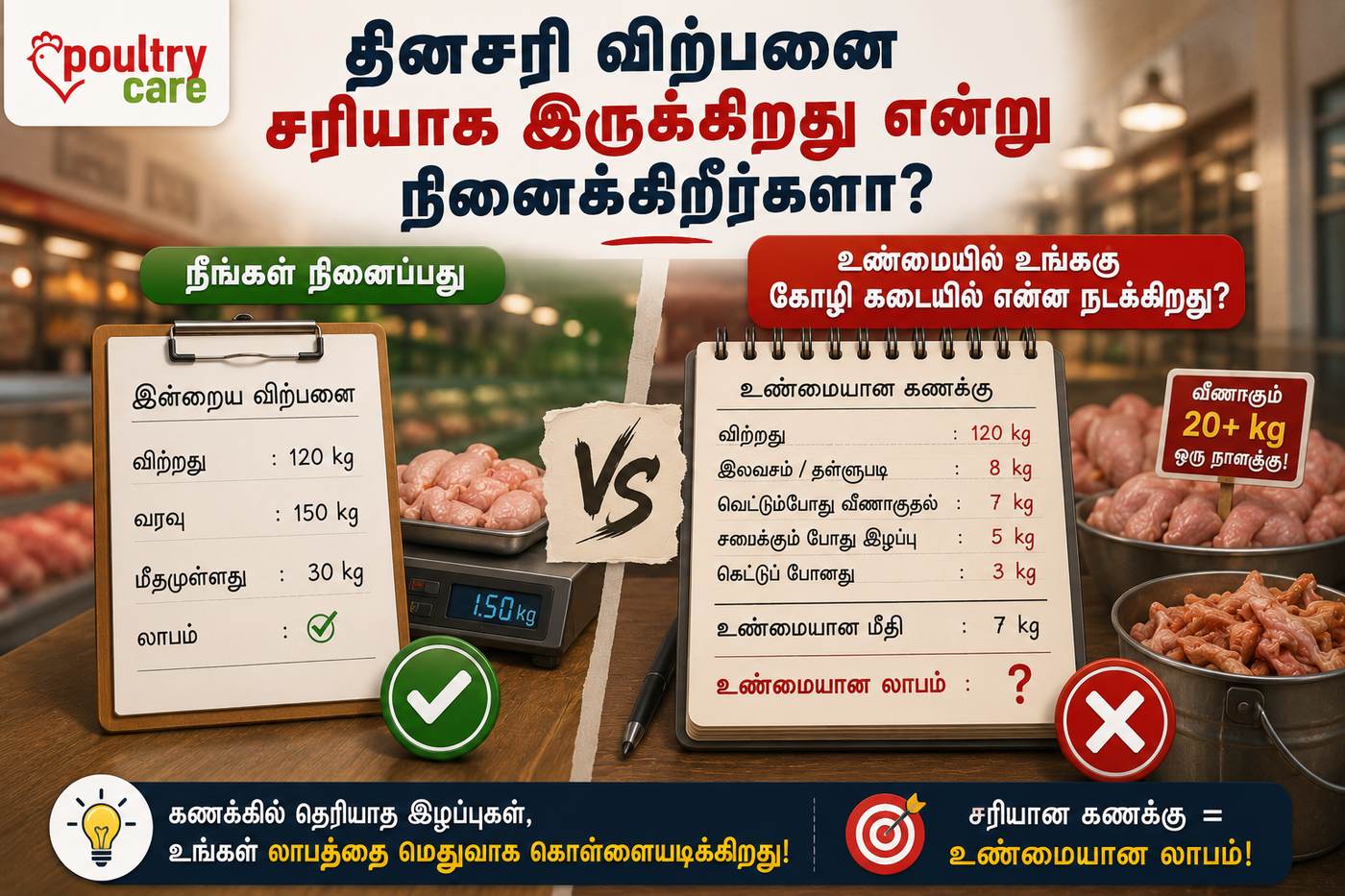
If you know about weight loss or shortage immediately, you can question it. If you know it after delivery, you adjust it. If you know it at month end, you forget it.
This delay turns loss into habit. And habits are dangerous in trading.
When information travels slower than birds, control disappears.
The Emotional Cost of Lost Control
This is not just about money.
When traders don’t know where loss happens, they feel frustrated. They argue with staff. They lose confidence during customer negotiations. They feel the business is running, but something is always missing.
Many traders say quietly,
“எவ்வளவு உழைக்கிறோம்… ஆனாலும் லாபம் ஏன் கைல வரல?”
This feeling comes not from lack of effort, but from lack of visibility.
What Changes When Traders Start Watching the Full Journey
When traders start observing the full journey from farm to sales, mindset changes.
They begin checking dispatch timing. They observe loading methods. They ask questions about routes and waiting time. They start linking movement with money.
Loss does not stop overnight. But it reduces slowly and steadily. Profit improves without increasing sales. Stress reduces because surprises reduce.
This is not magic. This is awareness.
Conclusion: Control Is Not About Power, It Is About Seeing Clearly
In poultry trading, the biggest losses do not happen at buying or selling. They happen in between. The journey from farm to sales decides profit more than rate difference.
When traders stop treating this journey as “normal” and start treating it as “critical,” everything changes. Small losses stop becoming big monthly shocks.
The business becomes calmer. Decisions become stronger. Profit becomes predictable.
The day a trader clearly sees what happens between farm and sales is the day real control begins.