
When Numbers Don’t Agree, Retailers Start Doubting Profit
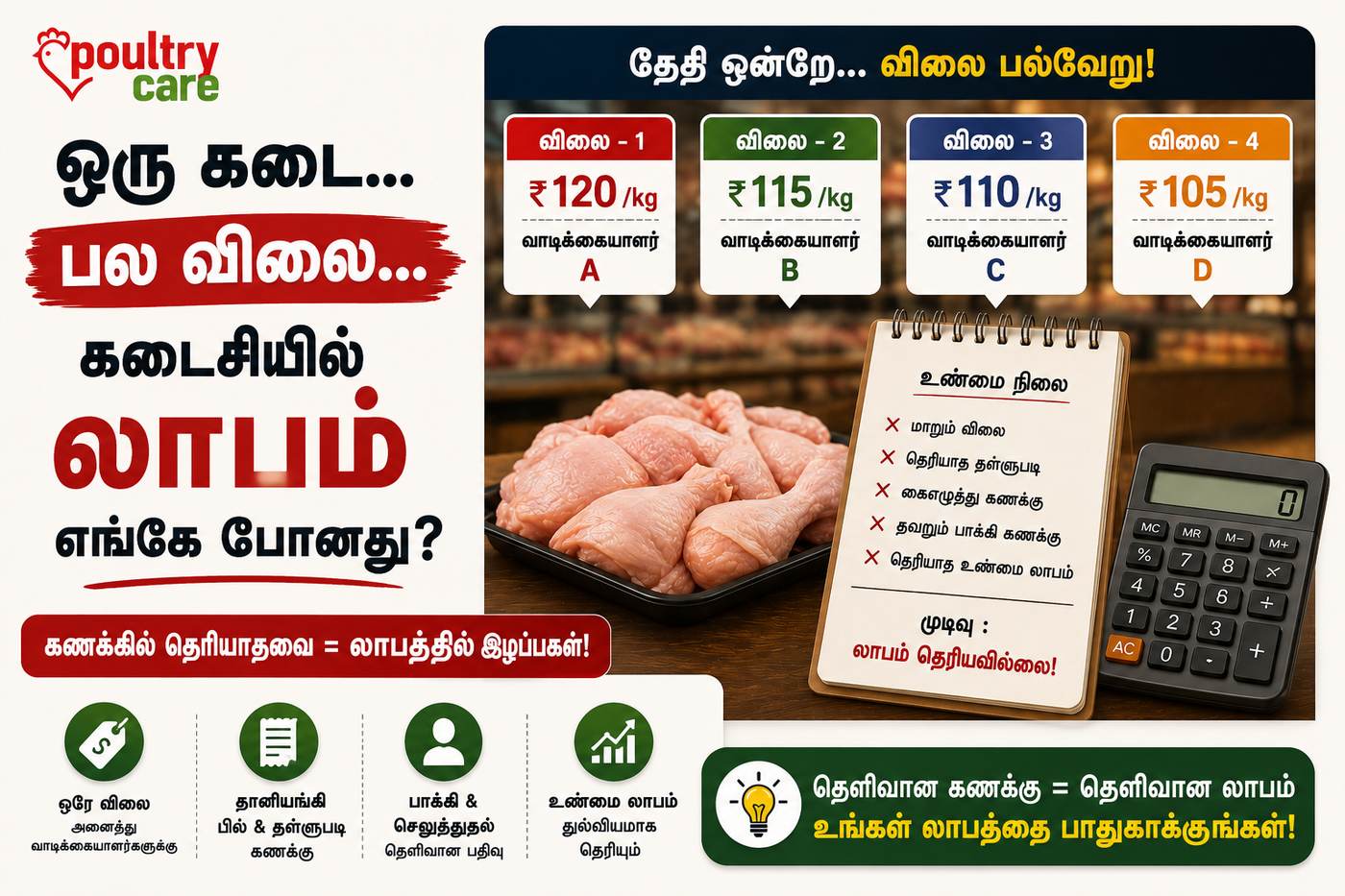
Almost every poultry retailer experiences this moment.
You purchase birds with confidence. The supplier invoice shows clear weight. Sales throughout the day look strong. Customers are satisfied, and business feels active.
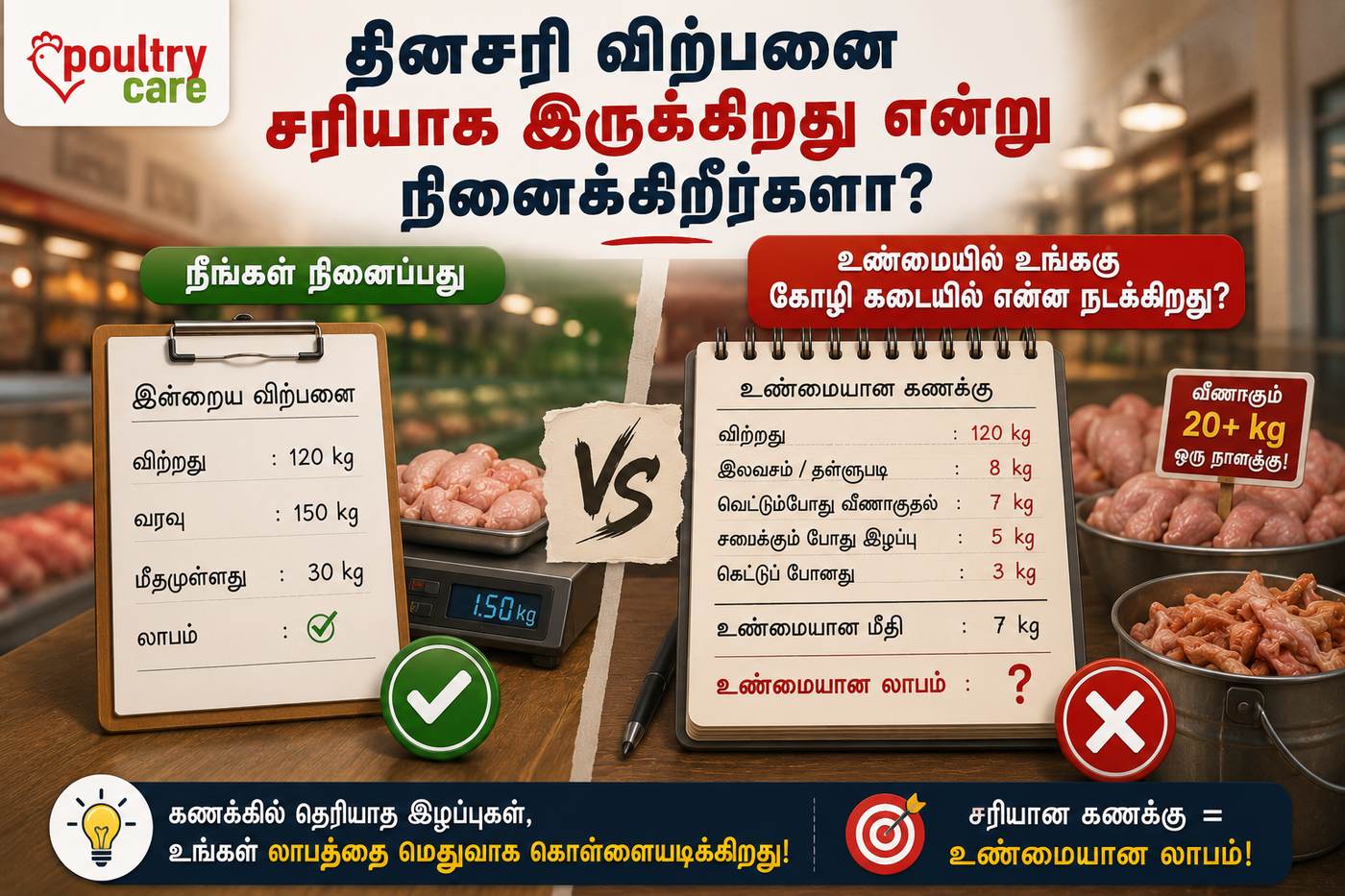
But when you compare total purchase weight with total sale weight, something feels wrong.
The numbers do not match.
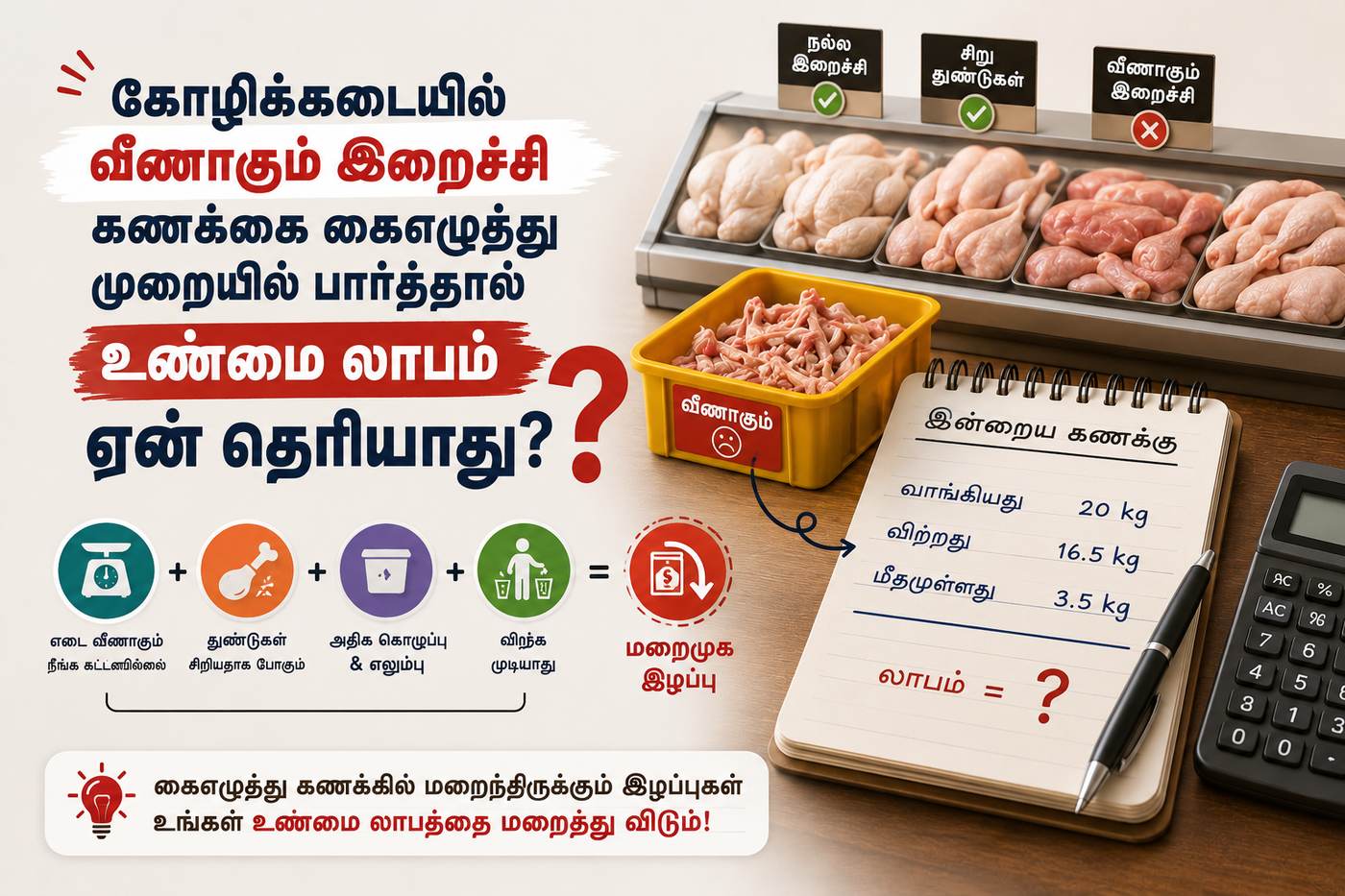
You bought 100 kilograms, yet billing reflects only 95 or 96 kilograms. Nothing appears stolen. No obvious mistake exists. Still, a few kilograms have disappeared somewhere inside daily operations.
Many shop owners initially blame staff, suppliers, or scales. But after years of working closely with poultry retailers, one truth becomes clear:
Purchase weight and sale weight almost never match exactly — and understanding why is the first step toward retail control.
Understanding the Journey of Weight Inside a Poultry Shop
Weight is not static. From the moment birds arrive at the shop, biological and operational changes begin.
Live birds or freshly processed meat naturally release moisture. Blood drainage continues after slaughter. Temperature differences between transport and shop storage cause evaporation. Cutting and cleaning remove non-saleable portions.
Each stage slightly changes measurable weight.
Retailers often think weight loss happens at one single point. In reality, it occurs continuously throughout the product journey.
The shop is not only a selling place. It is a transformation environment where product condition changes every hour.
Recognizing this journey helps retailers move from confusion to understanding.
Natural Moisture Loss: The Invisible Contributor
Chicken meat contains a high percentage of water. After processing, muscle fibers begin releasing retained moisture gradually.
This process is completely natural.
When meat is exposed to air, cooling systems, or repeated handling, surface evaporation occurs. Even properly stored chicken loses small amounts of water over time.
Retail display conditions strongly influence this effect. Continuous airflow from fans or refrigerators accelerates moisture release. Products displayed longer lose slightly more weight than freshly processed batches.
This loss is silent. Customers cannot see it, and staff rarely notice it. Yet by evening, measurable weight reduction becomes real.
Natural moisture loss alone explains a significant portion of the difference between purchase and sale weight.
Processing and Cutting Variations
Another major reason weights differ lies in cutting practices.
Every butcher has a unique cutting style. Some remove extra fat or skin. Others trim aggressively for visual appearance. Small variations repeated across dozens of birds create noticeable weight differences.
Retailers often underestimate how much trimming affects yield.
For example, removing an additional 30–40 grams per bird may appear insignificant. But across 100 birds, this becomes several kilograms of lost saleable weight.
Consistency matters more than speed.
Shops that standardize cutting methods experience more predictable sale weight outcomes, while inconsistent processing creates fluctuating margins.
Handling Practices That Slowly Reduce Saleable Weight
Handling may look harmless but contributes heavily to shrinkage.
Frequent shifting of trays, washing meat repeatedly, or leaving products exposed during busy hours increases water loss. Improper stacking compresses meat and causes drip loss. Delays between processing and refrigeration accelerate dehydration.
Retail environments are dynamic. Staff focus on serving customers quickly, often unaware that small handling habits influence measurable weight.
The problem is not negligence. It is lack of awareness.
When retailers begin observing handling behavior carefully, they often discover hidden sources of daily loss.
Time: The Most Ignored Factor in Weight Difference
Time itself changes poultry weight.
Fresh meat sold quickly maintains higher weight compared to meat held for extended periods. The longer chicken remains unsold, the greater the moisture reduction.
This explains why evening reconciliation often shows lower weight than expected even when sales appear accurate.
Retailers sometimes interpret this as calculation error, but it is actually product aging inside retail conditions.
Fast stock rotation reduces this effect, while over-purchasing increases exposure time and therefore increases loss.
Inventory planning directly influences weight accuracy.
Measurement Gaps and Human Estimation
Another common reason purchase and sale weights differ is measurement inconsistency.
Small scale calibration differences, rounding errors during billing, or skipped recordings create cumulative discrepancies.
Many shops rely on approximate entries during busy hours. A few missed entries or estimation-based billing can distort final reconciliation numbers.
Retail operations depend on measurement discipline. Without consistent recording, even well-managed shops struggle to understand real performance.
Numbers only tell the truth when captured accurately.
Why This Difference Matters for Profit
Some retailers accept weight variation as unavoidable and stop investigating further. However, the financial impact becomes clear when calculated over time.
If a shop experiences only 3 kilograms difference daily and sells at ₹220 per kilogram, the unnoticed value loss equals ₹660 each day.
Across one month, this becomes nearly ₹20,000.
Across a year, the number becomes significant enough to influence business growth decisions.
Understanding weight difference is not about eliminating natural loss completely. It is about distinguishing between natural loss and controllable loss.
That distinction protects profitability.
The Mindset Shift: From Selling Chicken to Managing Yield
Successful poultry retailers eventually realize an important truth:
Retail success depends not only on sales volume but on yield management.
Two shops may sell the same quantity of birds yet earn very different profits because one understands weight movement better.
When retailers start monitoring purchase weight, processing yield, and sale weight regularly, clarity improves. Decisions become data-driven rather than assumption-based.
Retail transforms from daily survival into controlled business management.
Practical Awareness Steps Every Retailer Can Begin Today
Improvement begins with observation.
Record purchase weight accurately upon arrival. Maintain consistent cutting methods. Reduce unnecessary handling exposure. Monitor storage conditions and compare expected stock with physical stock at closing time.
These simple actions create visibility.
Visibility creates accountability.
Accountability gradually reduces unexplained differences between purchase and sale weight.
No complex system is required — only consistent attention.
Final Thought: The Numbers Are Not Wrong — They Are Teaching You
When purchase and sale weights do not match, the numbers are not your enemy.
They are signals.
They reveal how your shop operates beneath daily activity. They show where product changes, where handling affects yield, and where small improvements can strengthen profit.
Instead of asking, “Why is weight missing?” a better question is:
“What is my shop teaching me about its process?”
Retailers who learn from these signals build stronger, more predictable businesses.
Because in poultry retail, profit is not decided only at purchase or sale — it is decided in everything that happens in between.