
“பறவைகள் போகுது… எடை மட்டும் எங்கே போகுது?”
In poultry trading, weight is money. Every gram matters, but weight loss is one of the most ignored problems in the business. Traders see birds moving out daily, sales happening, and vehicles running on time. Everything looks normal. But slowly, profit starts reducing, and no one clearly knows why.
Weight loss does not happen suddenly like a big accident. It happens quietly, bird by bird, trip by trip. Because it looks small on a daily basis, traders accept it as normal. Over time, this acceptance turns into one of the biggest hidden losses in poultry trading.
Why Weight Loss Feels Normal in Poultry Trading
Most traders believe that some amount of weight loss is unavoidable. Birds are living animals, transport is stressful, and market conditions are not perfect. Because of this thinking, weight loss is rarely questioned seriously.
When loss becomes common, it stops getting attention. Traders focus more on rates, sales volume, and collections, assuming that weight loss is already included in the business. This mindset is dangerous. Normalizing loss does not reduce it; it only hides it.
Where Weight Loss Actually Happens in Trading Operations
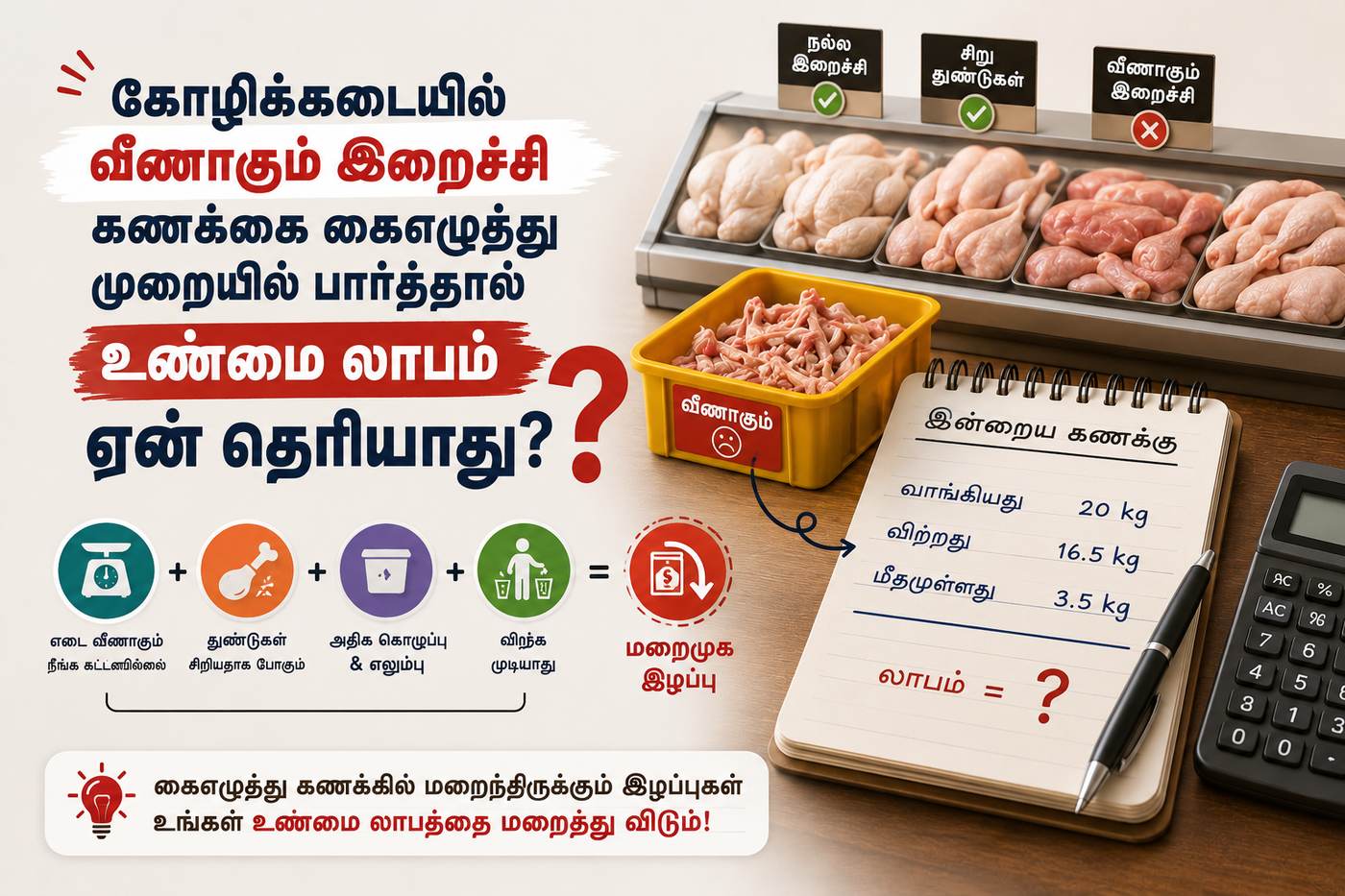
Weight loss does not happen in one place. It happens at multiple points between purchase and sale. Handling during loading, waiting time before dispatch, travel duration, temperature, ventilation, and unloading all affect bird weight.
Even small delays or rough handling increase stress on birds, leading to dehydration and weight reduction. Because these factors are spread across the day, weight loss does not feel like a single issue. But together, they create a serious profit drain.
How Small Weight Loss Turns Into Big Financial Damage
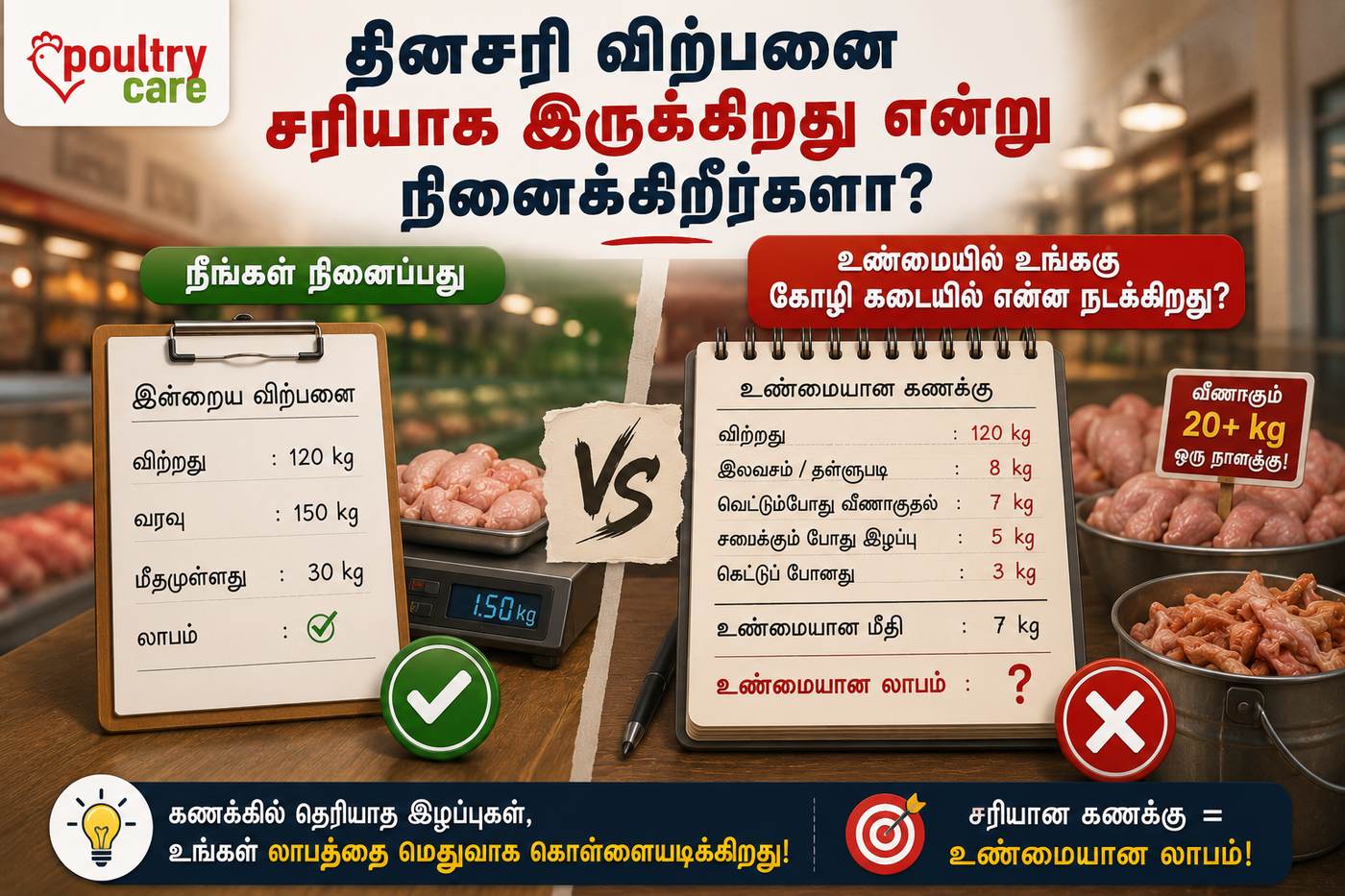
A few grams lost per bird may not look important. But poultry trading runs on volume. When hundreds or thousands of birds lose a small amount of weight, the total loss becomes significant.
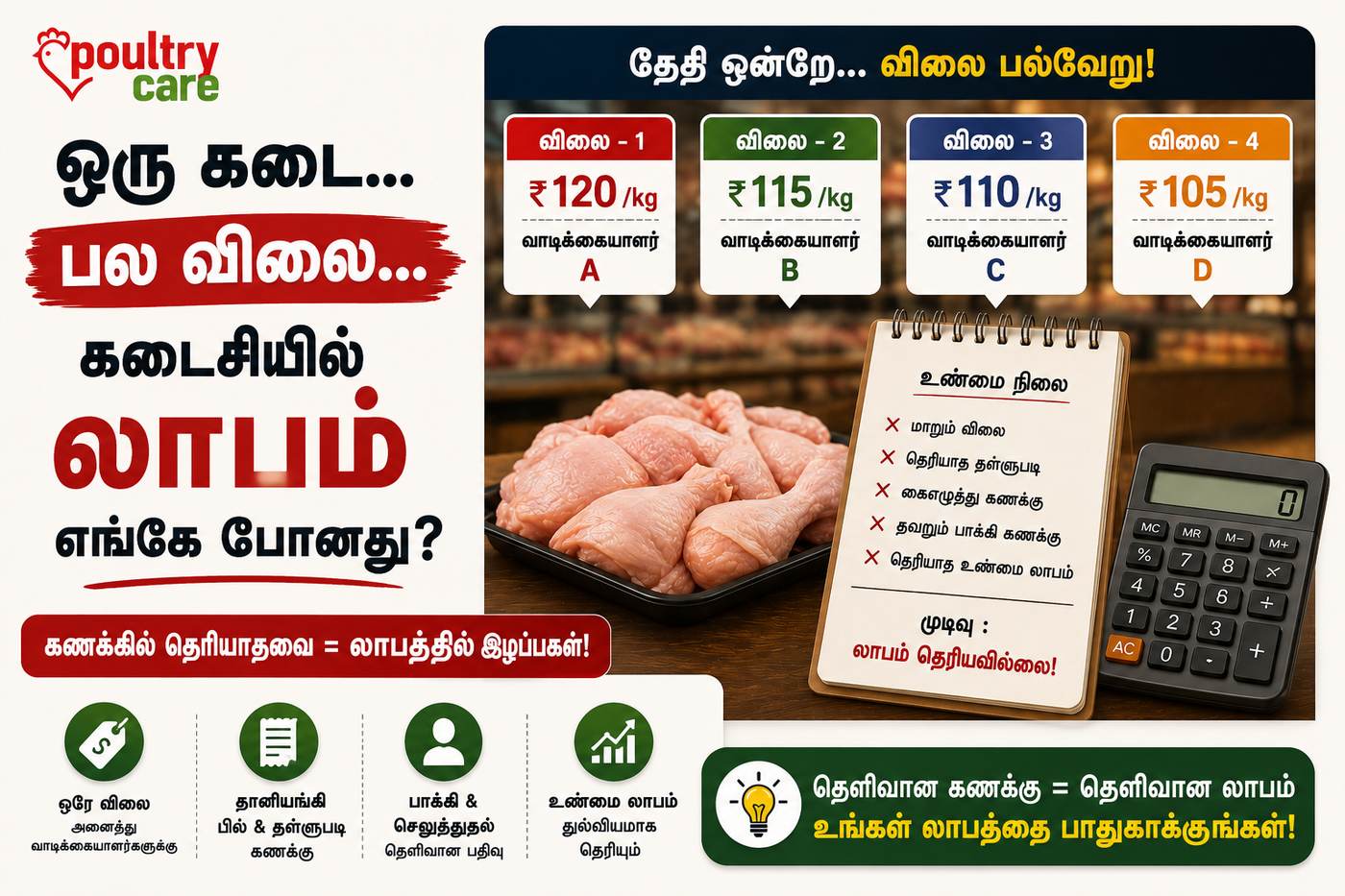
Most traders never calculate this loss properly. It does not appear clearly in sales or purchase records. It quietly reduces the final margin. When month-end profit is checked, the trader feels something is wrong but cannot point to a clear reason. Weight loss is often that invisible reason.
Why Weight Loss Is Rarely Tracked Properly
One major reason weight loss remains hidden is the lack of consistent tracking. Many traders check weight only at purchase and final sale. The difference is noticed, but the reason is not investigated.
Manual tracking and verbal updates make it difficult to connect loss to a specific vehicle, route, time, or handling practice. When there is no clarity, responsibility is unclear. Loss gets accepted instead of corrected.
The Impact of Weight Loss on Pricing and Negotiation
When traders do not clearly understand weight loss, pricing decisions become weak. Traders may reduce selling price under pressure without realizing that margin is already reduced by shrinkage. This double impact hurts profitability badly.
Traders who understand weight loss clearly negotiate better. They protect their margin because they know their real cost. Awareness of weight loss strengthens confidence during customer discussions and market fluctuations.
What Changes When Traders Start Paying Attention to Weight Loss
When traders start observing weight loss carefully, their entire approach changes. They become more alert during loading and unloading. They pay attention to waiting time, route planning, and vehicle conditions.
Instead of arguing at month end, they start fixing issues during the day. Weight loss reduces gradually, not because of one big change, but because of better daily discipline. This directly improves profit without increasing sales.
Conclusion: Weight Loss Is Not a Small Issue, It Is a Silent Profit Killer
In poultry trading, weight loss is often treated as unavoidable. But ignoring it is one of the biggest mistakes traders make. Weight loss may look small daily, but over time it becomes a major financial drain.
Understanding where weight loss happens and why it happens gives traders back control. Profit does not increase by working harder alone. It increases by protecting what is already earned. The day weight loss is taken seriously, poultry trading becomes more stable, predictable, and profitable.