
When Business Looks Busy but Money Doesn’t Stay
A poultry retail outlet located in a fast-growing market area appeared successful from every visible angle. Customers visited throughout the day. Weekend demand remained strong. Staff stayed occupied from morning preparation until evening closing.
The owner believed business was expanding steadily.
Daily cash collection looked healthy. Purchase volumes increased compared to previous months. Customer feedback remained positive.
Yet something felt wrong.
At month end, expected profit was missing.
Expenses had not increased dramatically. Supplier pricing remained stable. Sales volume had not reduced. Still, savings were far lower than projected.
The owner initially blamed market competition and rising operational costs. But a deeper operational review revealed a different truth.
The outlet had unknowingly lost ₹1,73,420 in just thirty days.
Not through theft.
Not through poor sales.
But through invisible operational leakage.
The Starting Point: Understanding the Shop’s Numbers
The outlet operated with an average daily purchase of approximately two hundred kilograms of dressed chicken.
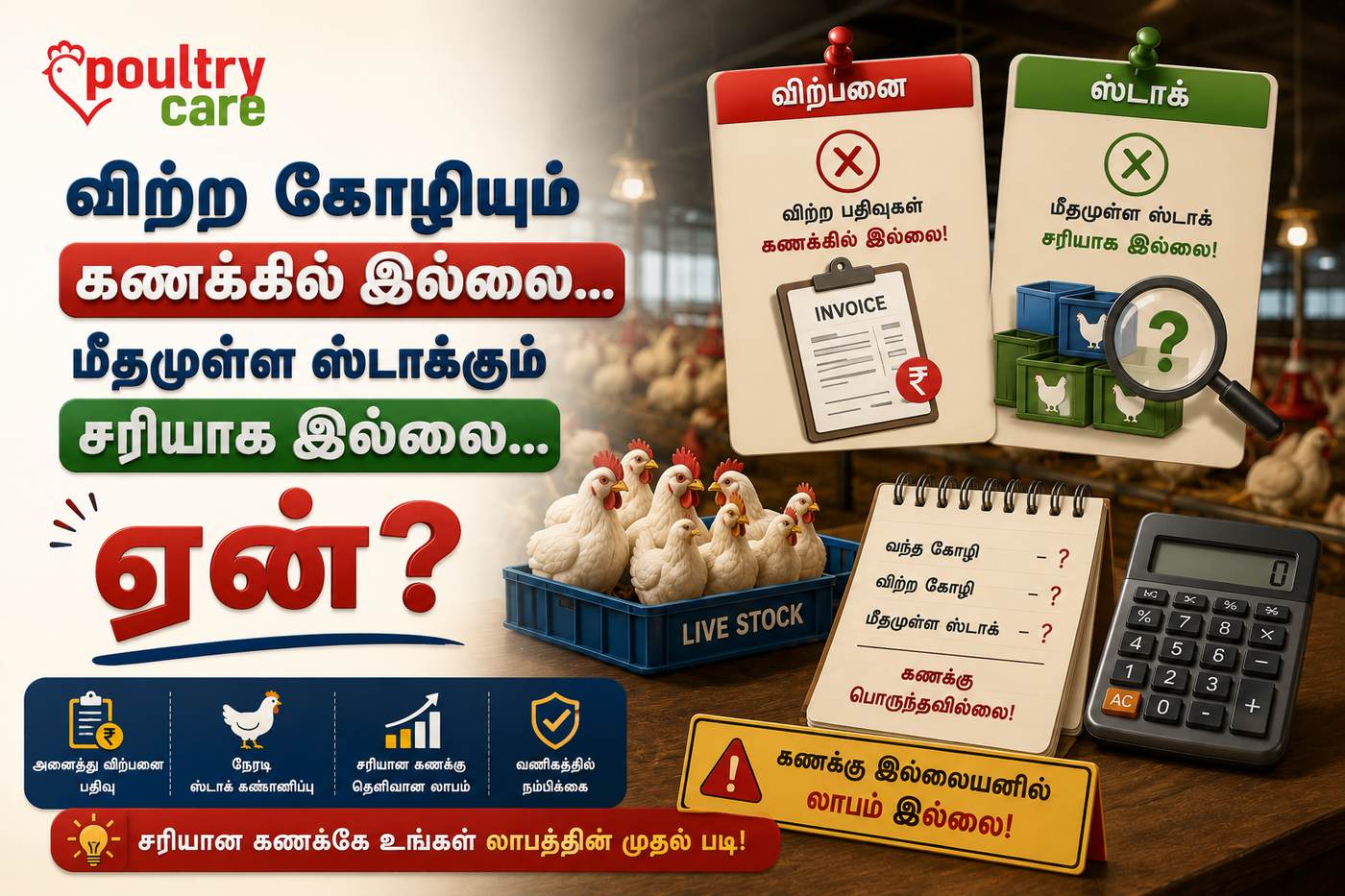
Sales were consistent, and billing records appeared accurate. However, one comparison had never been performed regularly — purchase weight versus actual billed weight.
When weight reconciliation began, a pattern appeared immediately.
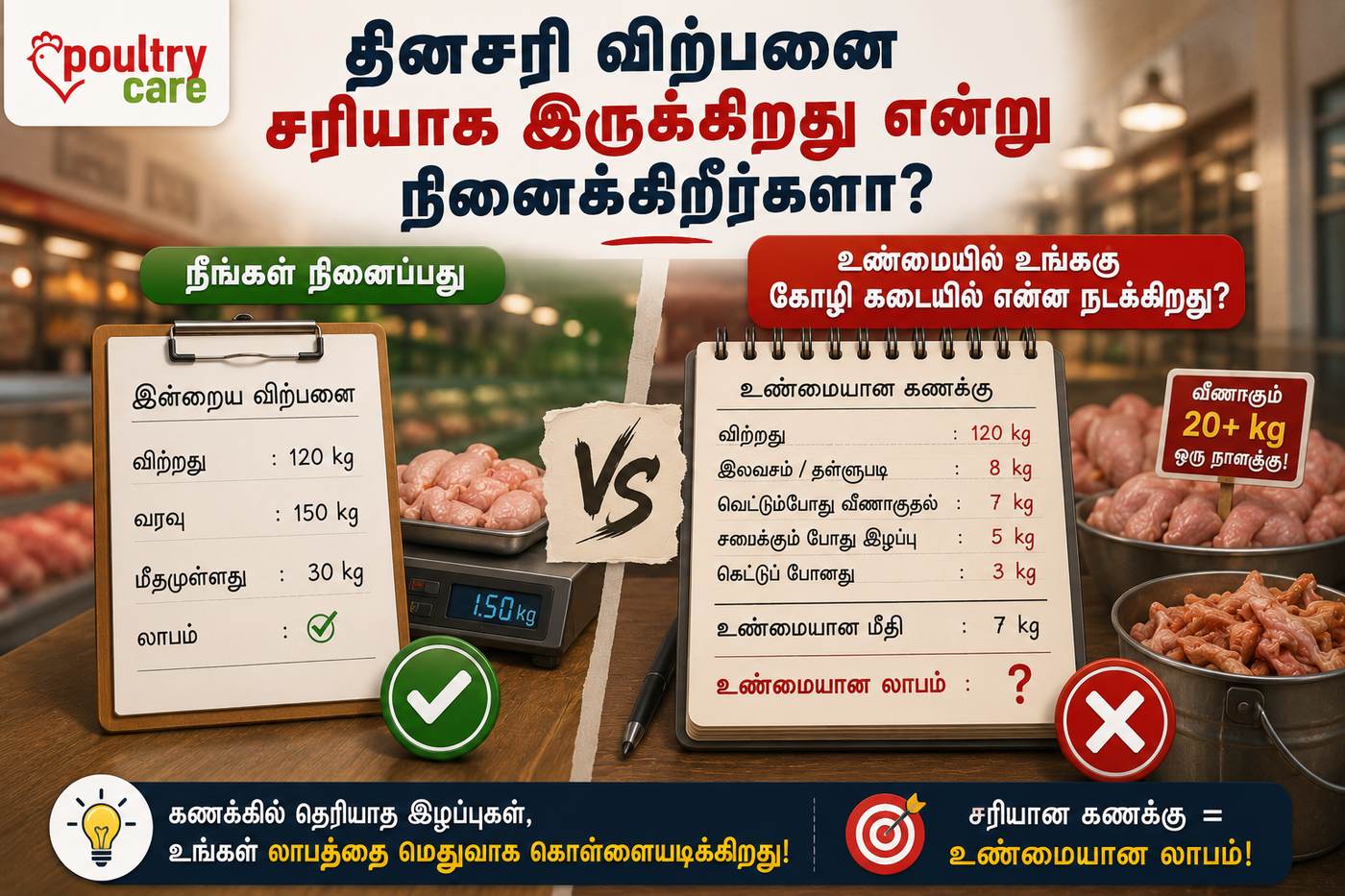
Each day, a small difference existed between incoming stock and total saleable quantity.
The difference seemed insignificant during daily operations. Staff considered it normal processing loss.
But when calculated over thirty days, the accumulated value became alarming.
Small daily losses multiplied silently until they formed a major financial gap.
The outlet was not losing customers.
It was losing kilograms.
And kilograms in poultry retail directly mean money.
How Small Daily Loss Turned Into ₹1,73,420
The investigation focused on understanding where loss occurred during the operational cycle.
Daily shrinkage averaged slightly above expected levels. Individually, the loss looked manageable.
However, poultry retail operates on repetition. The same process repeats every day without interruption.
A minor percentage loss applied consistently across daily purchases created compounding impact.
When converted into financial terms using selling margin and purchase cost, the total loss reached ₹1,73,420 within one month.
The owner realized an important lesson.
Profit rarely disappears suddenly. It leaks slowly.
Because the loss was distributed across multiple activities, it never triggered immediate concern.
Only monthly aggregation revealed the real picture.
Where the Outlet Was Losing Money Without Realizing
Detailed observation showed that loss came from several routine practices rather than a single major error.
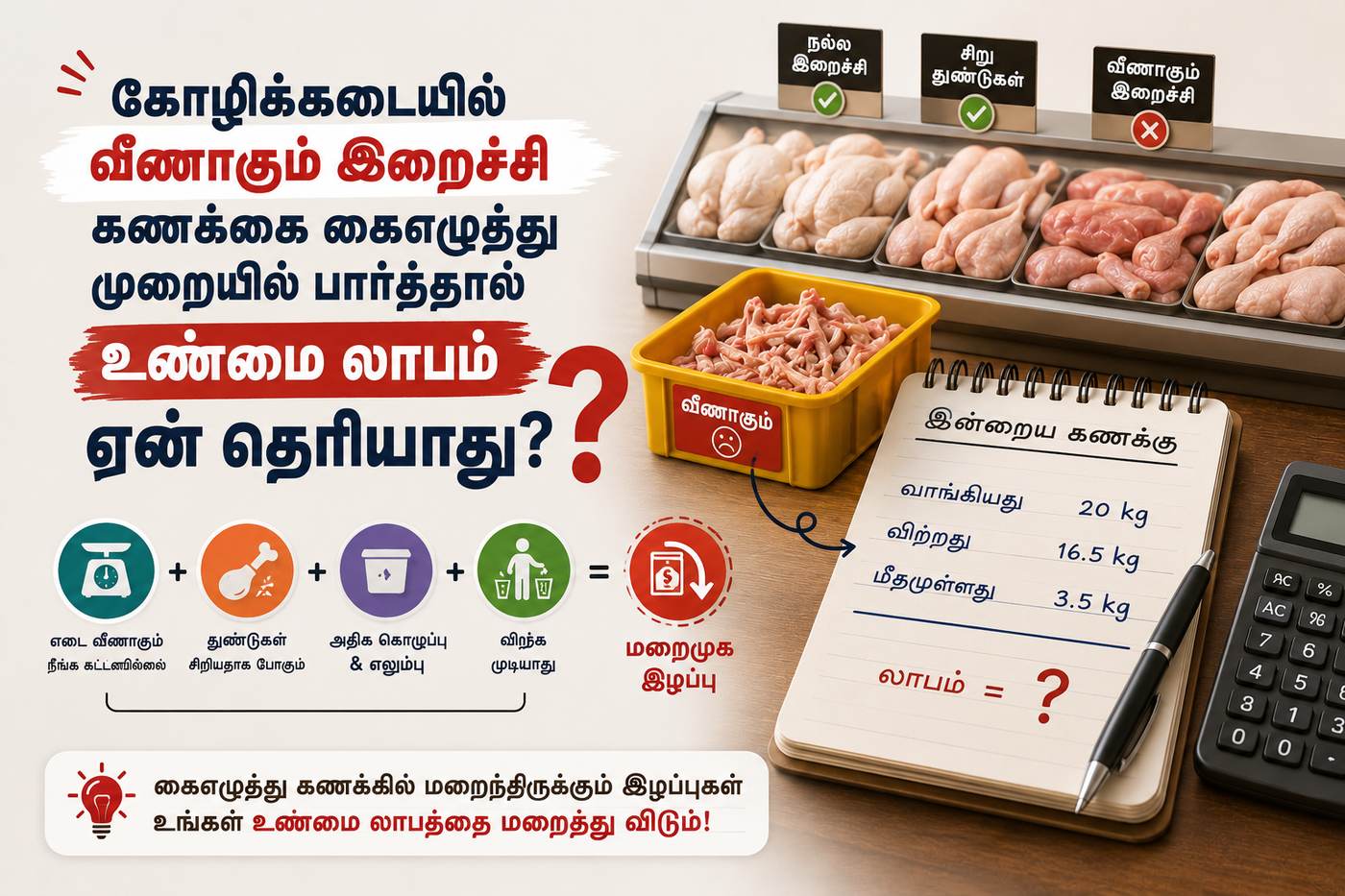
Processing methods contributed first. Excessive washing during preparation removed additional moisture weight. Staff believed extra cleaning improved freshness perception.
Cutting inconsistency created further leakage. Different workers followed personal cutting styles, removing more meat than necessary around bone sections.
Display handling increased exposure time. Products remained uncovered during peak hours, accelerating moisture evaporation.
Storage discipline also affected weight retention. Frequent refrigerator opening caused temperature instability, increasing drying effect.
Weighing practices introduced minor inaccuracies during busy billing periods.
None of these issues alone caused serious concern. Combined together, they created measurable financial damage.
Operational habits quietly converted into monetary loss.
The Psychological Trap Retail Owners Face
One reason such losses continue is mindset.
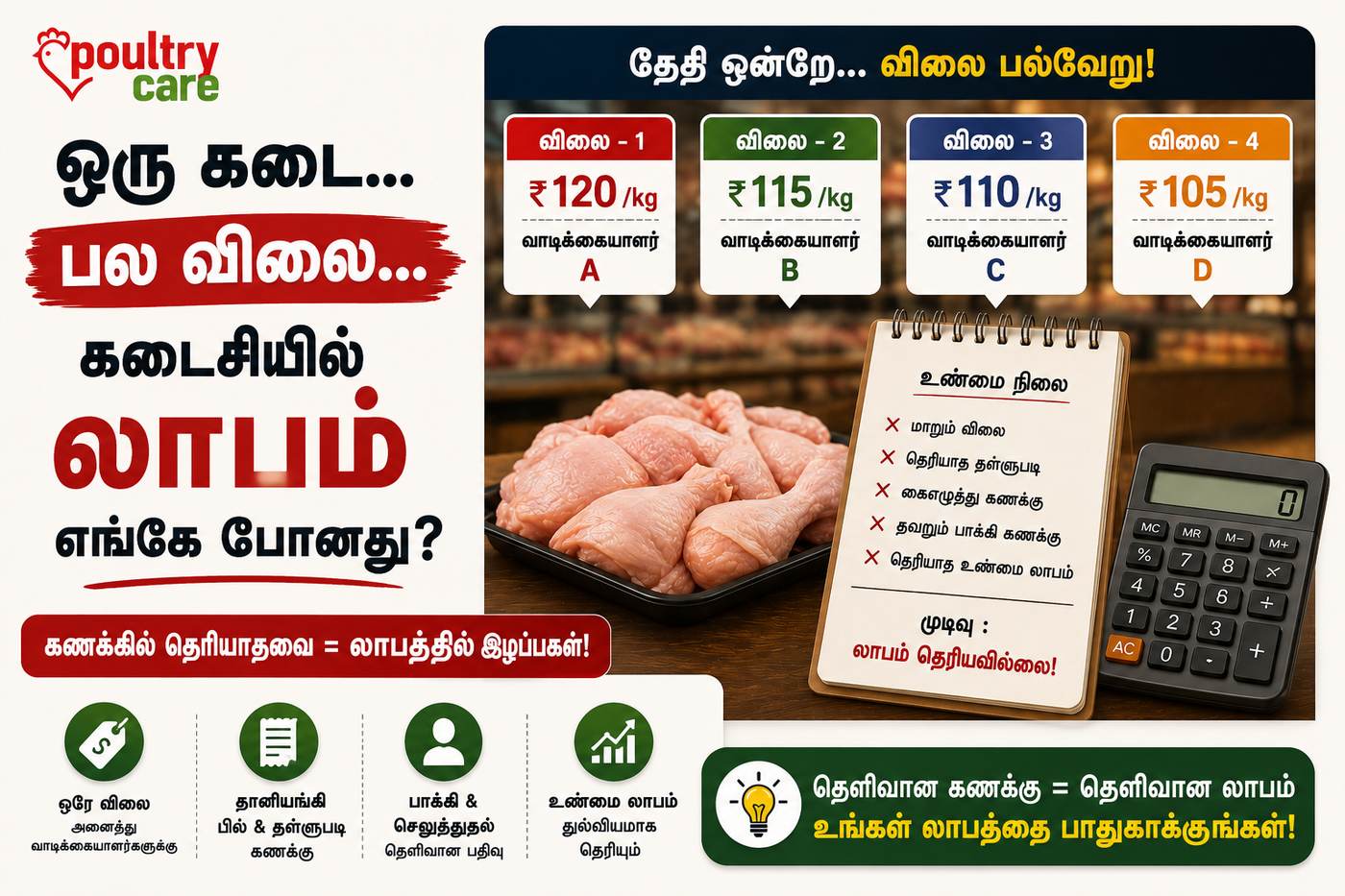
Retail owners focus primarily on visible metrics like sales quantity, customer count, and cash collection. Weight efficiency rarely receives equal attention.
Because money is not visibly paid out, shrinkage feels different from expenses like rent or salary.
Loss without a bill feels unreal.
This psychological gap allows operational inefficiencies to continue unchecked.
Owners often attempt solutions such as increasing sales targets or adjusting prices, while the actual problem exists inside daily workflow.
Without measurement, assumption becomes management.
And assumptions rarely protect profit.
The Turning Point: Measuring Weight Flow
The outlet’s recovery began with a simple change.
Daily weight tracking started.
Morning purchase weight was recorded carefully. Evening billed weight was calculated consistently. Differences were reviewed without blaming staff.
Awareness changed behavior naturally.
Workers became careful during cutting. Washing practices reduced. Storage handling improved. Exposure time shortened.
Within weeks, shrinkage percentage decreased noticeably.
Profit improvement followed without increasing customer traffic or changing selling price.
The biggest investment was not equipment.
It was visibility.
Lessons Every Poultry Retail Owner Should Learn
This case study highlights realities faced by many retail outlets.
Operational losses often exceed pricing problems.
Small percentages create large financial consequences when repeated daily.
Measurement builds accountability more effectively than supervision.
Profit improvement does not always require expansion or higher sales volume.
Retail efficiency protects margins more reliably than aggressive growth strategies.
Understanding weight movement transforms business understanding.
Retail success begins when kilograms are managed as carefully as currency.
From Running a Shop to Managing a Retail System
Traditional poultry shops operate based on experience and routine. Modern retail success requires measurable clarity.
When retailers understand where loss occurs, decision-making improves automatically.
Purchase planning aligns with demand. Staff coordination improves. Pricing becomes confident rather than reactive.
The outlet owner in this case did not expand infrastructure or hire additional workers to recover profit.
Efficiency alone restored financial performance.
This transformation marks the shift from selling activity to retail management thinking.
Growth becomes sustainable when internal efficiency improves first.
Conclusion: The Loss You Don’t See Is Often the Biggest
The outlet did not fail because of poor sales or weak demand.
It lost ₹1,73,420 because small operational losses went unnoticed for too long.
In poultry retail, profit protection depends less on selling more and more on preserving what is already purchased.
Every kilogram entering the shop carries potential profit. When part of that weight disappears before billing, earnings disappear with it.
Before ending today’s business, consider one question.
If your outlet loses a small amount daily, do you know its monthly financial impact?
Awareness is the first step toward control.
Retail growth does not always begin with expansion. Sometimes it begins by understanding what silently leaves the shop each day.
When invisible loss becomes visible, profit begins to return.