
When Weight Reduces but No One Knows Why
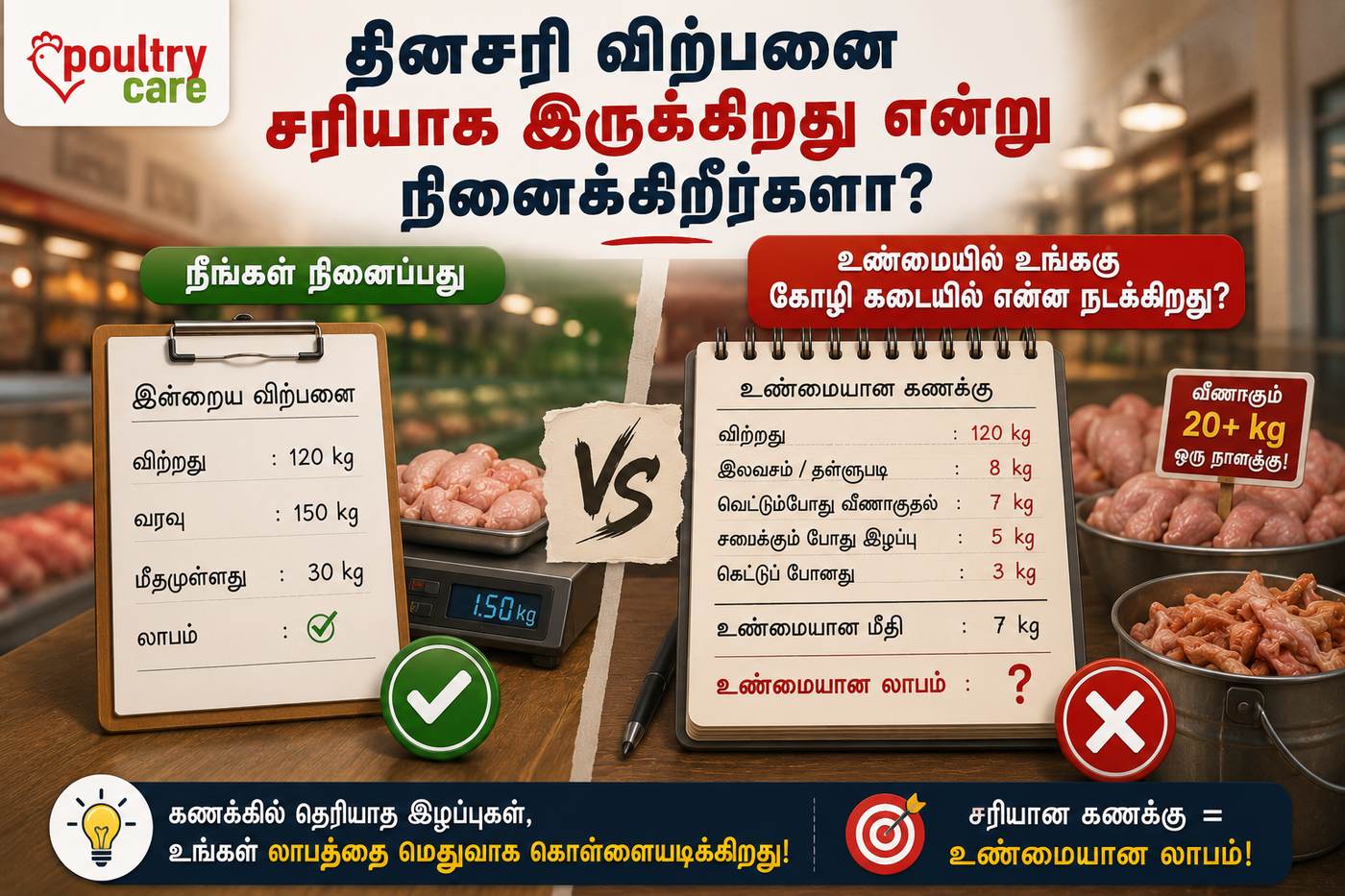
Many poultry retail shop owners notice a familiar situation. Birds arrive fresh in the morning with good weight. Sales continue throughout the day. Customers remain satisfied. But by evening, the total sellable weight feels lower than expected.
The difference is often accepted as normal business behavior.
Some call it natural loss. Others assume it happens during cleaning or cutting. Few retailers actually investigate where the weight reduction truly occurs.
The truth is that not all losses are the same.
In poultry retail, weight reduction mainly comes from two sources — water loss and handling loss. Both look similar on paper, but their causes and solutions are completely different.
Understanding this difference is important because one type of loss is mostly unavoidable, while the other can be controlled and reduced.
Retail profit improves when owners learn to separate natural loss from operational loss.
What Is Water Loss in Chicken Retail
Water loss is the natural reduction in weight caused by moisture evaporation from meat after processing.
Chicken meat contains a high percentage of water. After slaughtering and cleaning, the muscle structure begins releasing moisture gradually. This process continues during storage, display, and refrigeration.
Even when handling is perfect, some moisture loss will always occur.
Temperature plays a major role. When meat is exposed to air or when cooling conditions fluctuate, evaporation increases. Refrigeration removes heat but also draws moisture slowly from the product surface.
Water loss usually happens silently. The appearance of meat remains normal, but weight decreases slightly over time.
This type of shrinkage is biological and unavoidable to some extent.
Retailers should not aim to eliminate water loss completely. Instead, they should understand expected levels and manage conditions that slow down excessive evaporation.
What Is Handling Loss in Poultry Retail
Handling loss occurs because of operational practices inside the shop.
Unlike water loss, handling loss is not natural. It results from human activity during processing, cutting, movement, and storage.
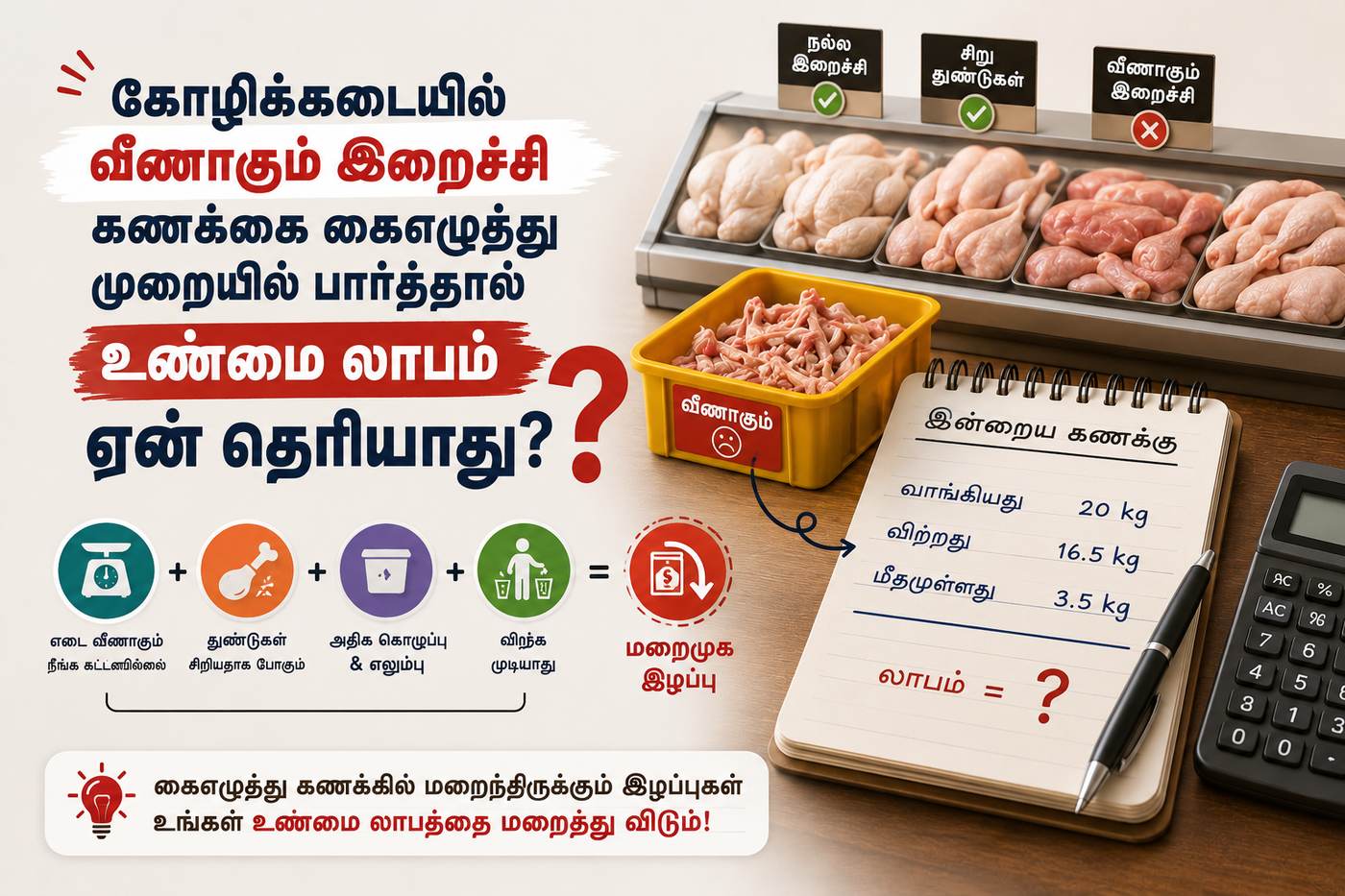
Examples include excessive trimming during cutting, dropping small pieces during handling, improper weighing practices, or rough product movement.
Sometimes staff remove more meat than required to improve visual appearance. Sometimes repeated washing removes unnecessary weight. Sometimes products stay exposed on the cutting table longer than needed.
Each action may appear minor, but repeated daily, they create measurable loss.
Handling loss is controllable because it depends on workflow discipline rather than biological factors.
This distinction is critical for retail owners. If all loss is assumed to be natural, improvement never begins.
Why Retailers Often Confuse the Two Losses
Water loss and handling loss happen at the same time, making them difficult to separate without observation.
When weight reduces, retailers usually blame storage or refrigeration. However, in many shops, a significant portion of shrinkage comes from handling practices rather than moisture evaporation.
Without measurement, both losses appear identical.
This confusion leads to wrong decisions. Owners may invest in better storage equipment while ignoring inefficient cutting methods. Or they may blame staff unnecessarily for natural moisture loss.
Clarity comes only when retailers observe when and where weight reduction occurs during the day.
If weight drops mostly during storage hours, water loss may be higher. If loss increases during busy cutting periods, handling practices may be responsible.
Understanding timing helps identify the real cause.
How Water Loss Happens Throughout the Retail Day
Water loss begins immediately after processing.
During morning preparation, freshly cleaned meat releases initial moisture. As products move into refrigeration, cooling air gradually pulls moisture from the surface.
Repeated opening of storage units accelerates evaporation. Warm air entering the refrigerator forces the system to work harder, increasing drying effect.
Display practices also influence water loss. Meat exposed directly to air loses moisture faster than covered products.
Long selling hours further increase evaporation, especially in warm environments.
Although unavoidable, water loss can be minimized by stable temperature control, faster stock movement, and reduced exposure time.
Retailers who manage environment carefully notice slower weight reduction.
How Handling Loss Develops Inside Daily Operations
Handling loss often begins unknowingly.
Inconsistent cutting styles between workers create uneven yield. Some cuts remove excess flesh along with bone portions. Over time, these small differences accumulate.
Repeated washing is another common source. Many shops wash products multiple times believing it improves cleanliness. Excess water contact actually removes weight and accelerates later evaporation.
Improper weighing practices also contribute. Scales placed unevenly or rushed weighing during peak hours introduce unnoticed discrepancies.
Frequent movement between storage and display increases product exposure and handling damage.
Unlike water loss, handling loss can be significantly reduced through standard operating habits.
When staff follow consistent processes, weight retention improves naturally.
Why Understanding the Difference Protects Profit
Retail profit depends on understanding controllable versus uncontrollable factors.
Water loss represents natural biological change. Handling loss represents operational efficiency.
When retailers separate these two, decision-making becomes clearer.
They stop blaming unavoidable conditions and start improving controllable practices.
Pricing decisions also improve because true operational efficiency becomes visible.
Many shops attempt to increase profit by raising selling price. However, reducing handling loss often produces the same financial improvement without affecting customers.
Knowledge reduces guesswork.
Retail owners who understand loss categories gain stronger control over margins and daily planning.
Building Awareness Among Staff and Operations
Shrinkage control is not achieved through strict supervision but through shared understanding.
When staff learn the difference between water loss and handling loss, they begin recognizing how their actions influence business results.
Training workers to follow uniform cutting methods improves consistency. Reducing unnecessary washing preserves weight. Organized workflow reduces repeated handling.
Daily observation helps teams notice improvement patterns.
Gradually, the shop moves from reactive work toward disciplined retail management.
Awareness turns routine activity into efficient operation.
From Experience-Based Selling to Knowledge-Based Retail Management
Traditional poultry retail depends heavily on experience. Modern retail success combines experience with measurement and understanding.
Knowing why weight reduces gives retailers confidence.
Instead of guessing profit margins, they understand operational reality. Instead of reacting to loss, they prevent it.
Retail management becomes proactive rather than corrective.
Shops that adopt this mindset often see improvement without expanding space, increasing labor, or changing suppliers.
Efficiency becomes the growth driver.
Conclusion: Not All Weight Loss Is the Same
Every poultry retailer experiences weight reduction, but not every loss has the same cause.
Water loss is natural and expected. Handling loss is operational and controllable.
Confusing the two prevents improvement. Understanding the difference opens the door to better management.
Before ending today’s business, observe your shop carefully.
Is weight reducing because of natural moisture release, or because of daily handling habits?
That awareness alone can transform how profit is protected.
Retail success is not only about selling chicken. It is about understanding what happens to every kilogram between purchase and sale.
When loss is understood clearly, profit becomes easier to manage.